







By Aggrey Baba
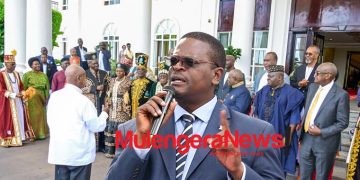
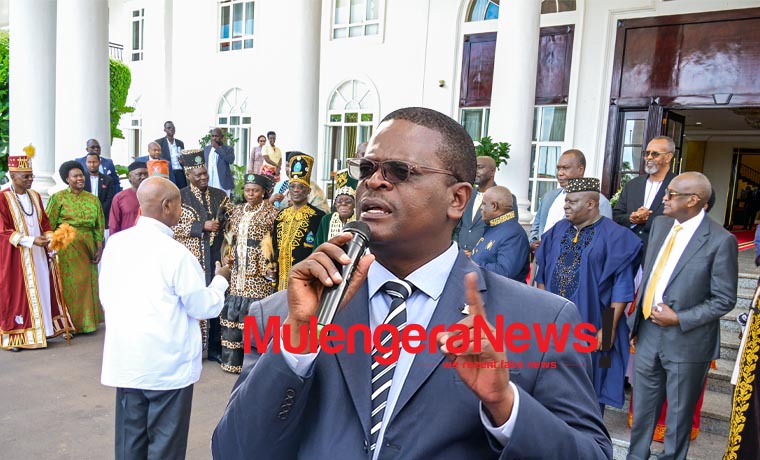
Following Museveni’s recent State House engagement with traditional leaders, in which the President reportedly urged them to concentrate on cultural affairs rather than politics, PFF’s Dr Michael Lulume has fired back, accusing the Museveni of wanting kings and cultural leaders to remain occupied with dances and ceremonies as the central government continues controlling the wealth of their communities.
He challenged traditional institutions to wake up to, according to him, the political and economic trap, insisting that their responsibility should extend beyond preserving culture to fighting for the resources and prosperity of their people.
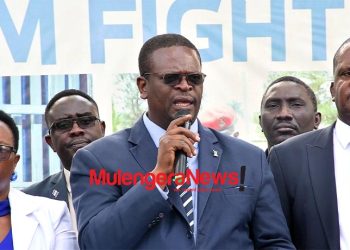
At the party headquarters on Monday, during PFF’s weekly press conference, Bayiga questioned why the cultural leaders should be discouraged from discussing governance, resource ownership and political representation when their subjects continue bearing the consequences of decisions made by the central government.

He argued that cultural institutions should not be reduced to ceremonial platforms where leaders preside over traditional dances, preserve languages and attend State House functions where they are blinded with rice and meat, while their communities struggle with poverty despite sitting on valuable natural resources.

Dr Lulume said traditional leaders represent historically established communities and therefore have a legitimate interest in how their people are governed, how their land is managed and who benefits from the resources found within their territories.
“Those are governors in their own respect,” he said, challenging the notion that traditional leaders should restrict their influence to cultural affairs.
He accused Museveni of using engagements with cultural institutions to encourage their withdrawal from governance debates, arguing that such an approach leaves the central government with greater freedom to determine the economic future of communities without meaningful local participation.
He particularly questioned why traditional leaders should remain silent when regions endowed with minerals and other natural resources continue experiencing economic hardship.
Lulume pointed to Karamoja, where he said enormous mineral deposits and other natural endowments have not translated into the prosperity expected by local communities.
He also cited iron ore deposits in the Batwa areas and mineral resources around Tororo and Kasese, arguing that the people living in there should have a greater stake in decisions concerning the exploitation and economic benefits of their natural wealth, other than their leaders being g reduced to presiding over cultural events.
He questioned the justification for communities to remain poor while valuable resources within their territories contribute to wider economic interests over which they have limited control.
Lulume argues that Uganda’s highly centralized governance structure has denied traditional communities sufficient authority to determine their economic priorities and benefit directly from their natural resources.
He consequently challenged the cultural leaders to look beyond ceremonial recognition and begin demanding political and economic arrangements that give their people greater control over local affairs.
“That man is hoodwinking you so that you can take away your eyes from your wealth,” Lulume said, accusing Museveni of diverting cultural leaders’ attention from resource ownership and economic empowerment.
He warned the leaders against allowing financial handouts, State House invitations and ceremonial recognition to silence them on issues affecting the livelihoods of the people they lead.
According to him, preserving a community’s cultural identity cannot be separated from protecting its economic interests, especially where poverty continues to affect people living in resource-rich areas.
He said federalism is the alternative through which Uganda’s traditional communities could acquire greater political, administrative and economic authority, arguing that Uganda was formed by 15 historical/traditional nations and an additional nation, each with its own historical background, cultural identity, language and traditional institutions.
He rejected attempts to portray federalism as tribalism, insisting that recognizing the historical communities that came together to form the country many pride in today, should not be confused with promoting ethnic divisions or undermining national unity.
Instead, he argued that these communities possess the people, land, cultural institutions and economic resources necessary to determine their development priorities if given meaningful political and administrative powers.
Lulume also disclosed that PFF intends to approach traditional leaders individually to explain its federalism proposals and challenge them to take a more active interest in governance and the economic empowerment of their communities.
He maintained that the party’s proposal is not about dismantling Uganda but creating a political arrangement in which traditional communities can preserve their identities while exercising greater influence over the resources and development programmes affecting their people.
His words place cultural institutions at the centre of PFF’s federalism campaign, opening a fresh debate over whether cultural leaders should remain confined to preserving heritage or take a more active role in demanding political and economic rights for their people.