







By Aggrey Baba
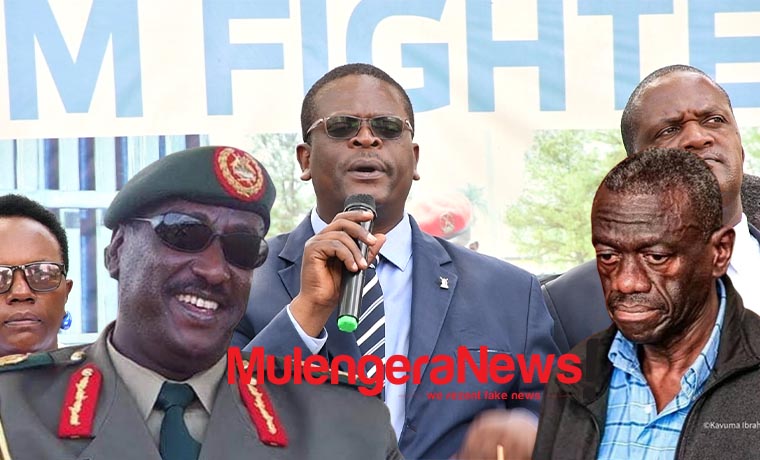
Gen Salim Saleh’s account of reconnecting with Dr Kizza Besigye has been challenged by Besigye’s political family, the People’s Front for Freedom (PFF), with Dr Lulume Bayiga saying the detained veteran opposition leader personally denied ever meeting or speaking to President Yoweri Museveni’s brother.
Lulume says the contradiction emerged when he and other PFF colleagues visited Besigye and asked him to clarify reports that Saleh had reached out to him as part of efforts to resolve the political standoff surrounding his detention.
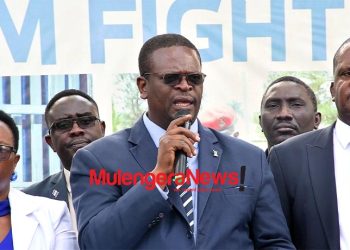
Lulume told journalists on Monday, that Besigye used his alphabet communication chart to deny having had any contact with Gen Saleh.

“He has never spoken to him, and he has never seen him,” Bayiga said, recounting the message he said Besigye communicated to the visiting team.

The claim directly challenges Saleh’s public account of renewed contact with Besigye, who is also his former bush-war comrade.
On October 30, while addressing Members of Parliament at his Namunkekera base in Kapeeka, Nakaseke District, Gen Saleh said he had reconnected with Besigye after years of estrangement caused by political differences.
He explained that the intervention followed an August 25 social media post by CDF Gen Muhoozi Kainerugaba, who reportedly told him that Besigye’s problem was his responsibility.
Gen Saleh said he subsequently visited Besigye and intervened to secure better medical attention for him, including facilitating his transfer to the Joint Clinical Research Centre (JCRC) in Lubowa.
He described the encounter as a big opportunity to reconnect with an old colleague and expressed hope that their engagement could produce a successful outcome within three to six months.
But Bayiga’s account raises questions about what exactly happened during the reported contact, whether Besigye personally interacted with his former friend and whether any political conversation took place.
Lulume said the PFF team deliberately sought clarification from Besigye because of the growing claims surrounding the proposed national dialogue and the possibility of negotiations involving senior government figures.
He explained that Besigye, who is unable to speak normally, communicates through an alphabet chart, with visitors interpreting the letters he selects to form words and sentences.
The PFF leader accused sections of the media of turning claims of contact and political engagement into established facts, warning journalists against reporting negotiations that the people supposedly involved have not confirmed.
He also questioned the basis on which some opposition politicians were presenting themselves as representatives of Besigye or the wider opposition in engagements with Salim Saleh and other government-linked actors.
The dispute comes amid wider public debate over Saleh’s role in efforts to find a political resolution to cases involving Besigye and other detained opposition figures.
The former Buikwe South MP used the controversy to challenge the credibility and enforceability of the proposed Consociational Democracy Agreement, arguing that opposition politicians risk giving legitimacy to a process that has not secured a formal commitment from the government expected to implement its proposals.
He said the document he examined in Jinja carried the signature of Professor Ogenga Otunnu but did not have Museveni’s signature or any formal government undertaking to implement the proposed reforms.
“Where is Museveni in this thing? Where is government in that thing?” he asked.
Lulume, on behalf of the party, argued that opposition leaders cannot rely on goodwill or private assurances from influential individuals when negotiating reforms that require government action and institutional commitment.
He warned that some politicians could be drawn into a political arrangement that offers them positions and personal benefits without giving them real authority to influence national decisions.
Citing Justice Minister Norbert Mao’s entry into government, Lulume questioned whether opposition politicians who join the establishment retain the independence required to negotiate meaningful political change.
He maintained that PFF would not endorse the proposed negotiations merely because some opposition figures had chosen to engage Saleh, insisting that any dialogue must have a legitimate mandate, independent leadership and guarantees that its resolutions will be implemented.
The competing accounts have now placed the nature of Gen Saleh’s reported reconnection with Besigye under fresh scrutiny, particularly the distinction between Saleh’s intervention in the opposition leader’s medical care and the separate question of whether the two men have actually held political talks.