







The People’s Front for Freedom (PFF) has challenged those pushing for national dialogue in Uganda to first explain who will convene the process, who will determine its agenda, who will participate and who will guarantee implementation of any eventual resolutions.
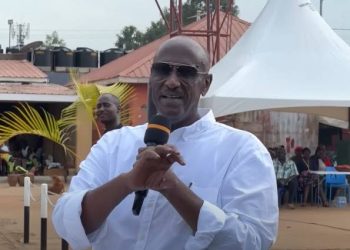
PFF leader Michael Lulume Bayiga said during Monday press conference at the party headquarters, in Kampala, that the party supports dialogue as a means of resolving the country’s political disagreements but will not participate in a process organized and controlled by the same government accused of creating the grievances that need to be addressed.
The former Buikwe South MP, known for being a man who never minces his words, said the growing public discussion about dialogue has largely ignored the fundamental questions that would determine whether such an engagement can produce meaningful national reconciliation.
He accused some political commentators and media personalities of portraying PFF as an extremist group opposed to dialogue simply because it has questioned the proposed arrangements.
“We are a party of dialogue, but the question is dialogue about what?” Lulume asked, further identifying four pillars that, according to PFF, must underpin any credible national dialogue.
The first is an agreed and neutral convener with sufficient authority to bring all participating parties to order and ensure that nobody dominates the process.
He argued that the government cannot invite its political opponents to a dialogue and simultaneously assume responsibility for organizing and controlling the engagement.
He maintained that a convener must be an individual or institution acceptable to all parties, particularly those who consider themselves aggrieved by the current political establishment.
“The convener cannot be the state or an entity or a person chosen by the state. That ceases to be dialogue. It would be a monologue,” he said.
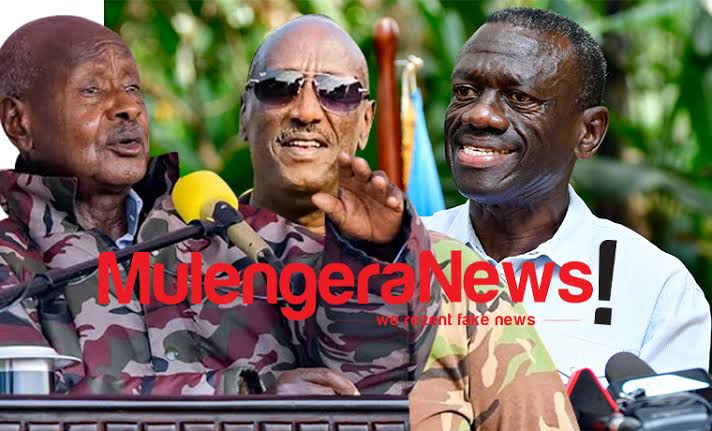
The dialogue in question stems from a document, authored by Gen Salim Saleh and his personal secretary Professor Ogenga Otunnu, which was reportedly introduced to representatives of all political parties who attended the two-day conference which brought together political actors from all political devoid, in Jinja.
The second requirement concerns the agenda, which Bayiga insists must be jointly developed rather than presented to political opponents as a completed document requiring their endorsement.
He questioned the logic of expecting opposition parties to accept proposals prepared by individuals associated with Museveni government without first allowing all stakeholders to identify the issues they want addressed.
The third pillar is an agreed and clearly defined list of participants.
Dr Lulume argued that Uganda’s political future cannot be negotiated exclusively by political parties because the country comprises several historical nations, religious institutions, traditional leaders, civil society organizations and other interest groups.
He specifically mentioned the business community and communities that have suffered what he called political oppression and state excesses.
The fourth requirement is an independent guarantor capable of ensuring that resolutions reached are actually implemented.
The PFF leader cited Uganda’s 1995 Constitution, arguing that although it emerged from a national constitutional process, its provisions have not prevented the subsequent concentration of power in the hands of President Museveni, his family and the state.
He said the experience demonstrates why Ugandans cannot simply sign another agreement and leave its implementation to the same people who have downplayed the existing one.
He also questioned the proposed choice of venues, warning against holding negotiations in places associated with the people in power.
He specifically mentioned State House and Namunkekera, where Gen Salim Saleh has established an operational base, arguing that such locations could undermine the neutrality and confidence required in negotiations.
Dr Lulume said PFF would only be interested if the process allowed all parties to negotiate as equals, with an independent chairperson and an enforceable implementation mechanism.
He maintained that the purpose of dialogue should be to address the country’s underlying political grievances rather than provide a public relations platform for the government.
He added, the credibility of any proposed national dialogue will depend less on how frequently political leaders talk about reconciliation and more on whether the arrangements guarantee fairness, representation and accountability. (For comments on this story, get back to us on 0705579994 [WhatsApp line], 0779411734 & 041 4674611 or email us at mulengeranews@gmail.com).