








By Mulengera Reporters
Access to affordable financing is emerging as a critical enabler in Uganda’s efforts to eliminate mercury use in artisanal and small-scale gold mining, with financial institutions being urged to support miners across the entire value chain to accelerate the adoption of safer technologies, protect livelihoods and promote responsible mineral resource development.
At the centre of the discussions is the need to move beyond conventional lending and develop financing solutions that address the practical challenges facing small-scale miners, including acquiring modern processing equipment, improving financial literacy and formalising mining groups.
These issues took centre stage at the planetGOLD Uganda Fourth Annual Stakeholders Meeting in Kampala, which brought together government regulators, financial institutions, development partners, civil society organisations and mining sector representatives to discuss pathways towards safer and more sustainable gold mining.

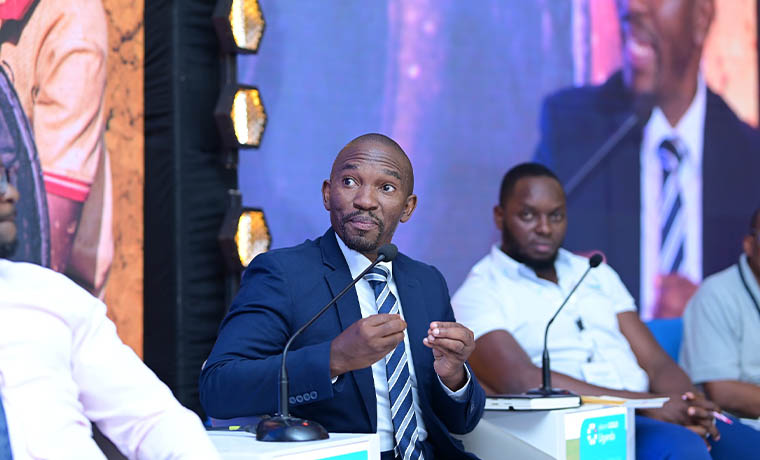
Speaking at the meeting, Bob Paul Lusembo, Head of Micro Business at Equity Bank, emphasised the importance of financing the entire mining value chain, noting that sustainable transformation requires more than providing miners with access to loans.

“If we are to ensure a safe and sustainable mining industry that contributes to the development of this country, we need to finance the entire value chain,” he said.
Lusembo highlighted the importance of supporting mining communities with financial literacy, equipment acquisition and business formalisation to enable them to transition towards safer, more productive and sustainable mining operations.
Uganda’s artisanal and small-scale gold mining sector supports an estimated 70,000 miners, many of whom depend on the activity as their primary source of income. However, limited access to affordable credit, inadequate equipment, informality and continued reliance on mercury remain significant barriers to the sector’s transformation.
Although mercury-free technologies are available, the high cost of acquiring processing equipment and upgrading mining operations makes it difficult for many miners to adopt safer alternatives without appropriate financial support.
The consequences extend beyond the mining sites. Mercury exposure can cause serious neurological and other health complications, while contamination of water sources, soil and ecosystems threatens surrounding communities and the environment.
The human cost of continued mercury use was brought into focus through testimonies shared at the meeting, including that of a miner who reported experiencing long-term health effects linked to mercury exposure.
Representing the National Environment Management Authority (NEMA), Dr John Ekure called on miners and sector stakeholders to prioritise human health and safety, cautioning against pursuing economic gains at the expense of workers’ wellbeing.
He underscored the importance of responsible mining practices, particularly as Uganda seeks to eliminate mercury use in line with its environmental and regulatory obligations.
From the development partners’ perspective, Magara Siraje, Extractive Industries Coordinator at Oxfam Uganda, noted that responsible exploitation of mineral resources could contribute to Uganda’s export growth and wider economic development.
However, he emphasised that unlocking this potential would require improved access to financial services and technical support for artisanal and small-scale miners.
His remarks reinforced the need for coordinated interventions that address both the financial and technical constraints preventing miners from adopting safer production methods.
For financial institutions, this presents an opportunity to support a sector with significant economic potential while contributing to improved environmental protection and sustainable livelihoods.
Financing equipment acquisition, strengthening financial literacy and supporting the formalisation of mining groups could help miners improve productivity, access markets and gradually move away from mercury-dependent processing methods.
Stakeholders therefore called for stronger collaboration between government agencies, financial institutions, development partners and mining communities to close financing gaps and accelerate the transition to mercury-free mining.
Ultimately, they agreed that access to affordable finance must be treated as a central pillar of Uganda’s responsible mineral resource development agenda, ensuring that the transition to safer mining practices does not leave behind the thousands of people who depend on the sector for their livelihoods. (For comments on this story, get back to us on 0705579994 [WhatsApp line], 0779411734 & 041 4674611 or email us at mulengeranews@gmail.com).