





By Mulengera Reporters
Finance, Planning and Economic Development Minister Henry Musasizi has challenged residents of the Kigezi sub-region to maximise the economic potential of their limited landholdings, warning that traditional land-use practices could undermine household incomes in an area where land is increasingly scarce.
Musasizi said residents in Rubanda, Kabale and Rukiga districts must adopt more productive land-use practices, combining agriculture with other income-generating activities to improve their livelihoods and transition into the money economy.
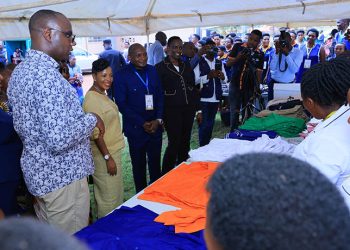
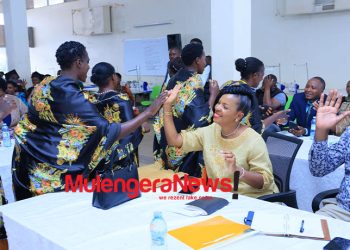
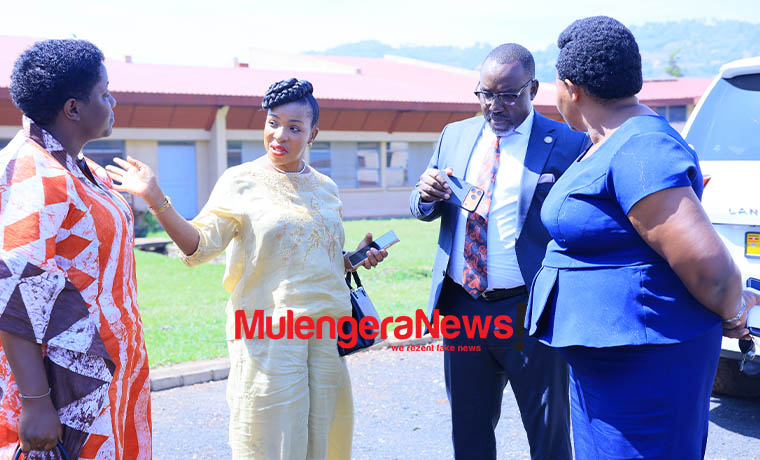
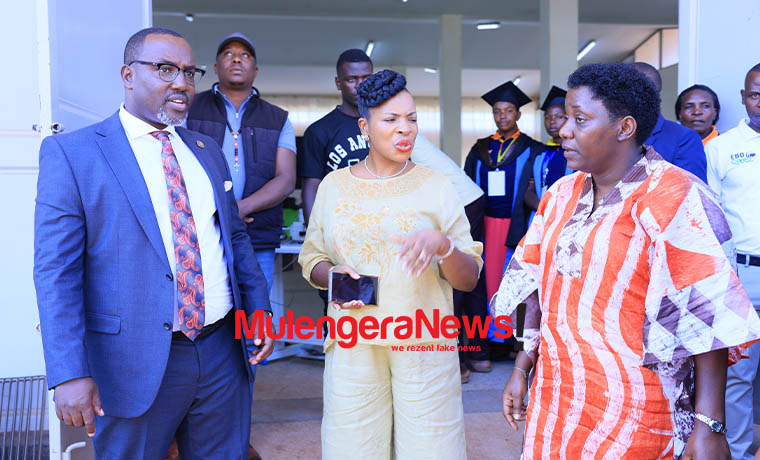
The minister made the remarks while speaking about the skills enhancement training conducted for more than 300 women entrepreneurs from Rubanda District under the Generating Growth Opportunities and Productivity for Women Enterprises (GROW) Project in Kabale.

He noted that the average landholding in the region stands at approximately 0.8 acres, making it necessary for households to rethink how they use the available land to produce both food and income.

“The average landholding in this region is 0.8 of an acre. We have got to guide people on how to utilise this land for generating income,” Musasizi said.
He explained that while families need land to grow food for consumption, they should also consider the commercial value of their agricultural activities by selecting enterprises capable of generating sustainable earnings from small plots.
According to the minister, farmers should calculate the expected returns from their land rather than engaging in farming without considering the income their activities can generate.

“For those who are in farming, we don’t want them to just do farming. We want them to do farming with the kibaro,” he said, referring to the need for farmers to calculate and plan their expected earnings.
Musasizi Warns Against Risky Settlements and Poor Land Use
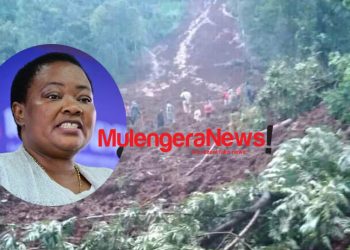
Beyond agricultural productivity, Musasizi raised concerns about settlement patterns in the mountainous districts of Kigezi, where houses are increasingly being constructed along hillsides.
He cautioned residents against building in areas vulnerable to landslides and urged households to balance residential development with productive land use.
“Now the settlements are going up a hill. They are going house after house,” he said, calling for guidance to prevent people from establishing homes in dangerous locations.
The minister also criticised the practice of using nearly all available land for residential construction while leaving other portions underutilised.
He argued that households should consider how their land can support productive activities instead of allowing valuable space to remain economically idle.
The challenge, he said, is to encourage safer settlement patterns while ensuring that limited land contributes to household food security and income generation.
Skills Training Opens Alternative Income Opportunities
Recognising that not every household has sufficient land for commercial agriculture, Musasizi said the government was promoting alternative vocational skills to enable people to earn money through other enterprises.
He pointed to activities such as tailoring, hairdressing and other practical trades as opportunities for people with limited access to land to establish businesses and generate income.
The skills training under the GROW Project provides women entrepreneurs with practical knowledge intended to strengthen their businesses and improve their economic prospects.
Musasizi said deliberate interventions, particularly in agriculture and skills development, were necessary to ensure that households could participate more actively in the money economy.
“The NRM government is determined to transform this country by assuring that every Ugandan is a wealth creator,” he said.
He added that every household should have an income-generating activity, whether through farming, vocational skills or another enterprise suited to its circumstances.
Local Leaders Told to Follow Up Trained Women
Musasizi emphasised that training alone would not be sufficient to transform communities unless participants received continued guidance after returning home.
He called on Rubanda District local government leaders to work with agricultural extension workers and production officers to monitor beneficiaries, assess their circumstances and guide them towards suitable enterprises.
He said parish-level extension workers, including those involved in monitoring the Parish Development Model (PDM), had a key role in ensuring that beneficiaries received the support needed to make informed business decisions.
“We cannot just leave them to do their things without any proper guidance,” Musasizi said.
He explained that while coordination and leadership would be provided at higher levels, much of the practical work of guiding beneficiaries and monitoring their enterprises needed to take place within their communities.
The follow-up, he said, should help beneficiaries identify activities suited to their available resources and ensure that the skills acquired during training translate into productive businesses.
Group Guarantees Proposed for Women Without Collateral
The minister also addressed concerns about access to financing among entrepreneurs who lack conventional security required by lenders.
He encouraged such individuals to organise themselves into groups so they could benefit from group guarantees, allowing members to support one another when seeking financing.
“Those who do not have security, we encourage them to form groups so that they can benefit from group guarantees,” Musasizi said.
He explained that members of a group could act as guarantors for one another, providing an alternative for entrepreneurs who would otherwise struggle to access financing because they lack collateral.
The approach, he said, was intended to help women and other small-scale entrepreneurs overcome financing barriers and pursue income-generating activities.
Turning Skills into Sustainable Household Incomes
Musasizi’s message places household income generation at the centre of efforts to address the economic challenges facing communities in the Kigezi sub-region.
With limited land available to many households, the combination of commercially oriented agriculture, vocational skills, access to financing and continued technical guidance could help residents explore alternative paths to economic independence.
For the women who completed the GROW Project training in Kabale, the next challenge will be applying their skills to establish, improve or expand enterprises that can generate reliable incomes.
The minister’s call for local leaders to follow up beneficiaries also highlights the importance of sustained support beyond the training period.
Ultimately, the objective is to help households move beyond subsistence activities and build enterprises that can support their families, create opportunities and contribute to the economic development of Rubanda and the wider Kigezi sub-region. (For comments on this story, get back to us on 0705579994 [WhatsApp line], 0779411734 & 041 4674611 or email us at mulengeranews@gmail.com).