





By Guest Writer
Northern Uganda and other historically disadvantaged communities across the country have renewed hope of escaping persistent poverty following the rollout of the fourth phase of the Northern Uganda Social Action Fund (NUSAF IV), a World Bank US$276 million government programme designed to strengthen household incomes, resilience and social protection.
The programme, which is expected to run until December 2031, expands coverage to nine sub-regions: Acholi, West Nile, Lango, Teso, Karamoja, Elgon, Bukedi, Busoga and Bunyoro.
The expansion builds on earlier phases of NUSAF, which began in 2003 to support communities recovering from conflict, poverty and limited access to basic socioeconomic opportunities. The first phase ran from 2003 to 2009, the second from around 2009/2010 to 2015, and the third from 2016 to 2021, with implementation periods varying slightly across reports.
NUSAF III operated in eight sub-regions, covering West Nile, Acholi, Lango, Teso, Karamoja, Elgon, Bukedi and selected districts in Bunyoro. NUSAF IV adds Busoga to the programme’s geographical coverage while retaining the other targeted areas.

The new phase comes amid continued concern about poverty, unemployment, climate-related shocks and the lingering socioeconomic consequences of past conflicts, particularly in northern Uganda and Karamoja.
According to the project’s environmental and social management framework published by the Office of the Prime Minister in February 2025, NUSAF IV is organised around four key areas: sustainable livelihoods enhancement; stronger safety nets for resilience and human development; improved delivery systems; and programme management, controls and accountability.
These interventions are intended to help vulnerable households build productive livelihoods, cope with economic and environmental shocks, and gain better access to social protection.
Speaking during the NUSAF IV induction of local government political leaders and technical staff from the Acholi sub-region in Gulu City, senior World Bank official James Ebitu said the programme had been extended to other sub-regions affected by insurgency and related hardships.

Ebitu, however, cautioned against the expectation that every participating sub-region would receive identical support, explaining that communities experienced conflict and its consequences differently.
He said implementation would need to recognise the varying levels of vulnerability, with interventions reflecting the particular circumstances of each area.
Ebitu emphasised transparency and accountability, noting that the Inspectorate of Government was part of the programme’s oversight arrangements and that misuse of public resources would not be tolerated.
He said NUSAF IV seeks to support sustainable livelihoods, strengthen the resilience of poor and vulnerable households to shocks, and improve adaptive social protection systems in Uganda.
He also urged local government leaders to take ownership of the programme, noting that implementation would largely depend on local government structures through which intended beneficiaries would be identified and supported.
Ebitu called on political leaders and technical staff to follow the implementation guidelines closely to ensure that resources deliver the intended results.
Pader District Chairperson Alfred Akena, representing district chairpersons in Acholi, welcomed the fourth phase but cautioned that its success would depend on whether lessons from previous interventions were applied.
Akena said communities should appreciate the programme but warned against practices that undermined earlier phases, including alleged diversion of funds, failure to reach intended beneficiaries and the delivery of substandard works.
He urged the project implementation team to give due consideration to the social and economic circumstances of communities emerging from insurgency, many of which continue to struggle with poverty and limited livelihood opportunities.
Akena also called for climate change considerations to be incorporated into project design, arguing that unpredictable weather patterns and other climate-related challenges were increasingly affecting communities dependent on agriculture.
He urged district leaders across Acholi to strengthen coordination and work collectively to ensure effective implementation.
He further reminded local leaders to safeguard community land interests, describing land as a vital asset for household recovery, production and long-term socioeconomic transformation.
Gulu City Mayor Julius Achire Labeja welcomed NUSAF IV and called for deliberate inclusion of young people in the programme.
Labeja said unemployment and limited access to practical skills had left some young people without meaningful economic opportunities, contributing to social challenges in urban centres.
He urged programme managers to ensure that youth livelihood initiatives include skills development, productive investment and opportunities for gainful employment.
The mayor said involving young people in viable economic activities would help them improve their livelihoods while addressing some of the challenges associated with unemployment and urban vulnerability.
In a speech read by Dr Robert Olimi, the Permanent Secretary in the Office of the Prime Minister, Alex Kakooza, said the programme was expected to deliver significant employment, resilience and social protection outcomes by the end of its implementation period.
The targets outlined in the speech include the creation of 860,000 jobs, strengthening the resilience of 1.8 million people to shocks, establishing a national social registry covering 100 districts, and increasing the proportion of grievances resolved on time to 88 per cent.
Kakooza urged district leaders to integrate NUSAF IV into their district development plans and make it a priority on their implementation agendas.
He emphasised that beneficiary selection must be fair, transparent and based on community participation in verifying eligibility, rather than political connections or favouritism.
A household, he said, should benefit because it is poor and vulnerable, not because its members have political connections.
The Permanent Secretary also warned against individuals demanding money from prospective beneficiaries, stressing that participation in the programme should not be conditional on unofficial payments.
He said reporting channels would be provided to enable communities to report anyone attempting to solicit money from them in exchange for access to programme benefits.
Kakooza further cautioned local governments against delayed or incomplete financial accountability, explaining that the release of subsequent funds would depend on proper accounting for previously disbursed resources.
He said the Inspectorate of Government would play a key role in enforcing accountability and addressing any misuse of programme resources.
The State Minister for Northern Uganda, Beatrice Akori, urged local government leaders to intensify public awareness campaigns so communities understand the objectives, requirements and opportunities under NUSAF IV.
Akori encouraged leaders to use radio stations, other media platforms and community meetings to communicate information about the programme and other government initiatives.
NUSAF was established as part of government efforts to address poverty and support recovery in northern Uganda following years of conflict, displacement and economic disruption.
Over time, the programme expanded beyond its original geographical focus as government and development partners sought to address vulnerability in other parts of the country.
For communities in Acholi and the other participating sub-regions, the central test will be whether the programme translates its ambitious targets into lasting improvements in household incomes, employment, food security and the ability to withstand future shocks.
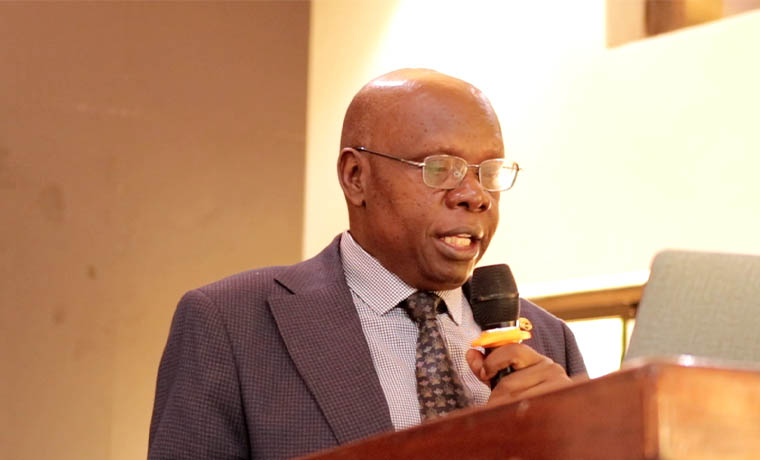
Photo: NUSAF IV head Dr. Robert Olimi, speaking to Acholi district leaders during an induction for local government leaders and technical staffs in Gulu city. (For comments on this story, get back to us on 0705579994 [WhatsApp line], 0779411734 & 041 4674611 or email us at mulengeranews@gmail.com).