






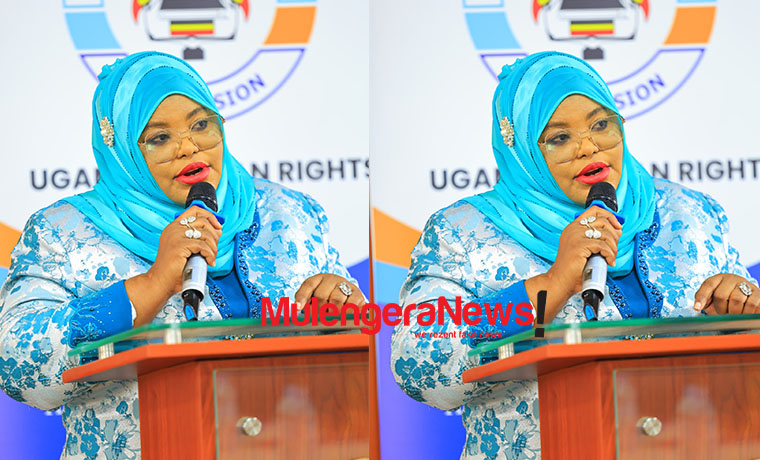
The Uganda Human Rights Commission (UHRC) has commenced consultations for its Annual Report on the State of Human Rights and Freedoms in Uganda, with a call for honesty and collective responsibility in assessing the country’s human rights record.
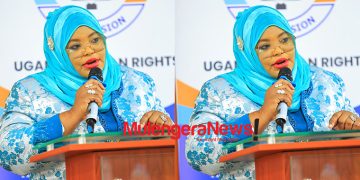
Opening the consultative meeting in Kampala, the Hon. Shifrah Lukwago, Member of the Commission, said the annual report is not merely a document of record but a constitutional obligation, a mirror of lived realities and a roadmap for action.
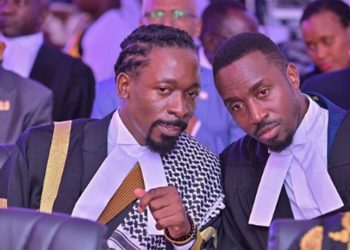
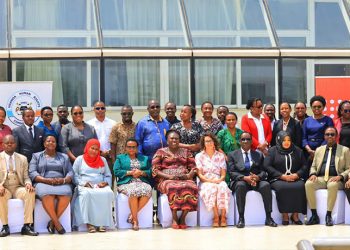
The meeting brought together Commissioners, Permanent Secretaries and senior government officials, representatives of Ministries, Departments and Agencies, civil society, development partners, academia, media, the Justice Law and Order Sector and UHRC staff.
Hon. Lukwago said the preparation of the report is a rigorous and inclusive process that draws from UHRC’s own monitoring and inspections, complaints received and investigated, tribunal decisions, research, and human rights education activities, but is critically enriched by stakeholders.
“The strength of any national human rights institution lies not only in the independence of its findings, but in the honesty of the voices that shape those findings,” she said.
She reminded participants that under Article 51 of the 1995 Constitution, the UHRC was established as an independent body mandated to promote and protect fundamental human rights and freedoms, and the Annual Report is the principal instrument through which it accounts to the people of Uganda, to Parliament and to the international community.
Lukwago noted that Uganda continues to operate within a framework of progressive constitutional and legislative protections, with developments in economic, social and cultural rights, the National Action Plan on Human Rights, business and human rights, rights of vulnerable groups, and engagement with regional and international mechanisms.
However, she challenged stakeholders to ask difficult questions during the consultations: Where has the State made measurable progress? Where have responses been inadequate or delayed? How can recommendations from previous reports be effectively implemented? And what emerging issues demand urgent attention?
“This consultative meeting offers us the opportunity to examine these issues with honesty… How do we ensure that human rights are not treated as abstract principles but as lived realities in every home, school, health facility, workplace, police station, prison and government office?” Lukwago asked.
She reaffirmed UHRC’s commitment to its dual role of promotion and protection through complaints handling, investigations, tribunal hearings, monitoring of places of detention, human rights education and research, but stressed that no single institution can safeguard human rights alone.
“Sustainable progress requires the concerted action of the Executive, the Legislature, the Judiciary, security agencies, local governments, civil society, the private sector, and every citizen,” she said.
Hon. Lukwago urged participants to propose practical and actionable recommendations that can inform policy, legislation and resource allocation, noting that the ultimate measure of the report will not be its elegance but the tangible improvement it brings to ordinary Ugandans.
She thanked the Government of Uganda for continued financial and institutional support, development partners and civil society for enriching the Commission’s work, and the UHRC staff for their dedication often under challenging circumstances. She then officially declared the UHRC Annual Report Consultative Meeting open. (For comments on this story, get back to us on 0705579994 [WhatsApp line], 0779411734 & 041 4674611 or email us at mulengeranews@gmail.com).