![A Beacon of Judicial Courage: Saluting Magistrate Sheilah Gloria Atim’s Fidelity to the Constitution-[OPINION]](https://mulengeranews.com/wp-content/uploads/2026/07/3A-2-360x180.jpeg)







By Asuman Kiyingi
Professor Kristof Titeca’s recent analysis in Democracy in Africa captures an unsettling truth that many Ugandans sense but few are prepared to acknowledge: Uganda has reached a point of no return. The extra-judicial shutdown of Nation Media Group, the arbitrary house arrest of a sitting Speaker, and the high-profile abductions of civic leaders Erias Lukwago and Miria Matembe are not isolated security operations. They are manifestations of what Titeca aptly describes as a “slow coup”—the systematic hollowing out of formal state institutions while decisive authority is concentrated within a personalized military vanguard led by the Chief of Defence Forces, Muhoozi Kainerugaba.
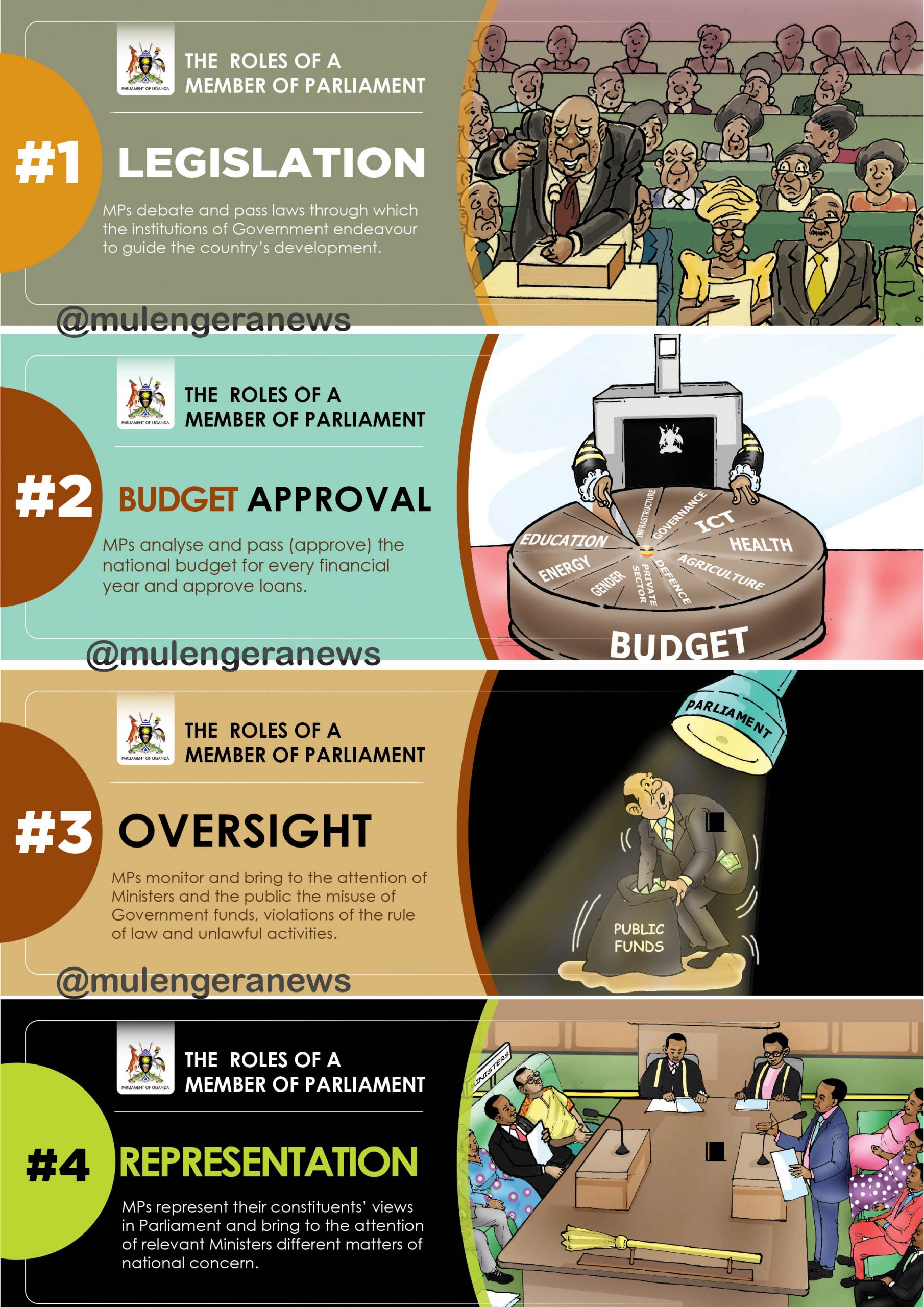
In sharp contrast, regime apologist Morrison Rwakakamba attempts to sanitize this constitutional erosion. In his response, Uganda’s Constitutional Order Under Stress, he relies on what James Madison famously described as “parchment barriers”—the comforting but misplaced belief that constitutional text alone can restrain political power determined to ignore it. Because Parliament continues to pass the national budget and courts occasionally grant bail, Rwakakamba concludes that Uganda’s constitutional order remains fundamentally intact. Invoking Articles 98 and 99 of the Constitution, he argues that Muhoozi’s extraordinary exercise of authority merely reflects presidential delegation rather than constitutional abdication.
This argument mistakes constitutional theatre for constitutional government.

The constitutional defect runs much deeper. The Constitution creates offices, allocates powers and prescribes the institutions through which those powers are to be exercised. Neither political convenience, military hierarchy nor familial relationships can lawfully create alternative centres of constitutional authority. Articles 98 and 99 vest executive authority in the President to be exercised in accordance with the Constitution and the law, while Article 208 defines the constitutional role of the UPDF. None authorizes the military to assume statutory powers vested in civilian regulators or other constitutional bodies.

The principle of legality is therefore decisive. Every exercise of public power must be traceable to a lawful source and exercised by the institution upon which the law confers it. The long-established rule delegatus non potest delegare reinforces this principle. Where military actors perform statutory functions assigned to civilian authorities—such as bypassing the Uganda Communications Commission to shut down independent media—they are not merely stretching executive discretion. They are, on any orthodox reading of administrative law, acting ultra vires.
The same constitutional reality is reflected in the relationship between the military and the judiciary. Courts derive their authority not from force but from obedience to the rule of law. When former Kampala Lord Mayor Erias Lukwago was reportedly abducted while acting as an officer of the court preparing to serve judicial process upon the Chief of Defence Forces, the issue ceased to be whether courts continue to sit or occasionally grant bail. The real question became whether judicial authority can be effectively exercised against those who command the coercive apparatus of the State. Constitutionalism survives only where the law binds the powerful no less than the ordinary citizen.
To understand why Rwakakamba’s defence fails, one must return to Professor Wangoola-Wangoola Ndawula’s analysis in The Problem of Busoga in the Problem of Uganda. The present crisis is not an abrupt constitutional rupture. It is the logical culmination of a trajectory that began in 1966, when Milton Obote abrogated the Independence Constitution and replaced civilian constitutional legitimacy with what Wangoola described as “Gun Power.” The National Resistance Army’s capture of power in 1986 did not dismantle that system; it institutionalized and refined it. The 1995 Constitution provided the language of constitutional democracy, while subsequent amendments removing presidential term limits in 2005 and age limits in 2017 ensured that political succession remained firmly under the control of the historic military establishment.

Today, that trajectory has reached its logical climax. Political authority has progressively retreated from national institutions and appears increasingly concentrated within a single familial core. Rwakakamba points to parliamentary proceedings, judicial activity and macroeconomic indicators as evidence that constitutional government remains healthy. Yet this confuses institutional form with constitutional substance. Personalized military regimes preserve legislatures and courts because they provide domestic and international legitimacy. Institutions continue to function, but increasingly within political boundaries established elsewhere.
Professor Titeca is therefore right. Constitutionalism is not proved by the continued existence of Parliament, functioning court registries or annual budget speeches. It is proved by whether public power remains subject to law rather than law becoming subordinate to power. The central question confronting Uganda is no longer whether the Constitution still exists on paper. It is whether constitutional authority still resides in the institutions created by that Constitution or has migrated to an extra-constitutional military centre of power. Until that question is honestly confronted, Parliament, the courts and other state institutions risk serving less as restraints upon arbitrary power than as actors in an increasingly elaborate theatre of legitimacy. The writer is a Senior Advocate and former Minister. (For comments on this story, get back to us on 0705579994 [WhatsApp line], 0779411734 & 041 4674611 or email us at mulengeranews@gmail.com).