








By Ben Musanje
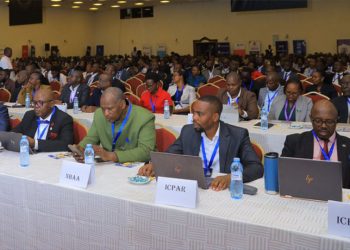
Equity Bank has unveiled a specialized School Bridge Financing Program in Central region aimed at addressing the unique financial challenges faced by private schools across Uganda, with more than 300 school heads and proprietors attending the launch event held at Hotel Africana in Kampala.
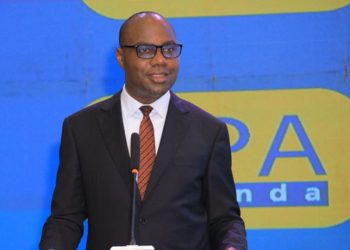
Speaking at the event, Olivia Mugaba, Head of Small and Medium Enterprises (SMEs) at Equity Bank, said the initiative was designed to help schools manage cash flow gaps during holiday periods when students are away and school fee collections decline, yet operational expenses continue.
“Schools operate differently from most businesses. Their cash flows are seasonal, but their expenses remain constant throughout the year,” Mugaba explained. “We wanted to discuss bridge financing solutions that help schools sustain operations during periods when they are not receiving school fees.”

She noted that many financial institutions structure school loans with monthly repayment schedules that do not align with the academic calendar, often resulting in financial distress for schools. Such challenges can lead to defaults and negative credit records, making it difficult for institutions to access future financing.

“Our approach is to structure financing around the schools’ actual cash flow cycles. By doing so, schools can comfortably meet their obligations without being unfairly burdened during holiday periods,” she said.
Beyond financing, Equity Bank is introducing digital fee collection solutions aimed at simplifying payment and reconciliation processes. Through the system, parents can make school fee payments directly from their mobile phones and schools receive instant notifications, enabling real-time tracking of payments.
Mugaba said the bank is also extending support to parents who may struggle to raise school fees at the beginning of a term. “We are looking at the entire ecosystem. If parents need support to pay fees, we want to provide solutions that ensure schools maintain sustainable collections while parents can meet their obligations,” she said.

The bank’s offering further includes comprehensive insurance packages covering schools, students, and financed assets. Mugaba highlighted the importance of insurance in safeguarding investments and ensuring business continuity.
“If a school building is damaged by fire or another disaster, insurance helps cover the losses. Similarly, students’ property can be protected while at school,” she explained.
She cited a recent case where a customer purchased a bus through bank financing, only for the vehicle to become irreparably damaged after sinking in a swamp a month later. Because the asset was insured, the customer was fully compensated and obtained a replacement bus without continuing to service a loan for a non-functional asset.
Equity Bank has already conducted similar engagements with schools in Northern, Eastern, and Western Uganda, with Kampala serving as the final stop in the nationwide outreach campaign.
The bank also used the event to educate participants on account opening procedures, access to overdrafts and other financing products, and the importance of proper financial record-keeping.
Mugaba revealed that Equity Bank offers free financial literacy training through its social investment arm, helping SMEs improve bookkeeping and financial management practices.
“Many businesses fail to access financing simply because they do not maintain proper records. We provide training, coaching, and guidance to help our customers build sustainable businesses and improve their chances of qualifying for loans,” she said.
The School Bridge Financing Program forms part of Equity Bank’s broader commitment to supporting Uganda’s education sector through innovative financial solutions tailored to its unique operational needs. (For comments on this story, get back to us on 0705579994 [WhatsApp line], 0779411734 & 041 4674611 or email us at mulengeranews@gmail.com).