







By Mulengera Reporters
As the world commemorates World Refugee Day, a quiet economic transformation is unfolding across Uganda’s refugee settlements. Thousands of refugees who once depended entirely on humanitarian assistance are now running businesses, accessing credit, saving money and contributing to local economies, thanks to growing access to financial services.
For decades, displacement has often meant more than the loss of a home. Refugees fleeing conflict and insecurity have frequently found themselves excluded from formal financial systems, unable to open bank accounts, access loans or build sustainable livelihoods due to a lack of documentation, collateral or banking infrastructure.
The result has been prolonged dependence on aid, with many displaced families struggling to regain economic independence long after finding safety in host countries.

In Uganda, however, that narrative is steadily changing.

As one of Africa’s largest refugee-hosting countries, Uganda has adopted one of the world’s most progressive refugee policies, granting refugees the right to work, move freely and establish businesses. These policies, combined with innovative financial inclusion initiatives, are creating opportunities for refugees to become active participants in economic development.
At the centre of this transformation is Equity Bank Uganda, which has partnered with humanitarian and development agencies to expand financial access for both refugees and host communities.
One of the bank’s most significant interventions has been facilitating humanitarian cash transfers through formal banking channels. To date, more than 132,699 refugee households have received support worth over Shs301.7 billion through Equity Bank’s digital banking network.

While the transfers have helped families meet immediate household needs and improve food security, they have also introduced thousands of refugees to formal banking services for the first time, opening pathways toward long-term financial inclusion and economic independence.
Access to financial services remains a major challenge in many refugee-hosting districts, where traditional banking infrastructure is often limited or non-existent. To bridge this gap, Equity Bank has deployed more than 262 banking agents across refugee settlements and surrounding host communities.
The decentralized network has brought banking services closer to communities, allowing refugees to open accounts, receive digital payments, save money and access financial products without travelling long distances.
The impact extends beyond convenience. By reducing dependence on cash-based aid systems, the initiative has encouraged greater participation in the formal economy while strengthening financial resilience among vulnerable households.
Perhaps the most transformative intervention has been access to credit.
Recognizing that traditional lending models often lock refugees out of financial opportunities, Equity Bank introduced a tailored credit programme that evaluates borrowers based on character, business potential and cash flow rather than conventional collateral requirements.
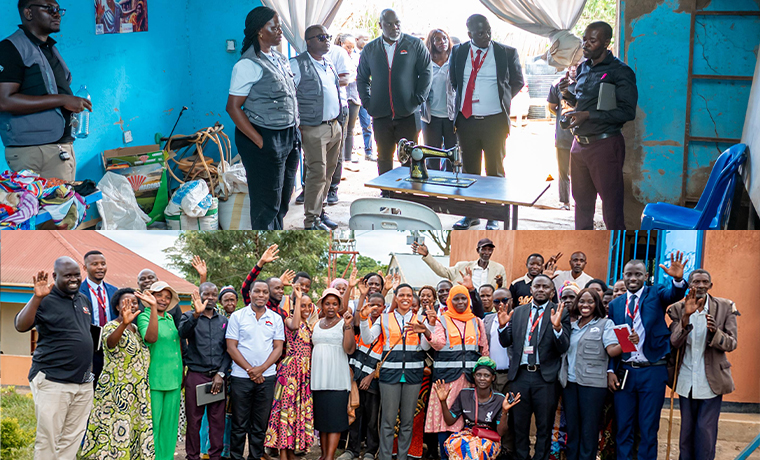
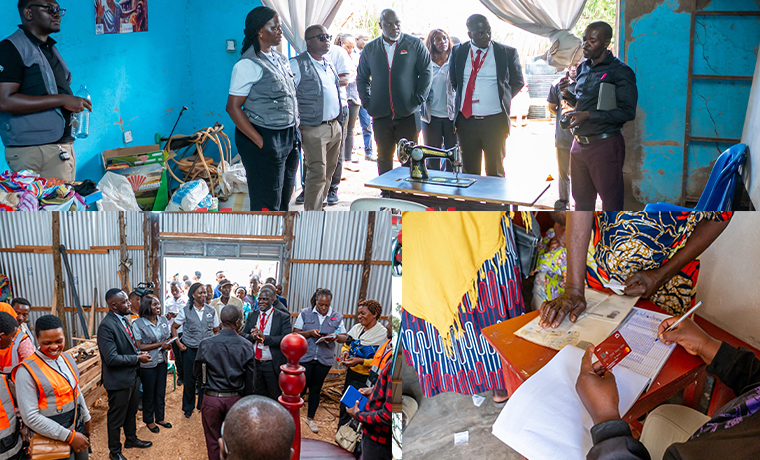
Over the last three years, 381 refugee groups have accessed loans worth Shs1.8 billion, financing enterprises ranging from tailoring businesses and retail shops to agricultural ventures and small-scale trading operations.
These enterprises are not only generating income for refugee families but are also creating jobs and stimulating economic activity within refugee settlements and neighboring communities.
The benefits have been particularly significant for women. Of the beneficiaries reached through the various financial inclusion initiatives, 7,182 are women compared to 3,867 men.
Development experts have long noted that women are more likely to reinvest earnings into household welfare, including education, healthcare and nutrition. As a result, empowering women financially often creates broader social and economic gains that extend beyond individual families.
The ripple effects are increasingly visible across refugee-hosting districts. As humanitarian funds flow through formal financial systems, local businesses benefit from increased spending, markets expand and employment opportunities emerge. The economic relationship between refugees and host communities is also strengthening, helping to promote social cohesion and shared prosperity.
What is emerging in Uganda’s refugee settlements is a different story from the one often associated with displacement.
Rather than being defined solely by vulnerability and dependence, many refugees are becoming entrepreneurs, employers and contributors to economic growth.
As the world reflects on the plight of displaced populations this World Refugee Day, Uganda’s experience offers an important lesson: refugees do not simply need assistance; they need opportunity.
When supportive government policies are combined with access to finance, strategic partnerships and inclusive financial systems, displaced people can rebuild their lives with dignity and become drivers of economic development.
Across Uganda’s refugee settlements, the future is increasingly being shaped not by aid alone, but by enterprise, resilience and opportunity. (For comments on this story, get back to us on 0705579994 [WhatsApp line], 0779411734 & 041 4674611 or email us at mulengeranews@gmail.com).