







By Aggrey Baba
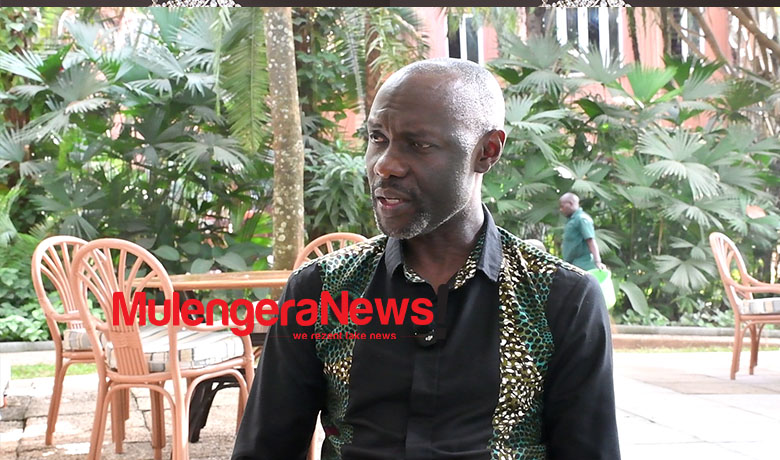
Eight years after he was appointed Uganda’s Ambassador to the United Arab Emirates (UAE), His Excellency Zaake Kibeedi has presided over a diplomatic tour that has increasingly focused on converting Uganda’s relationship with the UAE into investment, trade, tourism, skills development and employment opportunities.
Since taking up the UAE posting in 2018, Kibeedi’s work has gone beyond mere diplomatic engagements, with the embassy positioning itself as a link between potential UAE investors and Ugandan institutions responsible for implementing productive projects.


One of the areas where the mission has sought to make a difference is investor mobilization and verification.
Rather than simply connecting UAE businessmen to Uganda, the embassy, under Zaake Kibedi’s stewardship conducts background checks on prospective investors before referring them to relevant government agencies.

“Before we recommend investors to Uganda, we carry out due diligence on them,” Kibeedi said in an exclusive interview with this publication, explaining that the process involves understanding the investor, visiting their facilities and assessing their capacity before connecting them to institutions in Uganda.
Among the projects he highlighted was an investment by Abia Power in Arua, where the embassy helped facilitate engagements between the company and Uganda’s Ministry of Energy. The solar project, which started last year (2025), has since been completed, with the embassy continuing to support arrangements for its commissioning.
Another major project is the Emirates International Hospital in Entebbe, a specialized medical facility backed by UAE interests. The groundbreaking, Kibedi said was attended by Sheikh Abdullah, the UAE Minister of State for Foreign Affairs, following engagements between the two countries. The project is expected to be completed within about 12 months, according to Kibeedi.
The embassy has also been working to attract investment across sectors considered critical to the country’s economic transformation, including agro-processing, mining, hospitality, infrastructure, energy, finance and logistics.
The strategy has been to move from investment pledges at conferences to actual projects on the ground by maintaining contact with investors and following up on the implementation process.
“We follow up from the beginning to the end,” Kibeedi said.
Tourism has been another major area of focus, particularly efforts to attract UAE investors into Uganda’s hospitality industry, with Kibedi saying that the mission has supported initiatives involving hotel and lodge developments, including investments targeting Uganda’s national parks and the expansion of high-end accommodation and conference facilities.
The thinking behind this strategy is that Uganda must provide the kind of tourism infrastructure capable of attracting visitors from UAE and encouraging longer stays.
The diplomatic push has also extended to skills development, particularly for Ugandans seeking employment in the UAE.
The embassy, according to the Ambassador, has promoted the idea that Ugandans should increasingly leave the country with skills that enable them to compete for better-paying jobs instead of depending largely on low-skilled labour.
This has included supporting training initiatives such as Busoga International Polytechnic in Bugembe, which has received support from a UAE investor, as well as exploring training opportunities linked to international companies operating in the UAE.
The embassy has argued that better preparation of Ugandan workers could increase their earnings while reducing some of the challenges associated with labour migration.
“If you’re a skilled worker, on average you’ll earn USD 1,000,” Kibeedi said, contrasting skilled employment with the peanut salaries for casual workers (bakadama).
His eight-year tenure has therefore been characterized by an attempt to give economic diplomacy a more practical meaning, from mobilizing investment, opening business opportunities, supporting tourism, facilitating projects to encouraging skills transfer.
The UAE has also grown into an important destination for Ugandan products and a significant source of remittances, giving the diplomatic relationship a direct connection to Uganda’s economy and households.
Kibeedi’s tenure has coincided with a significant expansion of the Ugandan community in the UAE and deeper commercial links between the two countries, with now over 150,000 Ugandans working in the Gulf state, compared to only 50,000 by the time he was posted there.
The embassy’s role has consequently expanded from simply representing Uganda to also helping Ugandan businesses access the UAE market, protecting the interests of Ugandan workers and encouraging investors to consider Uganda as a destination.
The record, however, will ultimately be judged not by the number of diplomatic meetings held but by how many investment commitments become sustainable businesses, how many jobs are created and how much value Uganda derives from its relationship with the UAE.
The eight years in Abu Dhabi for Kibedi have been an effort to make that diplomatic relationship increasingly visible in the economy of his country back home. (For comments on this story, get back to us on 0705579994 [WhatsApp line], 0779411734 & 041 4674611 or email us at mulengeranews@gmail.com).