






By Ben Musanje
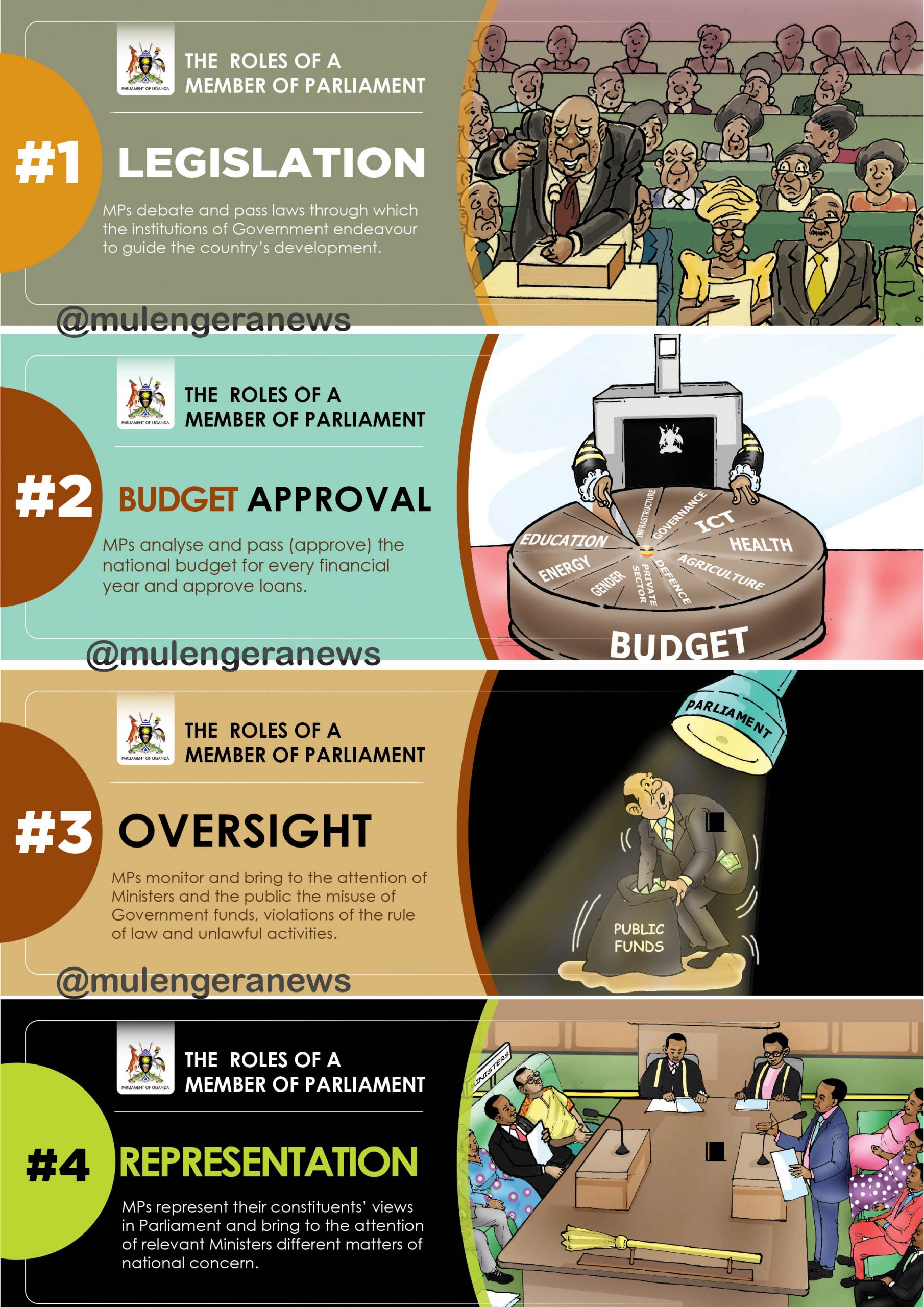
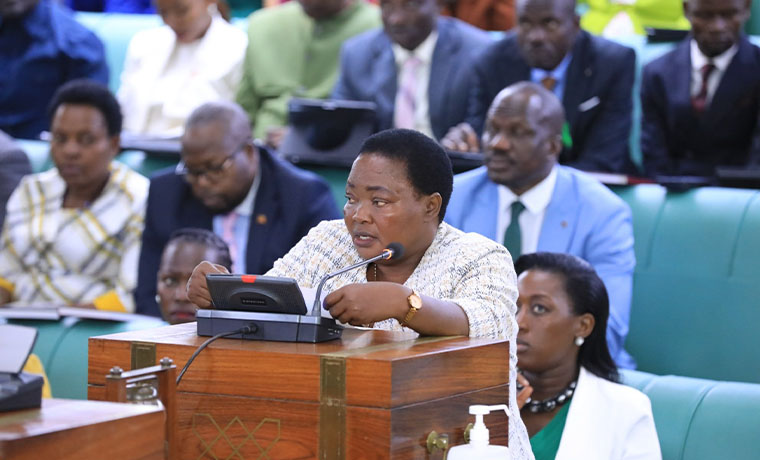
Women Members of Parliament dominated the Prime Minister’s Time session in Parliament, pressing Prime Minister Robinah Nabbanja for updates and government action on stalled road projects, flood disasters, drought, education gaps and other challenges affecting their constituencies.
The lawmakers used the session to highlight pressing concerns from their areas, demanding explanations and timelines from government on interventions meant to improve livelihoods and service delivery.
The most urgent concern came from Madi-Okolo Woman Representative Joanne Okia Aniku, who asked the Prime Minister to explain when government would compensate residents whose villages have remained submerged for years following flooding linked to the Wadelai Irrigation Scheme in neighbouring Pakwach District.

Okia told Parliament that three villages in Madi-Okolo have been underwater since 2022, leaving hundreds of residents unable to access their homes and farmland. She said the district had already prepared a disaster report and affected residents had opened bank accounts in anticipation of compensation, but they had waited for nearly four years without receiving support.

She added that the flooding had disrupted even basic civic activities, noting that some residents were forced to swim through flooded areas during elections to access polling stations.
“The affected persons have been waiting for compensation, already opened bank accounts, but for four years have not had access to the land because it is completely submerged,” Okia told Parliament.
In response, Prime Minister Nabbanja acknowledged the suffering of the affected communities, saying she was aware of the situation after personally visiting the Wadelai Irrigation Scheme area.

Nabbanja asked the legislator to formally write to her office to enable follow-up action, assuring Parliament that government would intervene.
“I know that problem. I was in the Wadelai irrigation scheme, and yes, those people are suffering,” Nabbanja said, adding that the matter would be handled.
Beyond flooding, women legislators also raised concerns over delayed infrastructure projects, with Kassanda Woman MP Rebecca Atukunda seeking clarification on the long-awaited construction of the Myanzi-Kasanda-Bukuya-Kiboga road.
Atukunda said residents of Kassanda had grown increasingly concerned over delays after being informed that the project could take several years before implementation.
Nabbanja responded that the road was a government priority under the National Development Plan Four and the ruling party’s manifesto. She explained that while the Ministry of Works had continued maintaining the road to keep it motorable, government was looking for resources to upgrade it to a tarmac road.
She said the road, which stretches from Myanzi through Kasanda and Bukuya to Kiboga, remained among the priority projects awaiting funding.
Zombo Woman MP Topista Acamfua also used the session to seek updates on the Goli-Paida-Vura road project, reminding government of a previous commitment that construction would begin.
She asked whether the contract for the project had been signed and when residents could expect works to start.
Nabbanja assured the legislator that the Goli-Nebbi road project was a priority and had been provided for in the current financial year budget, with implementation expected after release of funds.
Agriculture and food security also featured prominently, with Koboko Woman MP Sharifah Taban Aate raising concern over drought affecting communities in West Nile.
Aate said many families were facing food shortages and questioned when her district would benefit from the government’s agricultural tools distribution programme, particularly the supply of hoes.
State Minister for Agriculture Robert Migadde Ndugwa explained that the distribution exercise had started in some areas and was continuing depending on availability of resources.
Kumi Woman MP Christine Apolot added her voice to the drought concerns, saying communities in Teso Sub-region were struggling with dry conditions that had destroyed gardens.
She asked government to provide farmers with seedlings and planting materials, especially cassava, to help households recover.
Prime Minister Nabbanja said her office had prepared a Cabinet paper aimed at addressing drought challenges in Karamoja and neighbouring areas, adding that the intervention could eventually cover more districts affected by the crisis.
Meanwhile, Kwania Woman MP Kenny Auma questioned government’s slow progress in establishing technical institutes across districts, saying some areas were still without vocational training facilities despite an existing government policy.
Nabbanja confirmed that government’s plan was to establish technical institutes across districts but said implementation depended on available resources. The Minister of State for Primary Education, Phyllis Chemutai, explained that construction of vocational institutions was being undertaken under the National Development Plan and would follow government investment priorities.
The session also heard concerns over health services, education gaps in Karamoja and the need for improved water management systems to address recurring drought.
Overall, the questions raised by women MPs reflected growing pressure on government to accelerate development projects, respond to climate-related disasters and ensure that communities across the country benefit from public investments. (For comments on this story, get back to us on 0705579994 [WhatsApp line], 0779411734 & 041 4674611 or email us at mulengeranews@gmail.com).