






By Morrison Rwakakamba
Advocate Asuman Kiyingi, thank you for your thoughtful reply. In my earlier response, I directly addressed the questions you raised, drawing on Uganda’s constitutional text, practice, and real-world examples. I did not evade them. Nevertheless, you return to what you call the central question: “Where does effective public power actually reside, and are the powers created by the Constitution still being exercised by the institutions to which the Constitution entrusts them?” This inquiry deserves a clear answer.
The 1995 Constitution of Uganda (as amended) places executive authority squarely with the President. Article 98 establishes the President as Head of State, Head of Government, Commander-in-Chief of the Uganda People’s Defence Forces, and the Fountain of Honour. Article 99 vests “the executive authority of Uganda” in the President, to be exercised “in accordance with this Constitution and the laws of Uganda.” The President must execute and maintain the Constitution and all laws, promote the welfare of citizens, and protect the country’s territorial integrity. These powers are real and substantial — but they are not unlimited.
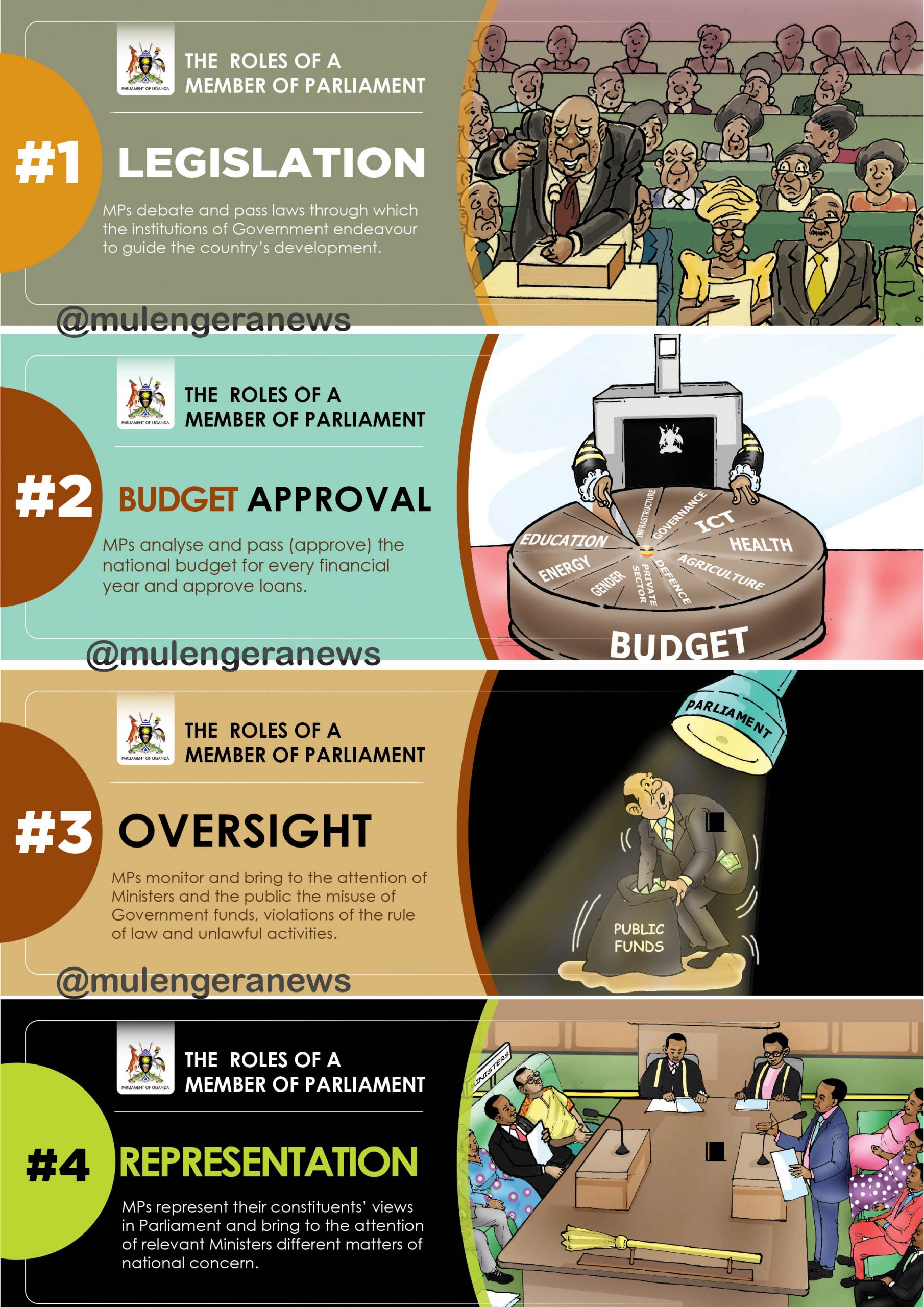
In daily governance, the President exercises these powers within clear legal channels. Appointments of ministers, key officials, and heads of constitutional bodies require parliamentary approval or recommendations from independent commissions. National budgets, major policies, and laws must pass through Parliament. The judiciary reviews executive actions for constitutionality. This is not mere formality; it is how government functions. The President leads, but operates alongside co-equal branches and statutory bodies.

Uganda’s constitutional history shows that overreach happens and has been checked. The Constitutional Court and Supreme Court have examined major executive initiatives. For instance, in the 2017 age-limit amendment case, the courts scrutinized the process and substance amid public and parliamentary debate. While the amendment was ultimately upheld, the judicial process highlighted limits on power and the role of independent institutions in upholding constitutional standards. Earlier, Justice George Kanyeihamba’s strong dissent in the 2006 presidential election petition called for nullification due to irregularities, demonstrating judicial willingness to restrain perceived executive dominance.

A practical example of restraint appears in fiscal matters. Indeed, fiscal matters emanate from Article 155 of the Constitution which mandates presidential budget requests to parliament ensuring legislative oversight and accountability. Presidential directives on tax waivers or reliefs (for sectors or emergencies) often require implementation by the Ministry of Finance and Uganda Revenue Authority under the Income Tax Act and East African Community protocols. In several cases, full implementation has been adjusted or declined unless aligned with these laws. Parliament has also pushed back on certain proposals, such as aspects of diaspora remittances taxation. The President has publicly noted these institutional processes, sometimes describing his advocacy for policies as operating like a “lobbyist” within the system. This reflects checks and balances at work, not weakness.
I am a believer in the independence of the media and the contestation of ideas. I do not subscribe to media acting as a public relations platform for the government. However, I will restrict myself to addressing the legality question you raise.
To your point on the principle of legality and the Nation Media Group case: The Constitution distributes public power deliberately, and institutional boundaries are constitutional safeguards. But delegated presidential authority and lawful coordination between civilian and security agencies do not equal “arbitrary power” or displacement of civilian regulators. Under Article 99, the President exercises executive authority directly or through subordinate officers, including in national security matters. The Uganda Peoples’ Defence Forces Act and related security laws provide for coordination between the executive, military, and civilian bodies like the Uganda Communications Commission (UCC) when public order, broadcasting standards, or national security are at stake. Military support in enforcement does not bypass legality; it operates within a coordinated chain of command under presidential authority.

Grievances against media operations can trigger lawful responses through established channels — regulatory oversight by UCC or security measures where content or activities pose risks. This is not informal migration of power but the executive branch fulfilling its constitutional duty to maintain order, with civilian institutions retaining oversight and review powers. Courts, Parliament, and regulators remain available to examine compliance. Claims of pure “military command” overriding civilian authority overlook this legal framework of delegation and coordination.
The closure of the Monitor is not a new event. It has happened before and been resolved legally or administratively within the bounds the constitution. In the 2013 incident, security agencies shut down the Daily Monitor and related outlets following publication of sensitive material. Courts later ruled the actions unlawful. The government was ordered to pay compensation — ultimately settling approximately Shillings 3.1 billion (including damages, interest, and costs) to Monitor Publications. This shows the system working: when government oversteps, independent courts intervene, and compensation follows. It affirms constitutionalism and the doctrine of legality in practice.
Institutions matter, but they depend on the people who run them. As the scholar De’John from the London School of Economics has noted, institutions are only as strong as the individuals who occupy their positions. Norms and procedures provide the framework, but weak or compromised leaders without a strong backbone and stomach lining can undermine even the best-designed systems. Strong, principled office-holders — in the executive, Parliament, judiciary, or civil service — keep institutions alive and effective. This is why vigilance of the people must remain on the high to keep officialdom on the check.
Uganda’s constitutional thinkers have long warned of these risks. Professor George Kanyeihamba, a key architect of the 1995 Constitution and fearless judge, stressed that the document must be defended through vigilant institutions and citizens. His dissents emphasized courage against irregularities. Historian Samwiri Rubaraza Karugire, in his works on Uganda’s political past, showed how personalized power and weak institutions have led to instability. Both urged fidelity to constitutional rules and accountable leadership rooted in history’s lessons.
As Pope Leo XIII reminded us in his encyclical Immortale Dei, “The Almighty has given the charge of the human race to two powers, the ecclesiastical and the civil… Each in its kind is supreme… They ought… to live together in harmony.” This underscores that legitimate authority must operate within moral and legal limits — a principle that aligns with our Constitution’s emphasis on accountable power.
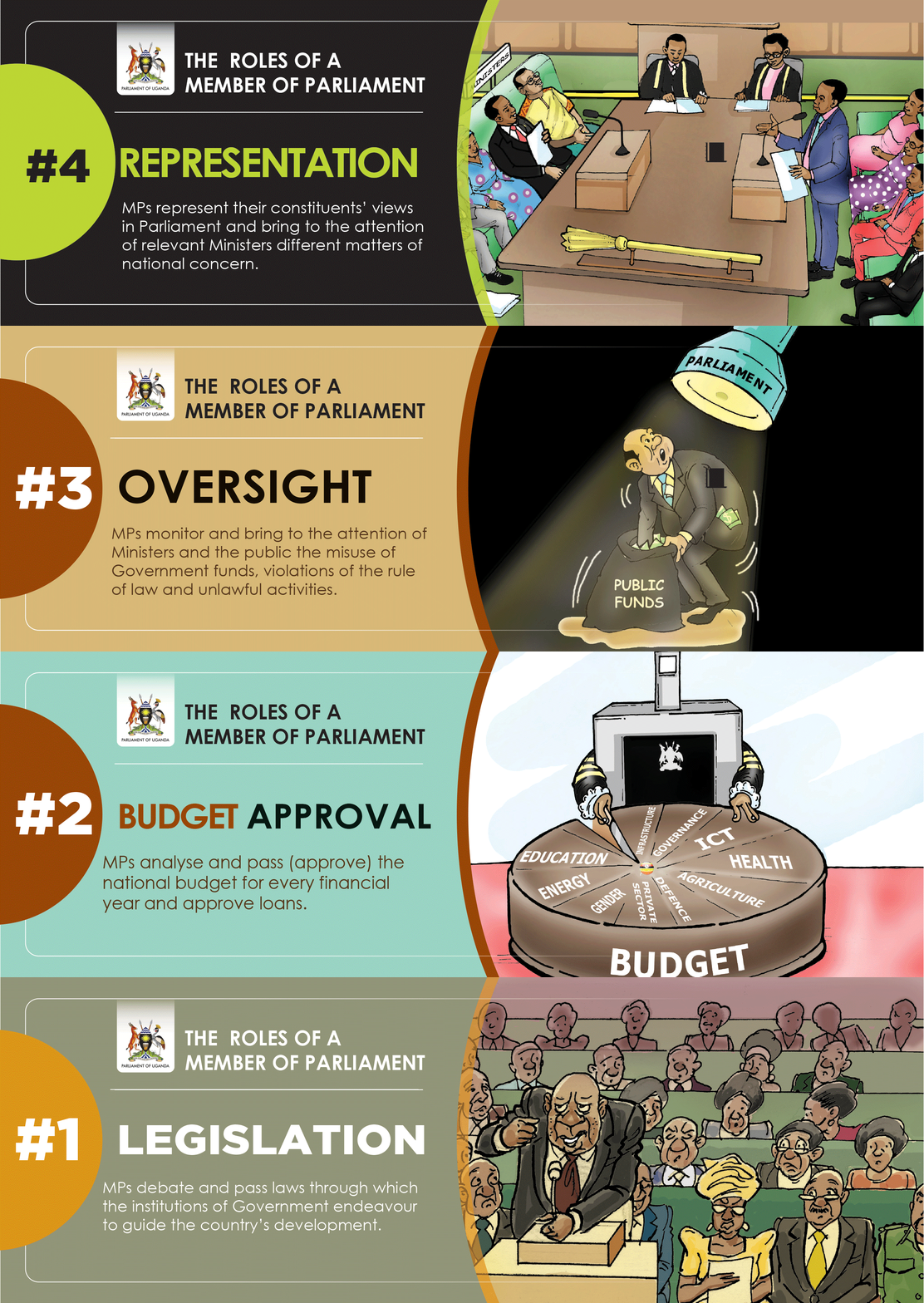
To your statement — “More often, constitutional forms survive while effective authority gradually migrates from legally accountable institutions to informal centres of power that increasingly determine public outcomes without assuming corresponding constitutional responsibility” — I offer clarity and comfort: Institutions in Uganda continue to undertake their constitutional responsibilities with real accountability, even under strains. Parliament debates and shapes laws, courts deliver judgments that check power, oversight bodies investigate, and ministries implement policy within legal bounds.
In cases like NMG, executive coordination with security agencies followed delegated authority and legal frameworks — not informal displacement. Past incidents, such as the 2013 closure, show that when wrong occurs, courts rule and compensation is paid. Power has not migrated to unaccountable informal centres; formal institutions still exercise their entrusted roles daily, with room for review, appeal and correction. The Constitution holds firm as a living framework guiding our republic.
The real task is not to deny challenges but to strengthen the guardians of the Constitution. Debate helps. Uganda’s future depends on institutions that work in practice, led by individuals who uphold the rule of law and people who pursue good trouble through insisting on the truth and what is right. Morrison Rwakakamba, Coffee farmer based in Rukungiri. (For comments on this story, get back to us on 0705579994 [WhatsApp line], 0779411734 & 041 4674611 or email us at mulengeranews@gmail.com).