






By Mulengera Reporters
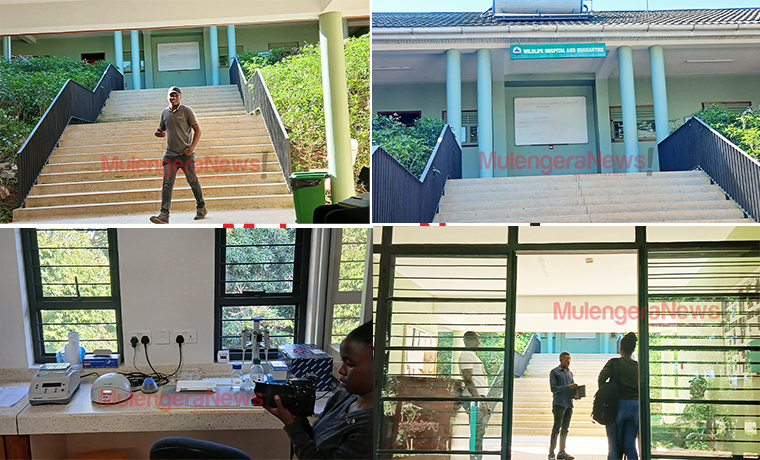
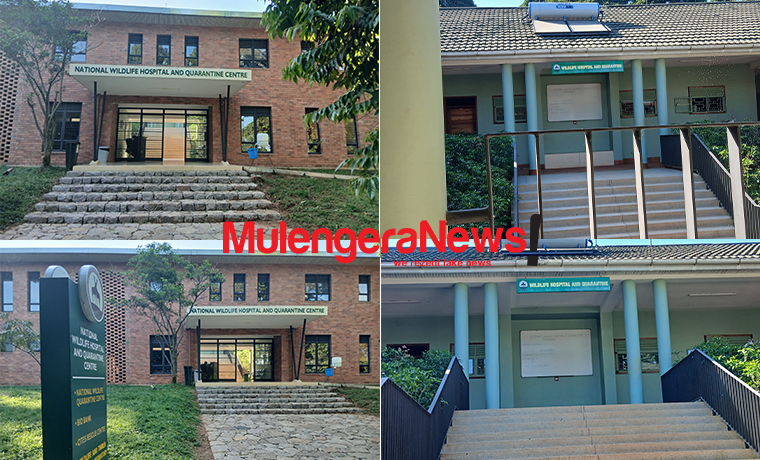
Hidden within the grounds of the Uganda Wildlife Conservation Education Centre (UWEC) in Entebbe lies a highly specialized facility that has become a critical weapon in Uganda’s fight against wildlife crime and illegal logging. The Uganda Wildlife and Timber Forensics Laboratory, the country’s only operational and certified wildlife forensic laboratory, is using advanced DNA technology to uncover the truth behind poaching, wildlife trafficking, and illegal timber harvesting.
According to Emmanuel Muhumuza, a Wildlife Forensic Lab Scientist at the facility, the laboratory serves as a scientific bridge between conservation enforcement agencies and the justice system by identifying the species origin of biological and timber samples submitted as evidence in criminal investigations.
“We are currently the only wildlife forensic laboratory in Uganda that is operational and certified,” Muhumuza explained during a tour of the facility. “We receive exhibits from investigators, police, wildlife authorities, and other law enforcement agencies and use DNA analysis to identify the species from which these materials originated.”

The exhibits handled by the laboratory vary widely. They can include ivory, meat samples, blood, hair, tissue swabs, and other biological materials that may have been seized during anti-poaching operations or wildlife trafficking investigations. The laboratory also examines timber and forest products suspected to have been harvested illegally.
For conservation agencies, the work is invaluable because wildlife products are often recovered after animals have already been killed and processed beyond recognition.
“When animals are poached, the traditional features used for identification are usually destroyed,” Muhumuza said. “You may not find an elephant in the market. You may only find ivory or a piece of meat. In such cases, traditional identification methods become difficult or impossible. That is where DNA comes in.”
The laboratory employs sophisticated scientific procedures to extract DNA from submitted samples. Scientists then perform Polymerase Chain Reaction (PCR) testing and DNA sequencing to generate genetic profiles that can be compared against reference databases. The resulting analysis helps determine the exact species involved in a case.

Once testing is completed, forensic scientists prepare detailed reports that are submitted to the institutions that requested the analysis. These reports frequently become key pieces of evidence in criminal prosecutions.
“The overall goal is that justice is served,” Muhumuza said. “The reports help determine whether a suspect was indeed found with wildlife products or illegally logged timber, and they can be used in court proceedings.”
The laboratory’s role extends beyond wildlife conservation to supporting forest protection efforts. Through collaboration with the National Forestry Authority (NFA), scientists help identify timber species that may have been harvested or transported illegally.
Some tree species are protected by law and require special permits for harvesting. However, once trees are cut into logs, visual identification can become challenging.
“If a truck carrying timber is intercepted and authorities cannot determine which species are being transported, samples can be brought to the laboratory,” Muhumuza explained. “Using DNA analysis, we can identify the species and provide a report that can be used in enforcement actions, court cases, or even tax assessments.”
The laboratory’s expertise can also help verify claims made by timber traders and furniture manufacturers regarding the type of wood used in their products. Whether a chair is truly made from mahogany, for example, can be scientifically determined through genetic analysis.
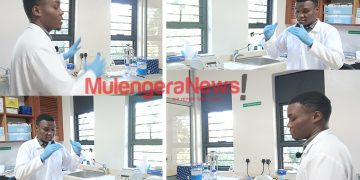
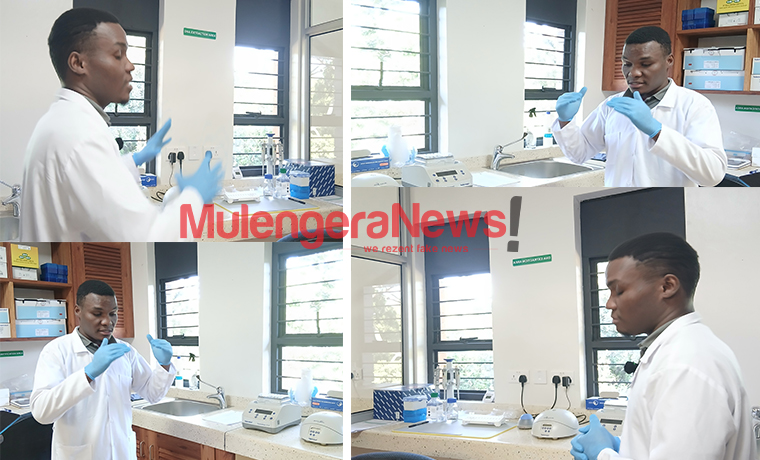
Inside the facility, strict procedures are followed to prevent contamination of samples. The laboratory is divided into separate workstations, each designed for a specific stage of the forensic process.
“Because of the nature of the work we do, we try to avoid contamination as much as possible,” Muhumuza said. “We have different sections where DNA extraction, amplification, sequencing, and analysis take place.”
Scientists use commercial DNA extraction kits and highly controlled protocols to obtain genetic material from even the smallest traces of biological evidence. Although the procedures vary slightly depending on whether the sample is wildlife material or timber, all cases generally follow the same forensic pipeline.
One of the laboratory’s strengths is the speed at which results can be generated. Muhumuza said that reports are typically completed within five days of receiving samples.
The cost of conducting a DNA forensic analysis ranges between approximately $50 and $80 per case, depending on the nature of the investigation. However, the laboratory does not operate as a commercial service provider.
Government agencies and organizations working in partnership with the government on conservation matters can access the services free of charge.
“As long as you are a registered entity working with the government and the goal is conservation, we provide the service at no cost,” Muhumuza said.
The laboratory’s work has become increasingly important as awareness of forensic science grows among enforcement agencies. Since beginning operations, the facility has experienced a significant rise in the number of cases submitted for analysis.
“When we first started handling casework, we only received about 20 cases in an entire year,” Muhumuza revealed. “Since then, the number has increased many times over due to growing awareness and increasing confidence in our capabilities.”
The rise in case numbers reflects broader efforts by Uganda’s conservation institutions to strengthen enforcement against environmental crimes. Agencies such as the Uganda Wildlife Authority (UWA), the National Forestry Authority, the Uganda Police Force, and the Uganda Revenue Authority increasingly rely on scientific evidence to support investigations and prosecutions.
Despite its growing relevance, the laboratory faces significant challenges.
Muhumuza cited limited funding, inadequate staffing, and resource constraints as major obstacles to expanding services. Ideally, he said, Uganda would have similar forensic facilities in multiple regions to improve access and accelerate investigations.
“There are many cases across the country,” he said. “Ideally, every region should have a facility like this. But because funding is limited, this remains the only one.”
The shortage of specialized personnel presents another challenge. Wildlife forensic science is a highly specialized field requiring expertise in genetics, molecular biology, evidence management, data analysis, and legal procedures.
According to Muhumuza, the laboratory operates through a collaborative team effort involving investigators, analysts, reviewers, and communicators, each playing a distinct role in the forensic process.
“Everyone has a different responsibility,” he explained. “There are investigators, analysts, reviewers, and others involved. We are not working alone, but we would still like to have more personnel.”
Although the laboratory focuses primarily on Ugandan cases, Muhumuza noted that neighboring countries such as Kenya, Tanzania, and Rwanda have established similar facilities to support wildlife law enforcement within their own jurisdictions.
Perhaps the most visible impact of the laboratory’s work occurs in the courtroom. Forensic reports generated by the facility are regularly presented as evidence in prosecutions involving wildlife crime and illegal timber trade.
Court appearances by forensic experts have become a routine part of ensuring that scientific findings contribute directly to law enforcement outcomes.
While Muhumuza is cautious about claiming direct impacts on wildlife population growth or animal lifespan, he acknowledges that stronger enforcement can contribute to conservation by deterring poaching and illegal exploitation of natural resources.
“Our work is largely post-mortem,” he said. “We deal with evidence after animals have died or after products have been seized. But by helping enforce conservation laws, the laboratory plays an important role in protecting Uganda’s wildlife and forests.”
As wildlife trafficking networks become increasingly sophisticated, the role of forensic science is expected to grow. For Uganda, the laboratory in Entebbe represents a crucial line of defense—one where science, conservation, and justice converge in the fight to protect the nation’s natural heritage. (For comments on this story, get back to us on 0705579994 [WhatsApp line], 0779411734 & 041 4674611 or email us at mulengeranews@gmail.com).