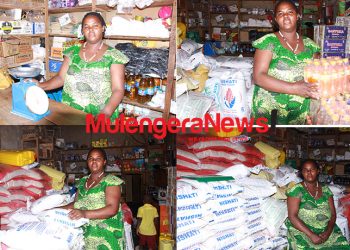








By Mulengera Reporters
For many people forced to flee their countries because of conflict, insecurity and personal loss, finding safety is only the beginning of a difficult journey. Rebuilding their lives, securing livelihoods and providing for their families often become the next major challenges.
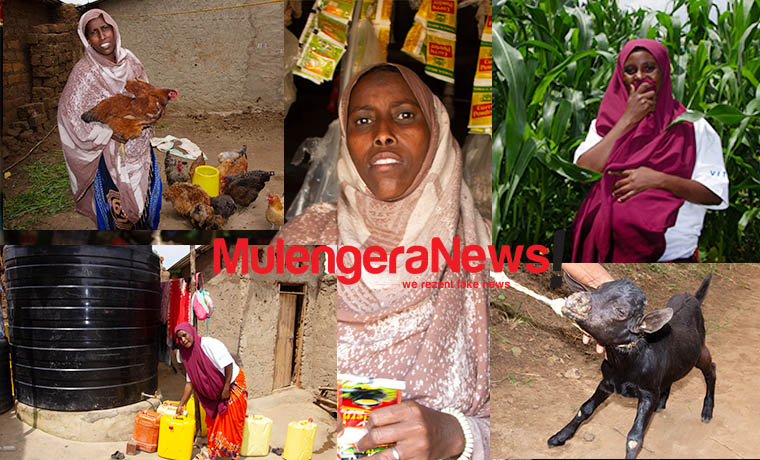
For two Somali refugee women living in Nakivale Refugee Settlement in Isingiro District, Western Uganda, the painful memories of displacement have not extinguished their determination to build better futures. Instead, they are turning to entrepreneurship, using agriculture, livestock rearing, water sales and small businesses to generate income and support their families.
Through the Generating Growth Opportunities and Productivity for Women Enterprises (GROW) Project, the two women have accessed financing to expand their enterprises, acquire productive assets and pursue their ambitions of economic independence.

Safiyo: From eight goats to 50, then a devastating setback
Safiyo Idiris Abubaker arrived in Uganda in 2022 with her husband and other family members after fleeing difficult circumstances in Somalia. Before reaching Uganda, the family had first sought refuge in Kenya, but the conditions they experienced there were unsatisfactory, prompting them to continue their search for a safer environment.
They eventually settled in Nakivale Refugee Settlement, where Safiyo began rebuilding her family’s livelihood.
Determined to become economically self-reliant, she started farming on a small piece of land before venturing into goat rearing. As the enterprise grew, she and her husband sought financing from UGAFODE Microfinance Limited to expand their agricultural activities.
When the GROW Project extended its financing opportunities to Nakivale, Safiyo saw another opportunity to accelerate her business growth.
She accessed a Shs5 million GROW loan through UGAFODE, with a repayment period of 12 months and monthly instalments of Shs460,000. The financing came at a lower interest rate than the loans she had previously accessed.
The additional capital helped her expand her goat-rearing enterprise from eight goats to approximately 50 within a relatively short period.
However, her progress recently suffered a major setback when an outbreak of foot-and-mouth disease struck her livestock, killing 42 goats. Only eight survived.
The loss was devastating and created additional pressure as she continued meeting her monthly loan repayment obligations.
Despite the setback, Safiyo has refused to abandon her entrepreneurial ambitions. To diversify her income, she invested in a 10,000-litre water tank and established a water-selling business in Kisura C Village, Rushasha Parish, Rugaaga Sub-county, within Nakivale.
She sells a 20-litre jerrycan of water at Shs1,000, benefiting from the high demand in the area. She also purchased a motorcycle that generates Shs40,000 in weekly income.
The water business has proved particularly valuable. Its proceeds enabled her to settle a separate Shs4 million financial obligation within six months.
At times, however, she has to sell one of her eight surviving goats for between Shs180,000 and Shs190,000 to raise money for her monthly GROW loan instalment.
Safiyo also grows beans and maize, owns a banana plantation and keeps chickens and ducks as part of her efforts to diversify household income.
Her husband has remained supportive throughout these challenges. Despite the livestock losses, she hopes to complete repayment of her current loan and access another facility to rebuild and expand her goat-rearing business.
Aminah: Turning savings and a Shs5 million loan into a growing business
A few houses away from Safiyo lives another Somali refugee entrepreneur, Aminah Ahmed Yusuf, whose journey into business was also shaped by personal loss.
Aminah fled Somalia following the death of her husband, seeking safety in Uganda and better educational opportunities for her seven children.
After settling in Nakivale, she started a grocery shop in 2024 to generate income for her household. Through savings accumulated with a local women’s savings and credit cooperative organisation (SACCO), she later purchased a 3,000-litre water tank and ventured into selling water.
When GROW financing opportunities reached Nakivale, Aminah saw an opportunity to expand her enterprise.
She accessed a Shs5 million loan from UGAFODE Microfinance Limited, repayable over 12 months, with monthly instalments of Shs460,000.
Although she had never accessed a loan before, she secured the financing with the support of guarantors, including her neighbour Safiyo and Rahma Hassan Ibrahim, the Vice Chairperson of the Refugee Welfare Council (RWC) in Kisura C Village.
The loan enabled her to acquire a motorcycle and an additional 5,000-litre water tank, increasing her capacity to serve customers.
Her business activities have also created opportunities for two other people. She engages one man to operate the motorcycle as a boda boda rider and another to look after her goats, under separate working arrangements.
Aminah also keeps 10 goats, adding livestock rearing to her growing portfolio of income-generating activities.
Beyond business expansion, her greatest motivation remains the welfare and education of her seven children. The income generated from her enterprises helps her meet household needs and support their education.
GROW: Opening economic opportunities for refugee women
The experiences of Safiyo and Aminah demonstrate the economic potential of refugee women when they have access to financing and business development opportunities.
Funded by the World Bank, the GROW Project is implemented by the Ministry of Gender, Labour and Social Development in partnership with the Private Sector Foundation Uganda (PSFU). It supports women-owned micro and small enterprises to grow through access to affordable financing, business training and other enterprise development services.
The project has expanded into Nakivale Refugee Settlement in Isingiro District to help refugee women grow their businesses and establish sustainable livelihoods as traditional humanitarian assistance gradually declines.
Through participating financial institutions, including Centenary Bank and UGAFODE Microfinance Limited, women entrepreneurs can access GROW-supported loans designed to address barriers such as limited collateral and credit history. The project also provides opportunities through the GROW Business Plan Competition Grant for qualifying women-owned enterprises, alongside financial literacy, mentorship and business development support.
For Safiyo and Aminah, access to financing represents more than obtaining business loans. It is an opportunity to invest in productive assets, diversify income, create employment and build a more secure future for their families.
Although their journeys have been marked by displacement, personal loss and business setbacks, both women remain determined to grow their enterprises.
Their stories demonstrate that refugee women are not merely recipients of humanitarian assistance. With access to finance and the right opportunities, they can become entrepreneurs, employers and active contributors to the economic development of their communities. (For comments on this story, get back to us on 0705579994 [WhatsApp line], 0779411734 & 041 4674611 or email us at mulengeranews@gmail.com).