





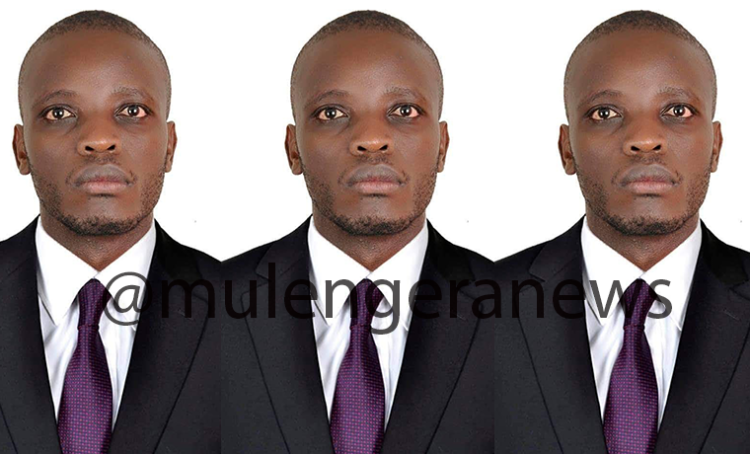
By Atwemereireho Alex
In the high chambers of the Kampala High Court on Monday, 29 December 2025, Justice Emmanuel Baguma delivered a ruling that will reverberate far beyond the stone walls of Courtroom No. 335. In a drama that has occupied the conscience of Ugandans and unsettled international observers for more than a year, the learned judge denied bail for the fourth time to veteran opposition leader Col. (Rtd) Dr. Kizza Besigye and his co-accused Hajji Obeid Lutale, directing that plea taking must first be conducted before any further application for bail could be entertained. It was a moment dense with legal symbolism, political consequence, and constitutional anxiety, crystallising the enduring tension between procedural orthodoxy, human dignity, and the promise of justice under a constitutional order.
This ruling is not merely another procedural waypoint in a protracted criminal process. It is a jurisprudential mirror held up to the Ugandan State itself, compelling interrogation of how power is exercised, how liberty is constrained, and how courts interpret their role in times of political stress. At stake is not only the fate of two accused persons, but the credibility of the rule of law as a living, breathing guarantee rather than a rhetorical ornament.


Dr. Kizza Besigye’s presence in the dock cannot be divorced from history. A physician by training, a former combatant in the National Resistance Army, and once a close confidant of President Yoweri Kaguta Museveni, Besigye has for over two decades been the most consistent face of electoral opposition in Uganda. He has contested the presidency four times, each time under conditions questioned by domestic and international observers, and each time followed by arrest, prosecution, or confinement. Independent human rights data indicate that since 2001, opposition actors account for a dominant proportion of politically related arrests in Uganda, with Besigye alone having been detained well over one hundred times. This historical continuum matters, because law does not operate in a vacuum; it operates within political realities that shape both perception and effect.
The current proceedings trace their roots to November 2024, when Besigye was seized during a visit to Nairobi and returned to Uganda under circumstances that provoked serious diplomatic and legal concern. He was subsequently detained alongside Hajji Obeid Lutale and Capt. Dennis Oola on allegations, including treason, one of the gravest offences under Uganda’s Penal Code Act, carrying the most severe penalties known to law. The accused have consistently denied the charges, maintaining that they are politically contrived and calculated to neutralise dissent. An initial attempt to process the matter before a military tribunal was later impugned and abandoned, following jurisprudence affirming that civilians and retired officers cannot be subjected to military courts for ordinary criminal offences. The case was thereafter transferred to the High Court, but not before months of incarceration whose legality remains deeply contested.
Justice Baguma’s ruling rests on two interlinked determinations: first, that bail could not properly be considered before plea taking; and second, that plea taking should proceed without further delay. The court observed that although the accused had been committed to the High Court as early as 29 May 2025, the defence had filed multiple applications and constitutional references which, in the court’s view, impeded the orderly taking of plea. In insisting on procedural sequence, the judge projected an image of judicial firmness and managerial control over the docket.
Yet it is precisely here that the ruling invites robust scrutiny. The Constitution of the Republic of Uganda, 1995, is explicit in its normative commitments. Article 28(3)(a) entrenches the presumption of innocence, a principle that is not decorative but operative. Article 23 safeguards personal liberty and, under Article 23(6)(c), provides that a person charged with an offence triable only by the High Court, who has been on remand for 180 days before trial, is entitled to apply for mandatory bail. The purpose of this provision is unmistakable: to prevent pre-trial detention from mutating into punishment without conviction.
The interpretation adopted by the court that the 180 days begin to run only from the point of formal civilian charge – excluding earlier periods of detention under defective or unconstitutional processes raises a troubling doctrinal question. Can the State, through its own procedural missteps or strategic delays, reset constitutional clocks and thereby prolong incarceration indefinitely? Comparative constitutional jurisprudence, grounded in equity and fairness, resoundingly answers in the negative. A State ought not to benefit from its own wrong. To permit otherwise is to incentivise abuse and hollow out constitutional safeguards through technical legerdemain.
International law reinforces this position with even greater clarity. Article 9 of the Universal Declaration of Human Rights and Article 9 of the International Covenant on Civil and Political Rights prohibit arbitrary arrest and detention and emphasise that pre-trial detention should be the exception, not the rule. The United Nations Human Rights Committee has repeatedly held that prolonged pre-trial detention, especially in cases entangled with political contestation, is inherently suspect and often arbitrary. At the regional level, Article 6 and Article 7 of the African Charter on Human and Peoples’ Rights guarantee liberty, dignity, and fair trial, obligations Uganda has freely assumed before the community of nations.
Beyond doctrine lies the irreducible question of human dignity. Detention is not a neutral act; it is a profound intrusion into bodily autonomy, family life, health, and psychological well-being. Dr. Besigye is a man in his late sixties, with a documented history of health complications exacerbated by repeated incarceration. International and comparative courts have consistently held that age, health, and the non-violent character of alleged conduct are relevant considerations in bail determinations. A legal system that treats bail as a discretionary indulgence rather than a constitutional right risks normalising cruelty through procedure.
The broader implications are inescapable. This case arrives in a politically sensitive season against the backdrop of looming electoral contests and a long-standing pattern in which national security laws are deployed against dissenting voices. Across Africa, from West to East, treason, terrorism, and public order offences have increasingly become tools for constraining opposition politics. Uganda’s experience thus forms part of a wider Pan-African struggle over whether post-colonial states will mature into constitutional democracies or relapse into juridified authoritarianism, where courts lend legality to repression through formal correctness devoid of substantive justice.
Judicial independence is not tested in easy cases; it is tested precisely in moments like this, where law, politics, and power converge. Courts are not called upon to be popular, but they are called upon to be principled. Fidelity to procedure must never eclipse fidelity to justice itself. As history has repeatedly shown, from apartheid South Africa to military-era Latin America, legal systems that exalt form over fairness ultimately forfeit legitimacy.
Justice Emmanuel Baguma’s ruling will be defended as lawful, orthodox, and procedurally sound. Yet law, when stripped of moral imagination and constitutional purpose, can become an instrument of quiet violence. The greatest jurists across continents have warned that the life of the law is not logic also of experience, conscience, and courage.
As Besigye and Lutale are compelled to take plea, the world is not merely observing a criminal process. It is witnessing a defining test of Uganda’s constitutional order, a measure of how seriously the State takes its own promises of liberty, dignity, and fair trial. Justice deferred may yet be justice salvaged, but justice proceduralised into endurance and exhaustion is something far more dangerous.
History will record this moment. Whether it will be remembered as a reaffirmation of the rule of law or as another fracture in its fragile edifice depends not only on future rulings, but on whether Uganda’s judiciary ultimately chooses to stand as a bulwark against power or an accessory to it. For now, the crucible burns, and the conscience of the nation remains on trial. The writer is a lawyer, researcher and governance analyst. (For comments on this story, get back to us on 0705579994 [WhatsApp line], 0779411734 & 041 4674611 or email us at mulengeranews@gmail.com).