







By Musa Mbogo
Farmers in Kiboga District and across the Busoga sub-region who have adopted regenerative agriculture say they have no regrets after registering increased harvests while significantly reducing production costs previously spent on fertilizers and weeding.
The farmers were introduced to regenerative agriculture practices by the Sasakawa Africa Association (SAA) through a series of sensitization workshops held in their communities. They say techniques such as mulching, applying organic manure, and intercropping have helped restore soil fertility, resulting in improved yields.
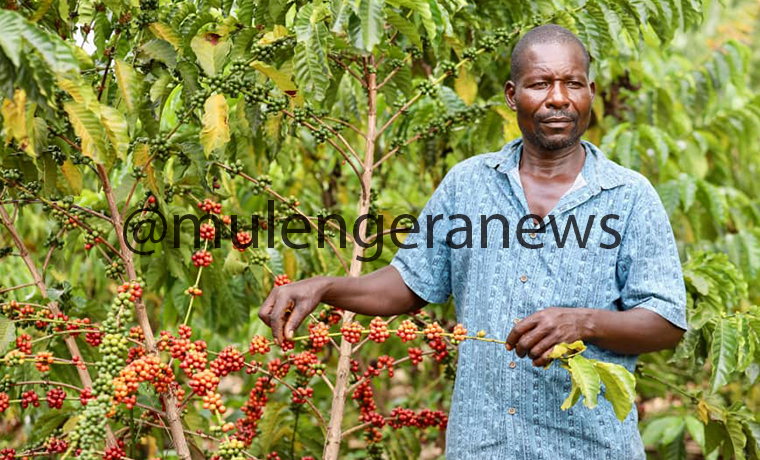
Lutakome Ronald, a farmer from Lusana Village in Kyomya Parish, Bukomero Sub-county, Kiboga District, says his farming outlook changed after the SAA trainings.
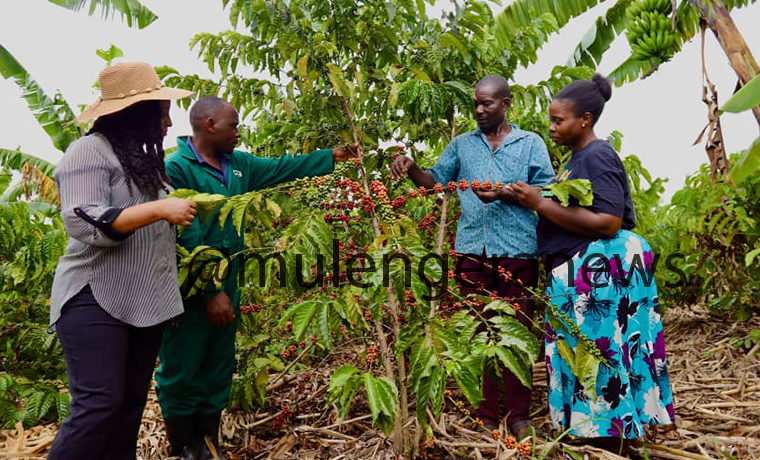
“Like many farmers, I used to grow bananas using traditional methods. When Sasakawa came in, I learned modern practices and started applying them across all my gardens. I now grow coffee, bananas and avocado in the same garden,” Lutakome said.

He explained that during a training held in Kabanyoro, he gained deeper knowledge about the benefits of mulching, which he immediately applied upon returning home.
“Mulching helps the soil retain moisture during periods of intense sunshine, keeps nutrients in the soil, and saves money that would otherwise be spent on hiring casual labourers to weed the gardens,” he said.
Lutakome noted that he has practiced regenerative methods in his banana plantation for five years and in coffee for about one and a half years.
Before adopting regenerative agriculture, he earned between Shs1 million and Shs1.5 million per season from his 4.5 acres of land. Today, he earns between Shs3 million and Shs6 million from the same land each season.

In Busoga, Thiety Namuganza, a Commercial Community-Based Facilitator (CCBF) based in Kamuli District, says the skills she gained through SAA engagements have enabled her to support coffee, cocoa and banana farmers across several districts in the region.
“We help farmers to carry out soil sampling so they can understand their soils and identify suitable crops through the Virtual Agronomist platform. Many have taken our advice and started growing multiple crops in the same garden,” Namuganza explained.

She added that her team also provides planting services using jab planters, as well as spraying services, particularly during the dry season.
“When I started working in Kamuli, much of the land was infertile. After several interventions, including regenerative agriculture practices, soil fertility has improved, which is clearly reflected in better yields,” she said.
Namuganza noted that farmers are now being encouraged to grow legumes, a practice that was previously uncommon in the area. She added that many farmers have also abandoned the practice of burning grass and crop residue, instead using it to make natural fertilizers.
Oliver Nabiryo, the Senior Programs Officer at Sasakawa Africa Association in charge of regenerative agriculture, said the initiative was introduced after studies revealed widespread soil degradation in many parts of Uganda due to poor farming practices such as open tillage.
“Open tilling exposes beneficial microorganisms in the soil to harsh climate conditions, leading to degradation,” Nabiryo explained. “Through periodic trainings, we equip farmers with regenerative agriculture practices that help them cope with climate change.”
She added that mulching not only enriches the soil as organic matter decomposes, but also lowers production costs by reducing reliance on artificial fertilizers.
According to Nabiryo, the initiative has been warmly received in all areas where it has been implemented, with farmers already recording tangible benefits in productivity, soil health and household incomes. (For comments on this story, get back to us on 0705579994 [WhatsApp line], 0779411734 & 041 4674611 or email us at mulengeranews@gmail.com).