


By BM
At 22, Florence Masmella is not just a student she is a voice for thousands of refugee youth in Uganda whose right to education has been disrupted by war, poverty, and displacement.
Born in Zone 1 of South Sudan, Masmella fled conflict and now lives as a refugee in Uganda.
She’s currently in Senior Five at Varengeses Secondary School, and while she’s proud of how far she has come, the journey hasn’t been easy.
She explained that she often lacks the most basic items sanitary pads, soap, or even a change of clothes.
During school holidays, she uses a skill she learned in the community to earn a bit of money, which she then uses to support her needs.

Despite these difficulties, she said she finds a way to keep moving forward.
Masmella described the physical conditions at her school as far from ideal.
She said the library was too small, the computer room was overcrowded, and that Senior Five classes lacked adequate classroom space.
For girls, the lack of private bathing rooms made it even more challenging especially during times when they needed to manage menstrual hygiene.
Still, she acknowledged the support she has received from organizations operating in refugee settlements from paying school fees to providing scholastic materials and uniforms.
She felt proud to have reached a level she once thought was impossible. In her own words, she had once considered herself a “nobody,” but now felt transformed into “somebody,” confident enough to express herself in fluent English.
Her experience reflects the broader challenges faced by young refugees in Uganda and the need for a more inclusive and flexible education system.
That need is what prompted the launch of Uganda’s National Accelerated Education Programme (AEP), a condensed curriculum that gives young people who dropped out of school a second chance to complete their studies.
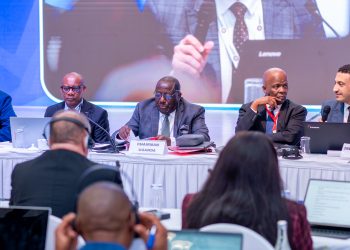
On Thursday, at Hotel Africana in Kampala, the Ministry of Education and Sports, in partnership with War Child Canada and the MasterCard Foundation, officially launched the National Guidelines for Accelerated Education.
The initiative is designed to help learners like Masmella re-enter the formal education system and prepare for national examinations.
During the launch, Dr. Kedrace Turyagyenda, the Permanent Secretary at the Ministry of Education and Sports, noted that Uganda’s population was among the youngest in the world.
She said the 2024 census confirmed that more than half of the population was under 18, and 75 percent under the age of 35.
She stressed that such a youthful population demanded urgent investment in quality education.
She observed that the country’s development goals including the Vision 2040 strategy would not be achieved through natural resources alone, but through the quality of people produced by the education system.
She said the focus needed to be on building skills, values, and character in young people so they could contribute meaningfully to society.
Dr. Turyagyenda also highlighted the importance of supporting refugee learners.
She said that many of them were intelligent and full of potential, but had been pushed out of school by conflict and poverty.
She likened the effort to support them to a child learning to walk someone had to hold their hand.
In this case, she said, that role had been played by partners like War Child Canada and the MasterCard Foundation.
Albert Siminyu, the Country Director of War Child Canada, echoed the need for urgent intervention.
He pointed to findings from the 2024 census, which revealed high dropout rates, especially in refugee-hosting districts, and a troubling number of youth who were neither in school, training, nor employment.
He said that such youth had been rendered invisible in national development efforts, and the AEP was a deliberate step to bring them back into the fold.
Siminyu explained that the Accelerated Education Programme condenses the standard four-year lower secondary curriculum into two years.
He said this gave learners the opportunity to sit their Uganda Certificate of Education exams and either continue to A-Level or pursue vocational and technical training.
He emphasized that the goal was to equip young people with practical skills that would allow them to find employment or even start their own businesses.
He expressed appreciation for the supportive environment provided by the Government of Uganda, particularly through the Office of the Prime Minister, which has enabled NGOs to operate in refugee settlements.
He also thanked the Ministry of Education and Sports for their collaboration and called for the scaling up of the programme across the country.
Dr. Cleophas Mugenyi, Director of Basic Education at the Ministry, highlighted the need to identify and support young people who had dropped out of school.
He said many youth seen on the streets were highly intelligent but had lost their way due to circumstances beyond their control.
He stressed that Uganda had all the right conditions peace, food security, and natural resources to support its youth and that it was now time to ensure every young person received a quality education.
Mugenyi warned that if these young people were not reintegrated, they could become a source of instability.
However, he remained optimistic, saying that with collective effort, these youths could be transformed into assets for national development.
Back at her school, Masmella continues to persevere. She said she was grateful for the new programme and all those who had supported her journey.
She promised to make the most of the opportunity and work hard so that those who believed in her could one day see her succeed.
Her transformation from being an overlooked refugee girl to a determined student with dreams now stands as a testament to what inclusive education policies and partnerships can achieve. (For comments on this story, get back to us on 0705579994 [WhatsApp line], 0779411734 & 041 4674611 or email us at mulengeranews@gmail.com).