







By Guest Writer
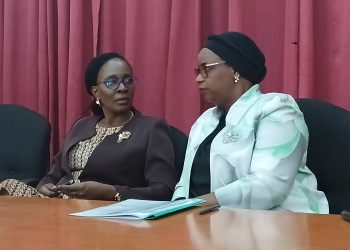
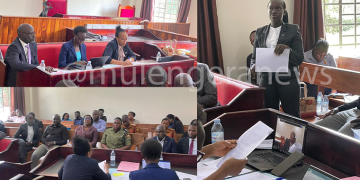
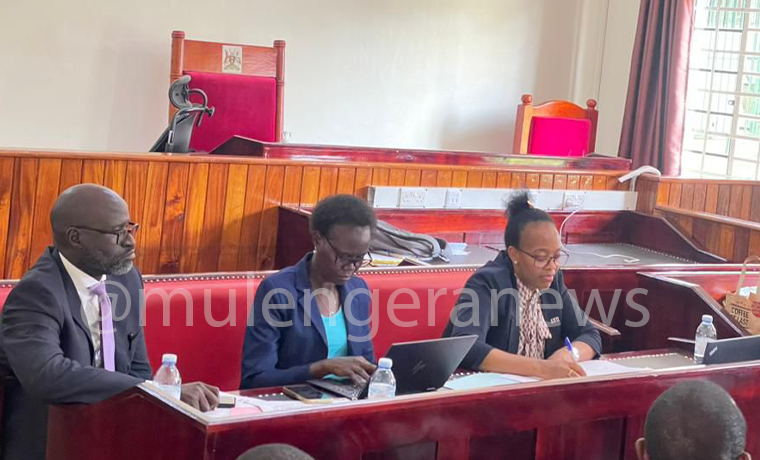
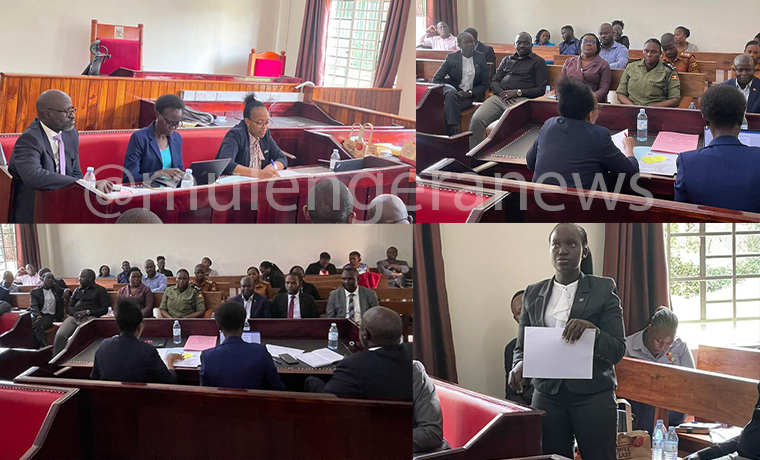
The Court Users Committee meeting held on Friday, 21 November 2025 at Court Room 1, Standards, Utilities & Wildlife Court (Makindye), brought together justice stakeholders, utility agencies and law enforcement to boost collaboration in handling utility‑related offences. Representing NWSC were Principal Legal Officer Brownie Ebal and Legal Officer Bongomin Emanuel, alongside partners from UEDCL, UCC, UWA, UNBS and URSB.
The Chief Magistrate opened the session by reaffirming the court’s mandate to deliver timely, fair justice for standards, utilities and environmental cases. She emphasized that justice delivery is a shared responsibility, requiring every agency to cooperate with professionalism and integrity. Prosecutors and investigators were reminded of their critical role in ensuring that all evidence presented is complete, well‑documented, and properly preserved. Mastery of the case file before stepping into court is essential to avoid adjournments and protect the rights of all parties. The court also pledged to uphold speedy trial timelines, noting that timely scheduling and quick disposal of cases are vital to maintaining public trust. Above all, multi‑agency collaboration rooted in mutual respect among prosecutors, defense counsel, police, and utility bodies was underscored as non‑negotiable for effective justice.
During the reporting period, NWSC handled 14 cases, securing 13 convictions, which translates to a 100 % conviction rate, while one case remains pending. These figures reflect the corporation’s growing effectiveness in tackling unlawful water use, meter tampering, illegal connections, and other related offences. The remarkable success rate underscores the importance of meticulous preparation and robust legal frameworks within the utility sector.
Brownie Ebal, Principal Legal Officer, elaborated on the key factors behind NWSC’s achievement. Strong inter‑departmental coordination is foremost; NWSC’s Legal Department works hand‑in‑hand with its Security unit, Environmental Police, Uganda Police, and the Water Loss Prevention Unit (WALOPU). This synergy ensures investigations are comprehensive and evidence reaches the prosecution team without delay.

Every file undergoes a thorough review where charge sheets, witness statements, inspection reports, photographs, sketches, recovered exhibits, and police documentation are scrutinized. Cases that do not meet the threshold of proof beyond reasonable doubt are filtered out or resolved through administrative measures, safeguarding judicial resources and maintaining process integrity.
Only files with accurately drafted charge sheets and unassailable evidence are sent to State Prosecutors for sanctioning, minimizing the risk of dismissal and boosting confidence in the system.
Ebal also acknowledged the State Prosecutors for their professionalism, guidance, and efficiency, noting that their collaborative spirit has been instrumental in presenting NWSC’s cases successfully. Moreover, the court’s fast‑track trial system where certain matters were resolved in under a month has reinforced deterrence and enhanced public confidence.
The Court Users Committee meeting proved that justice in utility and environmental offences thrives on synergy. NWSC’s flawless 100 % conviction record is as a result of meticulous case preparation, inter‑departmental teamwork, and respectful collaboration with judicial partners. As the Standards, Utilities & Wildlife Court continues to champion speedy, transparent justice, the model set by NWSC offers a blueprint for other public utilities across Uganda to emulate. (For comments on this story, get back to us on 0705579994 [WhatsApp line], 0779411734 & 041 4674611 or email us at mulengeranews@gmail.com).