










 56
By Guest Writer
The National Water and Sewerage Corporation (NWSC) has joined Uganda’s legal profession in embracing technological innovation, following its participation in the launch of PM Law AI, a locally developed legal Artificial Intelligence tool.
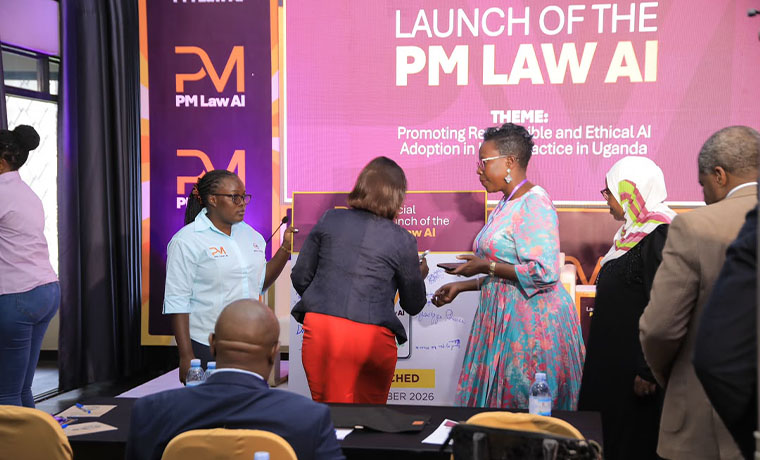
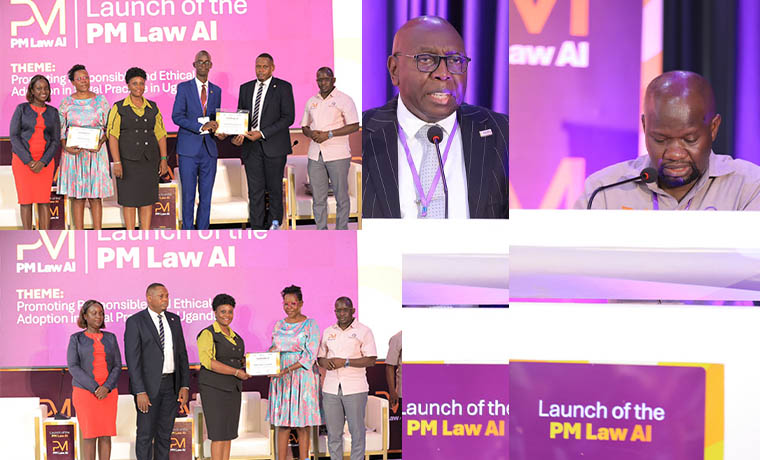
The launch, held on Friday, 30th October 2026 at Fairway Hotel in Kampala, was held under the theme _”Promoting Responsible and Ethical AI Adoption in Legal Practice in Uganda.”_


The Corporation was represented by Counsel Brownie Ebal, Manager – Litigation and Legal Advisory Services, Kampala Water.
The event brought together judicial officers, legal practitioners, technology innovators and other stakeholders to examine how AI is transforming legal research, litigation, professional ethics and legal service delivery.
It was officiated by Hon. Justice Geoffrey Kiryabwire, Justice of the Court of Appeal/Constitutional Court, while Naomi Thompson, Managing Director of Catalynt, delivered the keynote address on legal innovation as a driver of responsible and ethical AI adoption in Africa.
A live demonstration of PM Law AI was conducted by Dr. Paul Mukiibi, Executive Director of PM Digital Law Hub/PM Law AI, and Jeremy Andre, Founder of Agentik.
PM Law AI is a Ugandan legal technology initiative designed to support legal research and related professional processes within Uganda’s unique legal environment, reflecting growing efforts to develop locally relevant solutions for the profession.
A key highlight of the event was a panel discussion that sounded a strong warning against blind reliance on AI-generated legal information.
The panel, which featured Hon. Justice Antony Wabwire Musana, Judge of the Industrial Court; Lydia Namuli Lubega, Manager at the Law Development Centre; Patience Ayesigye, Programme Manager at PM; and Jeremy Andre, Founder of Agentik, examined both the opportunities and risks of AI adoption.
Discussions centred on the phenomenon of *AI hallucinations* where AI systems generate information that appears credible but is inaccurate, misleading or entirely fabricated. Reference was made to _Uganda v. Tugume Abubakar_ during deliberations on the importance of accuracy and verification.
Legal practitioners were urged to cross-check AI-generated case citations, judicial decisions and legal principles against reliable sources such as the Uganda Legal Information Institute (ULII).
The panel reaffirmed that while AI can support research and document preparation, responsibility for the accuracy of submissions before court remains with the advocate.
The discussions further explored the increasing application of AI in legal research, document review, language translation, legal analysis and contract review.
Lydia Namuli Lubega highlighted the practical value of AI in areas such as language translation and legal assessment, noting that it can drastically reduce time spent on repetitive tasks and improve efficiency.
However, panelists emphasized that technological efficiency must be balanced with critical thinking, professional competence and independent legal judgment.
Another critical discussion focused on the growing investment by law firms in AI-powered tools and its implications for client service. Patience Ayesigye noted that law firms are increasingly leveraging AI to improve efficiency and responsiveness, raising important questions about turnaround times, legal fees, accountability and value for money for corporate clients.
The panel also cautioned on the need to protect client confidentiality, especially when using third-party AI platforms that may process sensitive and privileged information.
Reflecting on the discussions, Counsel Brownie Ebal observed that the growing influence of AI presents important considerations for in-house legal practitioners.
She noted that as external law firms embrace AI, corporate legal departments will reasonably expect greater efficiency, improved responsiveness and transparency in legal service delivery.
“In-house counsel must remain informed about technological developments to better understand how they affect litigation management, contract administration and legal advisory services,” Counsel Ebal observed.
She further emphasized the need to strengthen working relationships between in-house and external counsel through timely communication, efficient case preparation, improved reporting and effective management of legal costs.
For NWSC, whose legal responsibilities include litigation management, debt recovery, contract administration, regulatory compliance and legal advisory, understanding AI developments is critical to safeguarding institutional interests and ensuring efficient legal service delivery.
NWSC’s participation in the launch provided an opportunity to appreciate emerging developments in Uganda’s legal technology landscape.
The overarching message from Fairway Hotel was clear: While AI is transforming how legal services are delivered, it cannot replace the professional judgment, ethical responsibility and accountability of the legal practitioner. (For comments on this story, get back to us on 0705579994 [WhatsApp line], 0779411734 & 041 4674611 or email us at mulengeranews@gmail.com).