








By Mulengera Reporters
The National Water and Sewerage Corporation (NWSC) has attributed persistent intermittent water supply in parts of Kampala and surrounding areas to distribution network challenges, saying the problem is no longer primarily about water production but the capacity to deliver treated water to consumers.
The Corporation says its water treatment plants at Ggaba and Katosi have sufficient production capacity, but several constraints within the distribution system prevent water from reaching some customers consistently.
According to NWSC’s October 2026 Water Supply Reliability Assessment, some customers receive water for less than 12 hours daily, while others endure supply interruptions lasting much longer, with some getting water for fewer than six hours a day.

The constraints include limited bulk water transmission capacity, pumping and storage bottlenecks, undersized distribution pipes, leakages and disruptions associated with ongoing road construction works.
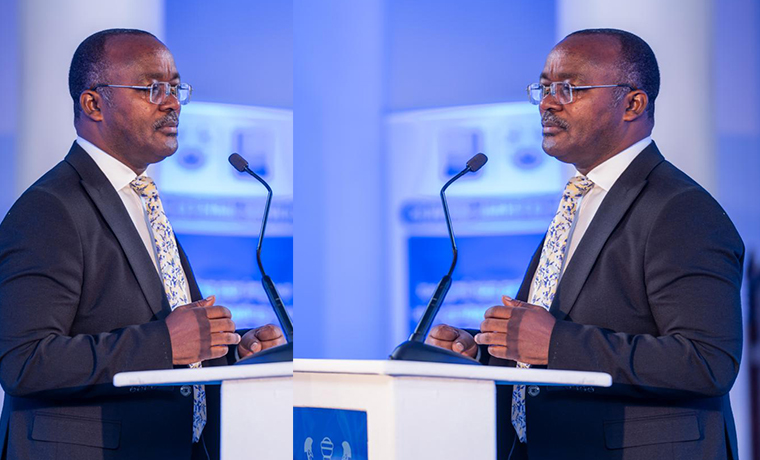
Speaking during the launch of the Kampala Water Forward-Looking and Optimisation of Water Supply (K-FLOWS) programme, NWSC Managing Director Eng. Dr Silver Mugisha said the Corporation must now focus on ensuring that the water it produces actually reaches customers.
“Our challenge is not simply to produce more water, but to ensure that the water within our systems reaches customers reliably, equitably and sustainably,” Mugisha said.
He noted that parts of north-eastern Kampala, Gwaise, areas around Nansana, Matugga and Gayaza have been affected by supply limitations because some communities are currently served through interconnected systems, including the Muyenga and Ggaba supply systems.
Mugisha explained that increasing water volumes in one part of the network could ease pressure on other supply zones, improving availability across the wider distribution system.
He pointed to the planned transfer of additional water from Katosi towards north-eastern Kampala as an intervention expected to improve water availability in the Ggaba and Muyenga systems, with positive effects extending to south-western Kampala.
The Managing Director acknowledged that intermittent water supply has far-reaching consequences for households and businesses, particularly women and children who often bear the burden of fetching water when household taps run dry.
He said reliable water supply reduces the time spent searching for water, lowers household expenditure and helps prevent waterborne diseases.
“When there is no water at home, the water which you would get at 100 shillings can cost you 1,000 shillings or even more,” he observed.
To address the challenges, NWSC has launched a six-month service acceleration programme running from November 2026 to April 2027, targeting Kampala City and serviced areas of Wakiso and Mukono districts.
The programme will combine bulk water supply augmentation with distribution network optimisation, including pumping upgrades, new boreholes, network interconnections, pipeline reinforcement and leak reduction.
NWSC says the interventions will be implemented in phases, with immediate improvements expected from quick-win projects before the completion of larger infrastructure investments.
The Corporation has also committed to engaging affected communities, providing advance communication about planned works and monitoring whether the interventions translate into actual improvements at customers’ taps. (For comments on this story, get back to us on 0705579994 [WhatsApp line], 0779411734 & 041 4674611 or email us at mulengeranews@gmail.com).