







By Guest Writer
A two-day youth boot camp has brought together young people from across Northern Uganda to acquire practical skills, share experiences and explore business opportunities in the agricultural value chain.
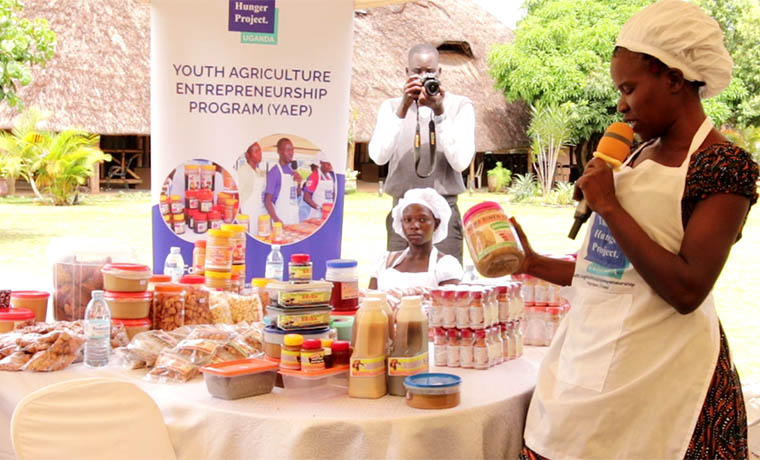
Organised by The Hunger Project Uganda under its two-year Youth Agriculture Entrepreneurship Program (YAEP), the boot camp seeks to equip young people aged 18 to 35 with the knowledge, networks and entrepreneurial skills needed to establish and grow sustainable agribusinesses.
The initiative particularly targets unemployed youths, including those facing challenges accessing land, by encouraging them to explore opportunities beyond primary agricultural production.
Speaking during the boot camp, Evelyn Namubiru Tondo, Head of Programs at The Hunger Project Uganda, said many young people underestimate agriculture’s commercial potential, prompting the organisation to emphasise value addition as an alternative entry point into the sector.

Tondo explained that young entrepreneurs can purchase produce from farmers and transform it into higher-value products, creating opportunities to earn better returns without necessarily owning farmland.

She said the boot camp provides a platform for young people to interact with government institutions, private-sector players and successful agribusiness entrepreneurs to discuss barriers to enterprise development and identify practical solutions.
The approach reflects a broader emphasis on developing agricultural value chains and strengthening the participation of young people in commercially viable enterprises. Uganda’s Ministry of Agriculture, Animal Industry and Fisheries identifies youth enterprise development, agricultural value addition and access to markets as important areas for expanding youth employment opportunities in agriculture.
Addressing barriers to women’s participation
Tondo acknowledged that women’s participation remains a challenge, partly because young women face competing responsibilities, including childcare, domestic work and other household obligations.
She added that distance and the timing of training activities can also limit participation, particularly for women who must balance family responsibilities with the pursuit of business opportunities.
She said the organisation was exploring ways to make its programmes more accessible and encourage more young women to participate.
Linking youth to institutions and markets
Denis Mukomasi, the project focal person for Nwoya and Amuru Districts, said the programme connects young entrepreneurs to government institutions, including the Uganda Registration Services Bureau (URSB), district local governments and private-sector actors.
According to Mukomasi, these partnerships are intended to help young people access essential business development services, formalise their enterprises and establish market connections.
He acknowledged that the cost of business registration can discourage some young entrepreneurs but encouraged them to consider working in groups to share costs and responsibilities where appropriate.
Mukomasi also urged young entrepreneurs to exercise patience, noting that businesses often require time, consistent investment and sound management before they begin generating meaningful returns.
He said the programme has supported young people not only through skills development but also through seed capital intended to strengthen their enterprises.
Value addition, technology and digital marketing
Tadeo Acuna of Young Professionals for Agricultural Development said that although some young people are increasingly interested in agriculture, many still perceive it as less attractive than other economic activities.
He said efforts to change this perception should focus on equipping young people with practical skills in value addition, technology adoption, marketing and business communication.
Acuna added that social media marketing and other digital tools can help young agripreneurs promote their products, reach customers and build stronger market connections.
Market opportunities for youth-led enterprises
Some programme beneficiaries, including Anyango Isabella and Amono Innocent Stella, are among the young people who have acquired skills and begun developing their enterprises.
In Nwoya District, district local government has reportedly linked some farmer groups to Bukona Agro Processors Limited, which is expected to purchase cassava, sorghum and maize from the groups.
The arrangement could provide participating farmers with a more direct route to industrial markets, although its impact will depend on factors such as agreed prices, product quality, quantities supplied and the reliability of purchasing arrangements.