







By Ben Musanje
Prime Minister Robinah Nabbanja has outlined key considerations government will use to assess and reward best-performing cities, districts, municipalities, town councils and other institutions under the National Clean Days Programme.
Nabbanja said government is in the process of recognizing entities that demonstrate outstanding performance in sanitation, waste management and environmental cleanliness as part of efforts to promote positive competition and strengthen public participation in keeping communities clean.
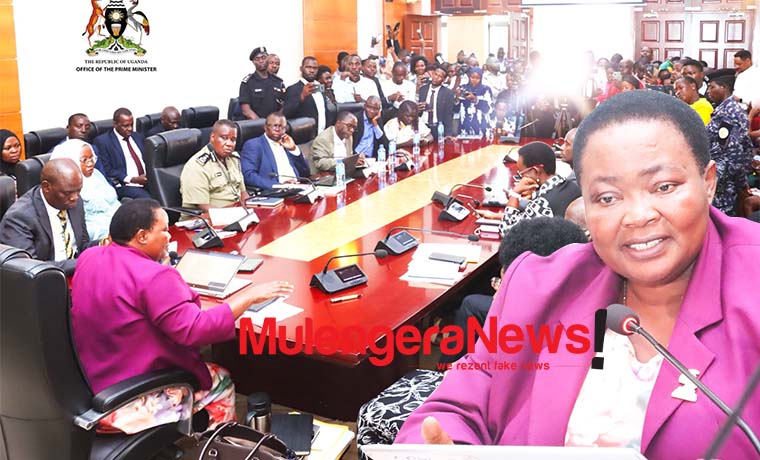
Speaking during a joint press conference at the Office of the Prime Minister on Wednesday evening, Nabbanja said her office was coordinating with relevant ministries, departments, agencies and local governments to develop assessment criteria, inspection guidelines and independent verification arrangements to guide the recognition process.

She explained that the assessment would focus on several key areas, including cleanliness of public spaces, waste collection and disposal, drainage maintenance, recycling, waste sorting, enforcement of sanitation laws, community participation and the sustainability of cleanliness standards.
The awards will cover cities, districts, municipalities, town councils, sub-counties, parishes, villages and institutions, with government seeking to recognize outstanding performance at different administrative and community levels.
The initiative is intended to encourage local leaders, institutions and communities to take greater responsibility for sanitation and environmental management while creating healthy competition among local governments to maintain clean and safe surroundings.
Nabbanja’s announcement comes as government continues implementing the National Clean Days Programme, which was approved by Cabinet under the slogan, “A Cleaner Uganda is Everybody’s Responsibility.”
The programme designates the last Saturday of every month for nationwide cleaning activities between 7:00am and 10:00am, with citizens expected to participate in cleaning public spaces, including markets, schools, health facilities, roads, places of worship and drainage channels.
According to Nabbanja, the first four National Cleaning Day exercises have established an important platform for promoting sanitation, environmental protection and collective responsibility across the country.
The four exercises were conducted on July 25, August 29, September 26 and October 31, 2026, with Kampala Capital City Authority, Kira Municipality in Wakiso District, Hoima City and Lira City respectively serving as the main cleaning sites.
Government says the exercises have contributed to improved cleanliness in urban and rural areas, increased public awareness and community participation, strengthened private-sector involvement and improved waste segregation and recycling initiatives at household and workplace levels.
Other achievements include stronger environmental protection efforts and improved coordination between government institutions and the wider community.
However, Nabbanja noted that more effort is still needed to address irresponsible waste disposal practices, urging Ugandans to desist from littering and dumping garbage in ungazetted areas.
She called upon the public to embrace responsible waste disposal practices, including the use of designated garbage collection points and the ‘Bring to Truck’ approach, while urging urban and local authorities to provide adequate garbage collection trucks to ensure prompt evacuation of waste.
The Prime Minister also emphasised the importance of maintaining drainage channels to prevent blockages that contribute to flooding, particularly in urban areas.
Meanwhile, government has announced that the fifth National Cleaning Day will take place on Saturday, November 28, 2026, from 7:00am to 10:00am, with Kalerwe in Kawempe Division, Kampala, designated as the main cleaning site.
Nabbanja called upon government institutions, schools, businesses, community organisations, cultural and religious institutions and all citizens to participate in the exercise, with particular attention to roadsides, streets, public walkways, markets, trading centres, business premises, drainage channels, streams, schools, health facilities, workplaces and green spaces.
During the three-hour cleaning period, movement of vehicles, motorcycles, bicycles and pedestrians will be restricted, except for specified essential services and other exempted categories.
In her concluding remarks, Nabbanja urged Ugandans to strengthen the spirit of Burungi Bwansi by taking collective responsibility for protecting the environment, safeguarding public health and building clean and dignified communities for present and future generations.
She said the fifth National Cleaning Day provides another opportunity for citizens to renew their commitment to a clean and healthy environment, calling upon everyone, regardless of age, status or location, to participate fully and sustain the spirit of cleanliness every day.
The government says the broader objective is to make environmental cleanliness a shared national value and an everyday responsibility rather than an activity observed only on designated cleaning days. (For comments on this story, get back to us on 0705579994 [WhatsApp line], 0779411734 & 041 4674611 or email us at mulengeranews@gmail.com).