







By Ben Musanje
A deep unease now hangs over Arua District as forests that once stood strong are slipping away under silent, calculated destruction.
While the Ministry of Water and Environment (MWE) pushes aggressively to restore Uganda’s forest cover, tree cutters in the district have found new ways to operate in the shadows.
What unfolds in Arua today feels like a quiet war—one side fighting to protect the land, the other chipping away at it in stealth.
The crisis became clear in Madwa Village, Logiri Sib County right opposite the tree nursery established by State Minister for Urban Development Mario Obiga Kania in Logiri Sub-county, a place that borders the Democratic Republic of Congo (DRC).

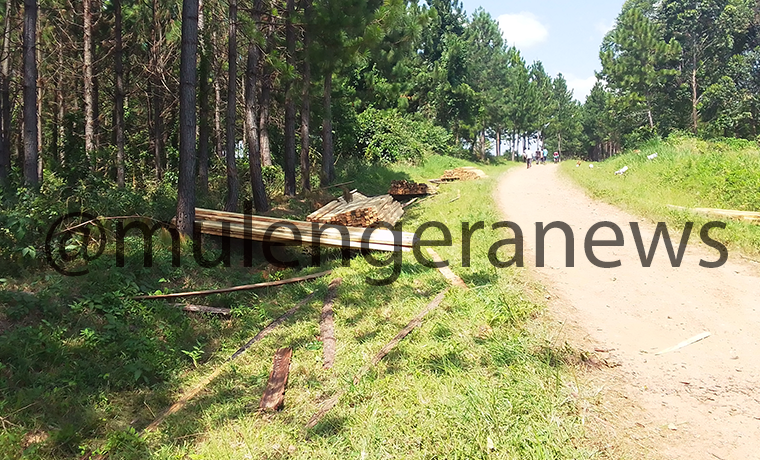
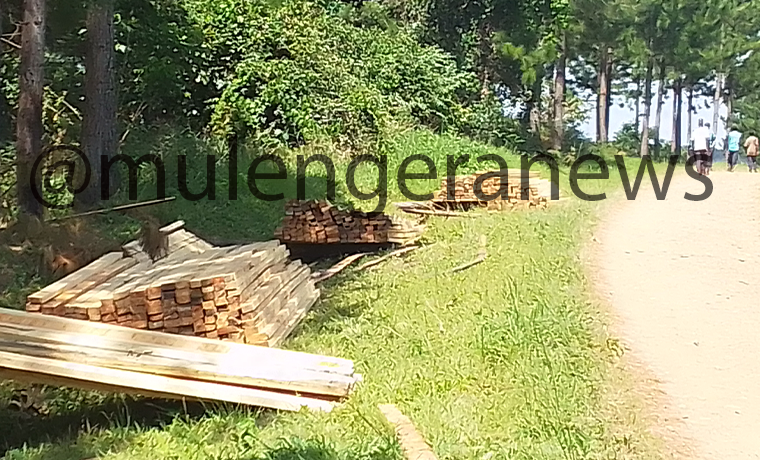
Here, the once-thick hills now carry scars of fresh stumps and scattered logs. The land tells a story before anyone speaks: the trees are disappearing faster than they can grow.
The truth came into sharp focus when a team from the Ministry of Water and Environment arrived at the Kafu Forest Reserve, a protected area that stretches across Logiri and Arivu sub-counties.
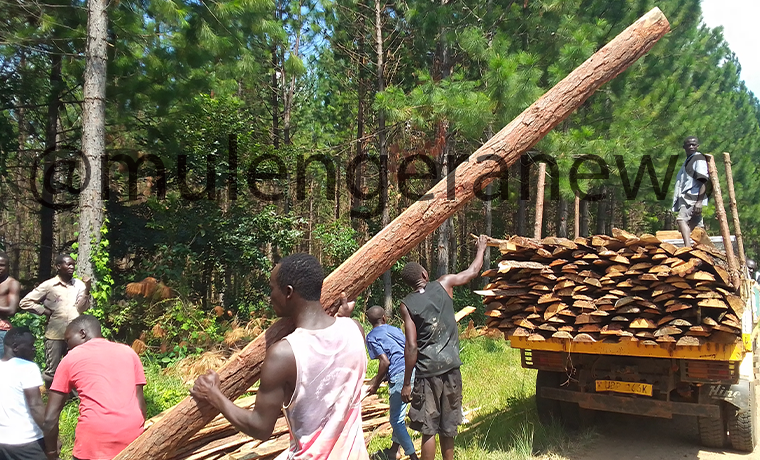
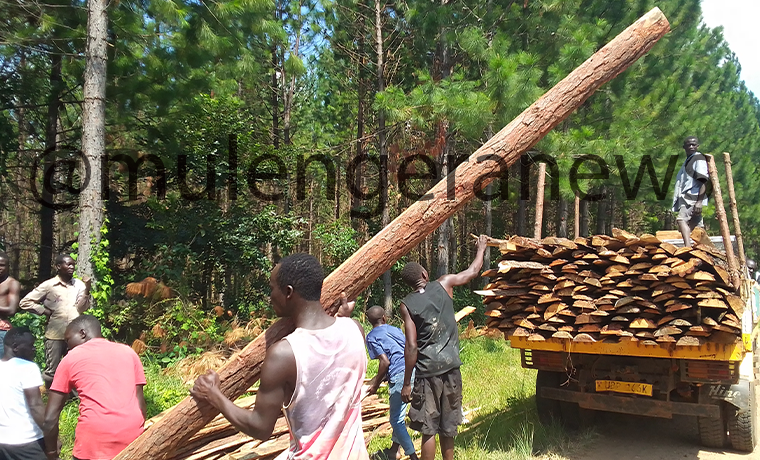
What they found captured the danger Arua is facing. A group of young men were deep in the reserve, busily cutting timber and loading it onto a truck. The chopping was quick and quiet—work perfected for speed and secrecy.

But the moment the youth spotted the Ministry vehicle with its distinct red number plate, panic rippled through the forest. Machines dropped. Men scattered. The truck, half-filled with timber, jolted forward in a desperate move to escape. Yet not everyone fled. A handful of young men stayed behind, frozen between fear and defiance.
Lillian Ayiru, the Acting District Forestry Officer for Arua District, approached the remaining youth. She spoke to them in Lugbara, the language they trusted.

Slowly, the truth came out. One of the hesitant young men handed over a phone number—the number of the person they claimed had sent them. That person was Professor Felix Andama, a lecturer at Muni University and a known private tree farmer in the area.
When reached by phone, the professor denied sending the youth to cut down trees. He said they were only thinning his plantation inside the reserve and planned to deliver the wood to a church.
According to the explanation, thinning was happening on 13 out of the 30 hectares of the Kafu Forest Reserve. But the trees on the ground painted a more troubling picture. Many looked mature—not in need of thinning, but ready for full harvesting. It raised a hard question: when does thinning become illegal cutting?
Kafu Forest Reserve is a Central Forest Reserve under the National Forest Authority. While private farmers may plant within such reserves under offer letters and permits, strict rules guide every step. Harvesting requires official permits, assessments, and clear documentation. Anything outside this framework threatens the forest and the communities depending on it.
Ayiru explained that harvesting can only begin when a farmer presents a letter from their LC1 confirming ownership of the land and trees. Forest officers then go on site to calculate the tree volume in cubic meters and estimate its value. This protects farmers from exploitation and ensures the government collects the required fees. But when tree cutters slip past these procedures using silent tactics, the entire system begins to crumble.
Ayiru has long warned that some individuals claim plantations that are not theirs, while others harvest recklessly without permits.
She stressed that education remains their strongest tool. The district uses radio talk shows, community sensitisation meetings, and field visits to teach farmers about the importance of sustainable tree planting. But changing people’s mindset, the deep-rooted habits of clearing land, using wood freely, and ignoring future consequences, remains a major challenge.
She noted that tobacco farming, once widespread in Arua, has sharply declined. This gives space, she said, for natural trees to regenerate. Yet this opportunity is often overshadowed by the rising demand for fuelwood in towns and institutions. To reduce pressure on forests, farmers are encouraged to grow fast-maturing species like acacia and calliandra or explore new livelihoods such as beekeeping.
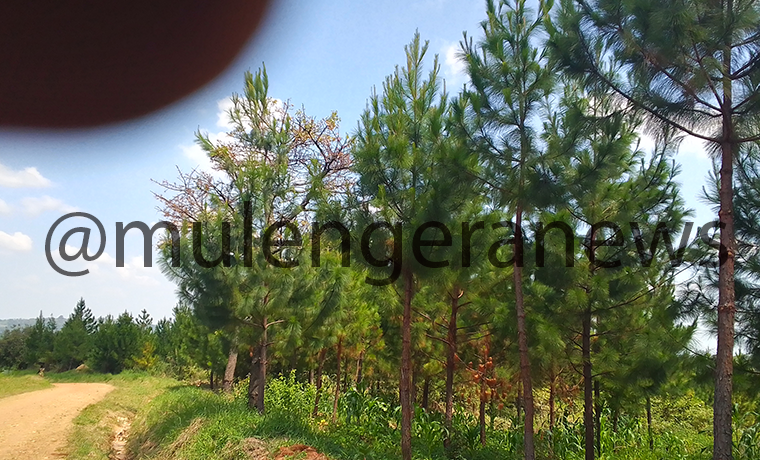
But not all stories are grim. One of the brightest examples comes from Lameky Abiribale, a timber dealer from Arua who has turned himself into a serious tree planter. On about 14 to 15 acres, Abiribale has planted between 10,000 and 15,000 pine seedlings. His project is born from determination and a vision for the future. He dreams of expanding his plantation to 50 acres and beyond. For him, trees mean oxygen, protected land, and a stable future for his children.
Ayiru praised his work, saying farmers like Abiribale show what responsible tree management looks like. They plant today not just for themselves, but for generations to come. She said the district’s plan is simple but ambitious: make Arua green again. That means protecting existing forests, planting new ones, and ensuring every community member understands the value of trees—not just as timber, but as life.
Yet the fight is far from over. MWE may be standing strong, but the cutters are becoming smarter and quieter. They hide their trucks, move fast, and operate in isolated corners. Their silent tactics threaten to undo years of progress.
Arua now stands at a turning point. If the silent destruction continues, the hills will become bare shadows of their past. But if communities, authorities, and farmers rise together, the district can reclaim its forests and secure its future. The battle for Arua’s trees has begun and the stakes grow higher with every cut made in the dark. (For comments on this story, get back to us on 0705579994 [WhatsApp line], 0779411734 & 041 4674611 or email us at mulengeranews@gmail.com).