






By Ben Musanje
The Government is moving to overhaul Uganda’s railway sector after Cabinet approved a new Uganda Railways Bill, 2026, alongside a €405 million (approximately Shs1.83 trillion) sovereign Sukuk to finance a section of the long-awaited Standard Gauge Railway (SGR).
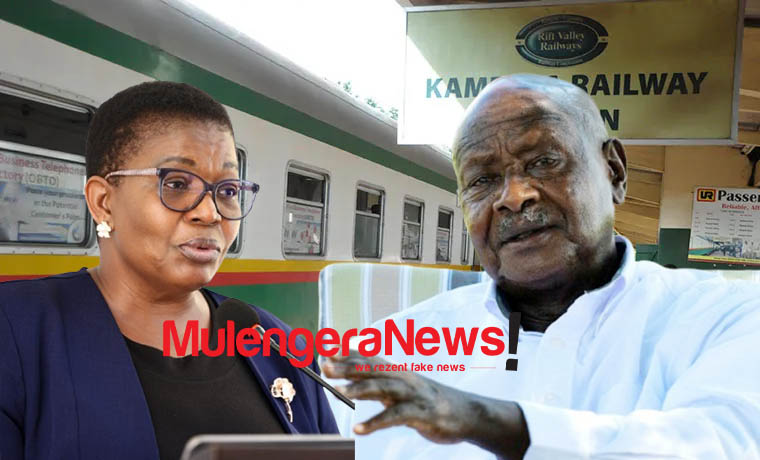
The decisions were taken on September 28, 2026 at State House Entebbe, and announced Tuesday 6th October 2026 by Minister for ICT and National Guidance Justine Kasule Lumumba while addressing the media at the Uganda Media Centre.
The proposed Uganda Railways Bill is intended to replace the Uganda Railways Corporation Act, Cap. 216, a law dating back to 1992 that government says no longer adequately addresses the realities of the modern railway industry.

The Bill has since advanced to Parliament as part of government business.

URC stripped of regulatory powers
One of the major changes proposed under the new law is the separation of railway operations from regulation.
Under the existing framework, the Uganda Railways Corporation (URC) has carried both operational and regulatory responsibilities. The proposed legislation would transfer regulatory functions to the Ministry of Works and Transport, leaving URC to concentrate primarily on railway operations.

The government argues that the restructuring will strengthen oversight and bring greater clarity to the management of Uganda’s railway sector.
The new framework also seeks to open parts of the railway industry to private investment, including passenger rail services and railway workshops.
However, heavy and bulk cargo transportation would remain exclusively under the state-owned URC.
The arrangement is in line with President Yoweri Museveni’s long-standing push to shift heavy cargo from roads onto railways in an effort to reduce pressure on Uganda’s road network and extend the lifespan of paved roads.
Shs1.83tn financing for Standard Gauge Railway
Alongside the legislative overhaul, Cabinet approved a proposal for Uganda to issue a €405 million sovereign Sukuk, approximately Shs1.83 trillion, to finance a section of the Malaba-Kampala Standard Gauge Railway.
The financing decision represents another major step in government’s efforts to revive and accelerate the country’s SGR ambitions, which are central to its broader plan to modernise freight transportation and strengthen regional trade links.
The railway is expected to provide an alternative to road transport for heavy cargo and improve the movement of goods along Uganda’s regional trade corridors.
Tougher protection of railway land
The proposed legislation also seeks to address longstanding challenges surrounding railway land and enforcement.
Government plans to strengthen enforcement mechanisms for protecting railway land reserves from encroachment, while updating fines and penalties that have been criticised as weak and outdated.
The reforms follow increased scrutiny of the operations of URC, including parliamentary investigations into a reported Shs125 billion accountability crisis involving issues such as missing rolling stock, questionable capacity-building contracts and alleged illegal disposal of assets.
The proposed law is therefore being positioned as more than a routine legislative update. It forms part of a broader attempt to restructure Uganda’s railway sector, strengthen accountability and prepare URC for the expansion of the country’s rail network.
With the SGR project and regional railway corridors forming a major part of Uganda’s long-term transport strategy, the government is betting on a modernized rail system to carry more freight, attract private investment and reduce the burden of heavy cargo on the country’s roads. (For comments on this story, get back to us on 0705579994 [WhatsApp line], 0779411734 & 041 4674611 or email us at mulengeranews@gmail.com).