







By Ben Musanje
The Ministry of ICT and National Guidance has called on telecom operators, digital platforms and technology companies to strengthen mechanisms for reporting and responding to online abuse as Uganda steps up efforts to protect children in the digital space.
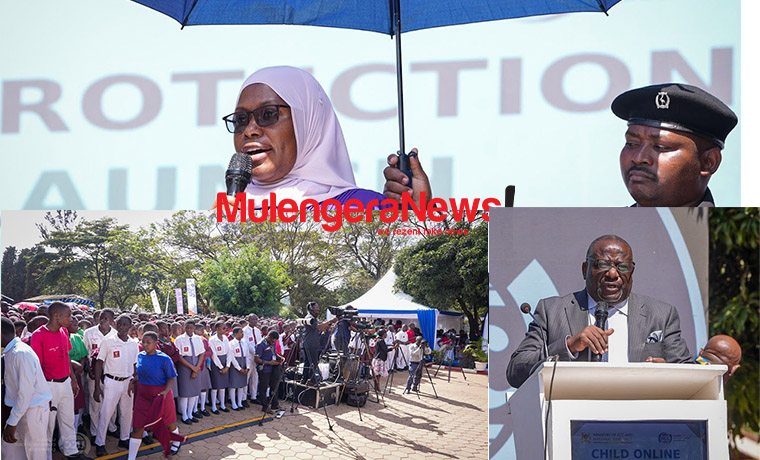
The call was made by the Permanent Secretary in the Ministry of ICT and National Guidance, Dr. Amina Zawedde, while representing the Minister of ICT and National Guidance, Justine Kasule Lumumba, at the launch of the Child Online Protection Campaign at Kololo Senior Secondary School in Kampala.
Zawedde said government alone cannot guarantee the safety of children online, urging technology companies to take greater responsibility for ensuring that the platforms used by children are safe.

“Let us make sure that as we design the technology, we design technology that has safer platforms, we strengthen the mechanisms for reporting abuse,” Zawedde said.

She specifically called for stronger reporting channels, including chatbots and other tools that allow children to report abuse, as well as systems capable of responding promptly to harmful content.
“We have chatbots and all these that children can use to report abuse. But also have mechanisms that help to respond promptly to harmful content and take the protection of children seriously in your operations,” she said.
The call comes amid growing concerns over children’s exposure to cyberbullying, sexual content, harassment, misinformation, hate speech and other forms of online abuse.

A survey presented by the Uganda Communications Commission (UCC) during the campaign launch found that 88.5 percent of participating students had encountered digital harms, including cyberbullying, misinformation and hate speech. Another 70.1 percent reported encountering sexual messages, images or videos, while 74.2 percent said they never told anyone about their experiences, including their parents.
UCC Executive Director Thembo Nyombi said the findings demonstrate the need for stronger safety nets to protect children as internet use becomes increasingly embedded in their daily lives.
Zawedde said government has already begun putting measures in place to address the risks. She cited the National Communication Policy approved by Cabinet in March 2026, which, she said, requires internet service providers to ensure inappropriate content accessible to children is blocked.
She added that government would continue reviewing laws and developing mechanisms to ensure that digital platforms used by children today and in the future are safer.
However, Zawedde stressed that regulation alone would not be enough and called for cooperation between government, telecom operators, technology companies, parents, schools and children.
“Government cannot do this alone,” she said, urging telecom operators and technology companies to play their part in protecting children.
The Child Online Protection Campaign, spearheaded by UCC, includes the Schools Awareness Assembly Program (SAAP), a youth-focused intervention aimed at increasing digital safety awareness among learners. The 90-day campaign will reach more than 100 schools across the country.
Zawedde also urged parents and guardians to take an active interest in what their children are doing online, describing them as the first line of protection.
Teachers, she said, should complement academic education with digital skills and judgement to help learners navigate the internet safely.
For children, Zawedde said the objective should not be to keep them away from the internet, given the opportunities it provides for education, creativity, communication and innovation.
“The internet belongs to you too. Do not be afraid of it, but you should learn how to use it responsibly and productively,” she told the students.
She urged young people to take charge of their digital footprints while calling on all stakeholders to work together to build a safer digital environment for Uganda’s growing digital generation. (For comments on this story, get back to us on 0705579994 [WhatsApp line], 0779411734 & 041 4674611 or email us at mulengeranews@gmail.com).