







By Guest Writer
Thieves stole more than just their livestock; they stole the heartbeat of the compound.
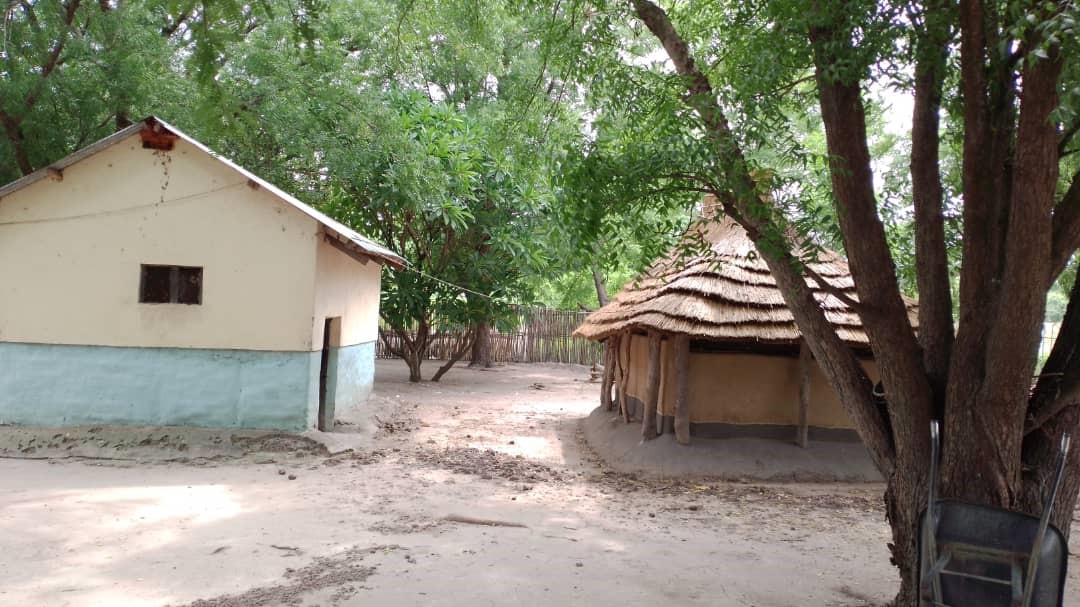
Once known for the joyful clucking of chickens in the compound, the home tells a very different story today. Progress shouldn’t look like an empty backyard.

From Rwakitura Promises to Heroes’ Day Afterthoughts: How Farm Theft Outran the Speeches

Picture the scene that has become quietly familiar across PDM villages: a farmer steps outside at dawn, the way he has every morning for years, and finds the pig sty empty, all ten animals gone, not a hoofprint left in the dust to explain how. Down the path, a neighbor discovers her poultry house stripped bare, thirty chickens vanished in a single night, the wire mesh cut clean and left hanging like a wound. A third household, one held up only months earlier as a PDM success story, wakes to find two of its cows missing from the kraal the very animals that were meant to prove the program was working. These are not isolated misfortunes. They are becoming the unremarkable rhythm of rural mornings: a sty emptied here, a coop stripped there, a kraal short two animals down the road households that did everything asked of them under PDM, now waking to loss instead of the growth they were promised.
In February 2025, in Rwakitura, farmers across Ankole felt hope when President Museveni stood before the cameras and made a pledge many had waited years to hear: thieves stealing PDM cows, goats, and produce would no longer walk free on bail. An executive order was coming, he said. For communities exhausted by watching their livestock and harvests vanish overnight, it felt, finally, like someone at the top was listening. Days later, in Mbarara, that hope did not fade, it grew when president expanded the threat, promising that police officers who released thieves on bond would themselves face consequences. He revealed the staggering scale of what was at stake: Shs 1.5 trillion invested in PDM and Emyooga, money meant to lift families out of poverty. With numbers this large and warnings this specific, farmers allowed themselves to believe that real protection was finally arriving. But months passed, and no order came.

Enter July, at State Lodge, the promise had quietly changed shape. Gone was the talk of banning bail outright. In its place came a smaller idea that journalists would help monitor PDM zones. It was dressed up as progress, but it was not the bold action farmers had been promised, and this is where the first cracks in their confidence began to show. Was anything actually changing on the ground, or merely the wording of the promise itself? December’s rallies in Kiryandongo and Bushenyi brought the same warnings farmers had heard ten months earlier, the same urgency, almost the same words, but still no order, still no visible arrests, still cows disappearing into the night. What had once felt like momentum now felt like repetition. The hope that had lit up rural meetings in early 2025 was dimming into a weary, familiar disappointment.
By February 2026, at the Heroes’ Day celebration, the message had softened further still, a passing remark that improved phone access should make theft easier to control. For farmers who had waited a full year for the bold order first promised in Rwakitura, this felt less like leadership and more like an afterthought. The excitement of early 2025 had curdled into quiet resignation. The speeches kept coming. The goats kept disappearing. And the gap between promise and protection had never actually closed.
A Problem Uganda Has Never Actually Measured
Beneath this year of unmet promises lies a more fundamental and uncomfortable truth: before Uganda can “easily control” farm theft, as the president has suggested, the country would first need to know how large the problem actually is. And at present, it does not. Uganda’s national agricultural surveys are thorough in certain respects. They carefully track losses from pests. They track losses from drought and unpredictable weather. But theft, remarkably, is not even recorded as a category. It does not appear as a line item anywhere in the country’s official statistics.
What exists in its place is not data but description. Journalists and researchers speak of crop theft as “endemic” in regions such as West Nile and the Acholi sub-region, a word that conjures the image of an unseen disease spreading quietly through the countryside. It is vivid language, but it is not the kind of evidence a government can use to calibrate a serious policy response.
Neighbors’ numbers, Uganda’s silence and the unmeasured fire of farm product theft”
Because Uganda does not have its own clear data on farm product theft, we can learn from what is happening in nearby countries. In Tanzania, a study of rural crime showed that more than one in three households suffered some kind of crime in one year, and most of these cases involved stealing livestock or crops. In Kenya, research from Moi University found an even higher level: over 90 percent of farmers said they had experienced theft from their farms at some point in their farming lives. These figures cannot be taken as exact numbers for Uganda, but the farming systems in these countries are very similar to Uganda’s: small plots, open fields, scattered animals, and weak security. Because of these similarities, it is hard to believe that Uganda’s situation is much better. This is the quiet problem behind the president’s confident promise. He says farm theft can be “easily controlled,” but the true size of the problem has never been measured. No one has actually counted how big the problem really is.
When Speeches Outrun Action and PDM’s Promises Met Silent Fields
This matters now because a promise said five times in one year, with no law, no executive order, and no real numbers to back it up, is no longer just a policy being prepared. It has become a pattern, and patterns make people ask questions. If Uganda’s farmers are to believe that the government is serious about protecting the money put into programs like PDM, that seriousness must be shown not by more talk, but by doing the hard, quiet work of counting the losses, passing clear laws, and enforcing them properly. The speeches have already been given. What is left is the tougher job: turning a year of warnings into a real system that actually protects farmers, built on facts instead of promises, and on strong institutions instead of announcements.
The Only Thing Growing Faster Than PDM Herds Is the Night‑Time Theft Industry
Mr. President, consider what your own numbers are quietly telling you: PDM, Operation Wealth Creation, and the 4-Acre Model are not just agricultural programs, they are a bet. The bet is that if government hands a household seed, fertilizer, or a starter herd, that household will grow its way out of poverty and into the money economy. Picture it plainly: a goat handed out under Emyooga, fed and raised for months on borrowed hope and stolen the week before it could be sold. The investment doesn’t just shrink. It vanishes. The poverty statistics these flagship programs were built to move do not move because the thing meant to move them was carried off in the dark.
And here is the part that should genuinely alarm the president: theft isn’t merely stealing outcomes it’s quietly rewriting farmer behavior in the exact opposite direction of what your policies demand. A farmer who scales up production under PDM’s own logic is, in the same breath, painting a target on his own field. Bigger harvest, bigger herd, bigger risk. So, some farmers are doing the rational thing and holding back deliberately staying smaller, staying poorer, staying safer. Others are hiring private guards, siphoning off the very capital your programs gave them to grow, just to protect what little they already have. Think about what that means: the closer a household gets to the commercial success PDM was designed to produce, the more exposed it becomes to losing everything. Success and vulnerability are rising together, hand in hand, and your program is unintentionally teaching farmers to fear the very growth it’s paying them to pursue.
Then there is the second front one you have named yourself. Beyond stolen goats and stolen maize sits stolen money: PDM funds diverted before they ever reach the people they were meant to lift. But look at what it means when both fronts are under attack simultaneously, produce stolen from the field, funds stolen before they arrive. It’s a pincer movement closing on the same target: the trust of the very farmers your flagship programs depend on to keep showing up, keep planting, keep believing the next disbursement will actually reach them. Lose that trust, and no executive order, however forcefully worded, will bring it back.
How Jamaica Turned Farm product theft from crisis into convictions
History offers the extreme end of the spectrum as a cautionary tale, not a template: in Britain’s “Bloody Code” era, stretching from the late seventeenth century into the early nineteenth, a farmer whose sheep were stolen could see the thief hanged for it, the theory being that theft from agriculture threatened survival itself, so the law answered with its harshest possible weapon.
It worked, after a fashion, but at a moral cost no modern government could justify, and Uganda should treat it as proof of how far a state can go, not proof of what it should do.
Jamaica shows the far more usable model serious, immediate, and proportionate. Facing its own crisis of praedial larceny, the government didn’t reach for execution or life imprisonment; it simply made the existing law bite harder, substantially raising the maximum penalty under its amended Agricultural Produce Act, and then backed that tougher law with boots on the ground through training and deploying a dedicated corps of over 243 Agricultural Wardens whose sole job is watching over farms and enforcing the statute. Real teeth, real enforcement, real people patrolling real fields, the immediate result before any promises are made about long-term deterrence.
Under the Agricultural Produce (Amendment) Act, 2023, maximum fines were raised sharply from as low as UGX 750,000 to as high as 11.3 billion UGX for offences related to theft of agricultural product and the maximum jail time was extended from six months to three years.
Under the 2025 Jamaican amendments, additional crimes were folded in under the wardens’ enforcement powers including robbery and receiving stolen property under the Larceny Act, and setting fire to crops under the Malicious Injuries to Property Act, meaning arson against a farmer’s field is now treated as part of the same enforcement regime as straightforward theft.
For the first time, farmers gained the right to give victim impact statements before sentencing, the court may, before sentencing, consider a statement from the victim, giving farmers a direct voice in how their case is weighed. Convictions surged from nine in 2024 to 209 the following year, a roughly 2,000 percent increase, largely credited to the launch of a dedicated police Agricultural Protection Branch in June 2025. By mid-2026, that unit had recorded 480 convictions for the year.
Why a UPDF Unit Could Be the Missing Link in Farm‑Theft Enforcement
Jamaica’s number, a 2,000% jump in convictions, didn’t come from the fines alone. It came from pairing tougher penalties with a dedicated enforcement branch and a traceability system that made stolen produce and livestock much harder to resell without detection. Jamaica’s Agricultural Wardens work because Jamaica’s rural crime problem, while serious, operates at a scale civilian law enforcement can credibly handle.
If the military can be trusted to guard fish, there’s no principled reason it can’t be trusted to guard goats, granaries, and gardens. The unit would plausibly be modeled directly on the Fisheries Unit’s structure a dedicated UPDF formation with a narrow, specific mandate zoned to work along LDU’s, Police (not replacing them) and the journalist monitoring idea Museveni floated in July 2025, so the unit becomes the enforcement muscle behind those existing information channels rather than a standalone initiative. But this idea comes with a real risk, and it’s worth being honest about it. Using soldiers for rural law enforcement can go wrong if there’s no proper oversight. Any such unit would need clear rules on how it operates, ways to hold it accountable, and normal civilian courts to handle prosecutions. The UPDF’s job would be to protect farms on the ground not to act as judge and jury
Its mandate would also need to be broad enough to match how theft actually happens. Protecting a standing crop in the field is not enough if the goat pen, the poultry coop, and the granary next to it are left unguarded those are often the easier, bigger targets. And the protection shouldn’t stop the moment produce is sold. If a farmer uses money from selling maize or livestock to buy a bicycle, tools, or other property, and that item is then stolen, it is really the same loss in a different form, the harvest, just carried further down the line.
Still, given that some parts of the country already face armed cattle raiding, and given that the government has spent a full year making promises without any real action behind them, a UPDF Agricultural Theft Unit makes sense. It would be built on a model Uganda already knows and trusts and it offers a far more believable solution than yet another executive order that never actually gets signed. Museveni has already said PDM represents about Shs 1.5 trillion, money meant to lift the poorest Ugandans out of poverty. He has treated this as a top national priority, just as serious as fisheries, if not more so. If he really means that, then the protection given to PDM should match its importance the same way the UPDF already protects Lake Victoria and the fisheries sector.
Measure, Legislate, Enforce, Or Keep Counting Empty Pig Stys After Every Rally
None of the above suggestions has any legal power until Uganda actually turns it into law. Right now, the president’s promises are just speeches, not statutes. Perhaps the sharper truth is that many who could act today may only come to feel the full weight of this problem after their tenure ends, when the security details are gone, when they return to the villages as ordinary farmers themselves, exposed to the same empty coops and thinned kraals as everyone else. By then, of course, the law they might now personally wish for will still be sitting unwritten, waiting for someone else’s urgency to finally put it on the table.
Waiting for personal experience to generate political will is not a strategy, but simply theft, given more time to keep happening. Here’s a simple starting point, one any interested legislator is free to review and refine because it isn’t written by someone trained in legislative drafting.
- Parliament’s Agriculture Committee and the Uganda Bureau of Statistics should add a theft-tracking section to the next National Household Survey or Agricultural Census. This isn’t just paperwork, it’s the evidence that will later prove the law is fair and necessary if it’s ever challenged in court.
- A standalone Act, modeled on Jamaica’s own success story, should bring everything under one roof: crops in the field, produce in storage, animals and poultry, and even property bought with money from selling farm goods.
- The Ministry of Agriculture, the Judiciary, the Police, and if the UPDF unit moves forward the Ministry of Defense should all have a seat in shaping the bill, not just approving it later.
- Since the president’s promise dates back to February 2025, Cabinet is the natural sponsor, and it must come with a clear plan for funding the wardens or the UPDF unit — not just the idea of them.
- First Reading, Committee stage, Second Reading — with real dates attached. A bill without a timeline is just another promise in disguise.
In conclusion, the continuing theft of animals and crops supported by PDM is not just a small rural problem. It directly weakens the government’s main plan to reduce poverty. Every stolen goat, empty store, or chicken coop taken at night discourages farmers from growing more, which is the opposite of what PDM wants to achieve. For a year, the president has warned thieves, but there has been no new law, no clear data, and no visible action. As a result, the early hope among farmers has turned into quiet disappointment, even though evidence from neighboring countries suggests Uganda’s losses are likely very high but not properly recorded. The way forward is not more speeches, but clear steps: first, measure the problem through proper surveys; second, pass a strong law that punishes theft from the farm to the market and closes loopholes that allow stolen goods to be sold; third, support that law with serious and accountable enforcement, either through better-trained civilian wardens or a focused UPDF Agricultural Theft Unit working with police and local leaders. Only by building protection on real data, clear laws, and strong institutions can the government regain farmers’ trust and make sure that PDM’s Shs 1.5 trillion investment leads to real, lasting improvement in people’s lives, instead of repeated losses that go unpunished.