





By Obed K. Katureebe
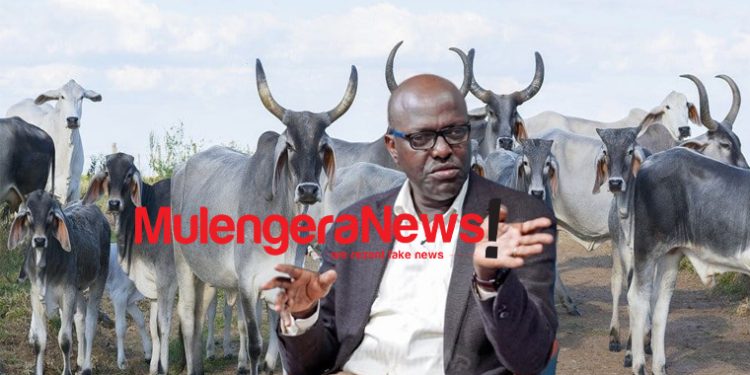
While canvassing for votes in the last presidential and parliamentary elections of 2025/6, President Yoweri Museveni conceived the recent uniform five-cows per-household restocking plan for Teso, Lango and Acholi subregions.
This followed widespread public dissatisfaction and corruption concerns over the initial legalistic compensation scheme launched in March 2022. These three subregions lost cows during the civils wars in the 1990s up to 2006. The lawyers, whom the cattle claimants had brought on board to pursue their interests on their behalf, highjacked the process and distorted the whole exercise.
They largely seemed to pursue their own self-interest, rather than that of the bonafide claimants. As a result, the compensation exercise stalled for years, because of inflated legal claims and a failure to reach the broader population. While meeting leaders, in those three subregions during election campaigns, Museveni correctly argued that the use of the word ‘compensation’ was misplaced.

He argued that there is no way government would compensate people who lost their livestock, because of the civil wars that took place in those subregions. His view shifted away from individual cash compensation for war-related livestock losses in Teso, Lango and Acholi because he argued that governments cannot compensate the chaos of war, which he likened to acts of God or natural disasters, and also because the cash-based compensation system was plagued by corruption.

Museveni stated that the state cannot realistically pay out individualized war damages, for massive historical conflicts, comparing war disruptions to natural occurrence. He, therefore, designed what he called restocking, using a model of five cows per household. He correctly worked out a formula that would benefit every household, irrespective if they had lost cattle or not.
He felt that cows would go a long way towards restoring wealth that was washed away, due to insurgency that lasted over 20 years in those subregions. Indeed, this programme is aimed at improving the livelihood of farmers and increase their resilience, by providing seed capital for procurement of five cattle (two bulls and three heifers).
The bulls are meant to increase agricultural 2 production, by promoting draught power, while the heifers are meant to promote animal multiplication and nutrition in northern Uganda. As a result, in the last financial year 2025/2026, the Government of Uganda has allocated Shs80 billion for the initial phase of the cattle restocking programme in the Acholi, Lango and Teso sub regions, with an additional Shs100 billion earmarked for the upcoming financial year to cover approximately 16,000 beneficiary households.

According to reports from the Office of the Prime Minister 80% of that money has been disbursed to the real beneficiaries. A quick survey conducted by officials of Uganda Media Centre in the three subregions confirmed that. For example, in Omoro District one of the 33 districts implementing the Government Restocking Programme, was allocated Shs 2,554,086,950 (two billion, five hundred and fifty-four million, eighty-six thousand, nine hundred and fifty shillings). This money was sufficient to support 520 beneficiaries in the 65 parishes that form Omoro District, giving an allocation of 8 beneficiaries per parish.
On average, every district got Shs 2.5 billion, benefiting 400-500 families per district. This, however, would differ going by the population each district has. Most gratifying is the model used to identify the beneficiaries. They largely targeted the most vulnerable members. Key categories prioritized for this first phase were the elderly, returnees, former rebels, widows, unemployed youth, female-headed households and people with disabilities. Able bodied persons were told to wait for the next phase.
Endorsed minutes and the attendance list of the community engagement were key in recognizing the list generated and submitted to the Chief Administrative Officer for upward submission. Validation was conducted by the Parish Development Committees, in consultation with the Gombolola Internal Security Officer (GISO).
Selected beneficiaries per parish were entered into the restocking module and submitted for upward consideration. The District Restocking Team, comprised of District Internal Officer (DISO), Chief Administrative Officer, District Community Development Officer and District Veterinary Officer who sat and reviewed minutes of all community engagements, which were endorsed by Parish Chiefs and Gombolola Internal Security Officers (GISOs); names attached in the hard copies were also compared to the names uploaded onto the restocking module.
Any irregularities and discrepancies noted were referred for correction, before upward submission to the Office of the Prime Minister for payment. All beneficiaries selected, onboarded, validated and submitted were paid by the Office of the Prime Minister.
Yes, there have been incidents of some light-fingered persons who wanted to benefit irregularly, this did take place but the cases were minimal. On average these were not more than 10 cases per district. Indeed, those that attempted to benefit illegally have been arrested and made to vomit the money.
Finally, despite some challenges like the need for proper education of all the beneficiaries since most of them have little or zero knowledge of animal husbandry, treatment costs and, of course, over pricing of cows in northern Uganda since the beneficiaries are not allowed to cross over Karuma Bridge down south to buy cows in the cattle corridor because any transportation of cows beyond Karuma up north is prohibited fearing the Balaalo might use that gap to re-enter northern Uganda. Over and above, despite all that there are all hallmarks of northern Uganda regaining her lost glory as a cattle corridor. The writer works with Uganda Media Centre. (For comments on this story, get back to us on 0705579994 [WhatsApp line], 0779411734 & 041 4674611 or email us at mulengeranews@gmail.com).