








By Ben Musanje
Uganda’s deepening housing crisis is placing an urgent demand on universities, innovators, government and the private sector to develop cheaper and more sustainable ways of putting decent homes within reach of ordinary families.
That was the message at the University Innovation Awards 2026 for Low-cost Housing, held at Hotel Africana on Thursday, where Habitat for Humanity Uganda (HFHU) challenged students to turn classroom ideas into practical solutions for the country’s housing deficit.
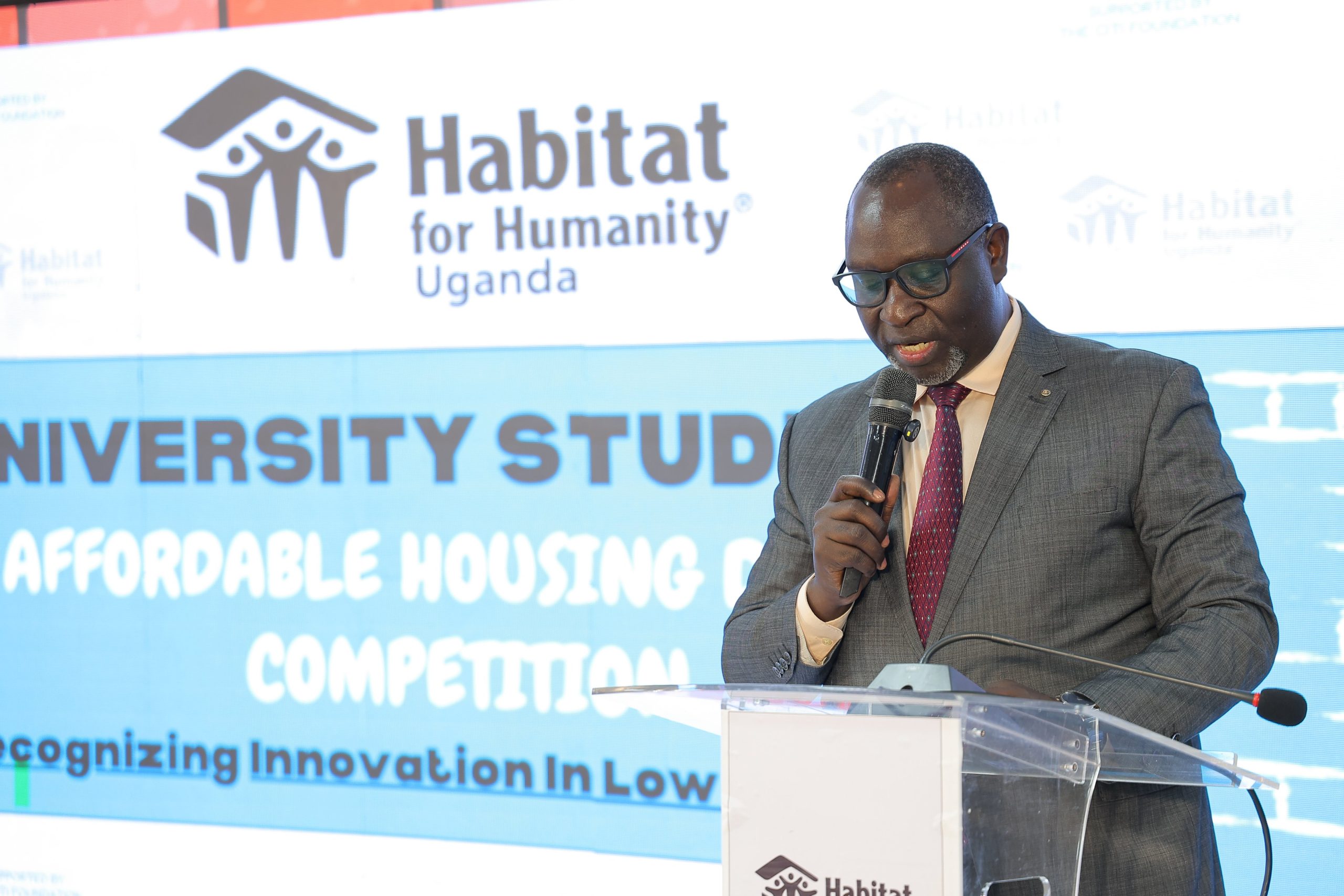
Speaking at the event, HFHU Board Chairman Owekitiibwa Robert Wagwa Nsibirwa said Uganda faces a housing deficit estimated at between 2.5 million and three million homes, a challenge he said is compounded by rapid population growth and the country’s predominantly young population.

“We all know the country is desperate for decent affordable homes,” Nsibirwa said, arguing that Uganda cannot address the challenge through conventional approaches alone.

He said the scale of the problem requires collaboration, innovation and partnerships among government, academia, communities and the private sector.
“When we come and have innovations like we are going to witness today, it is a big contribution to bring down the barriers of access to decent homes by communities,” Nsibirwa said.
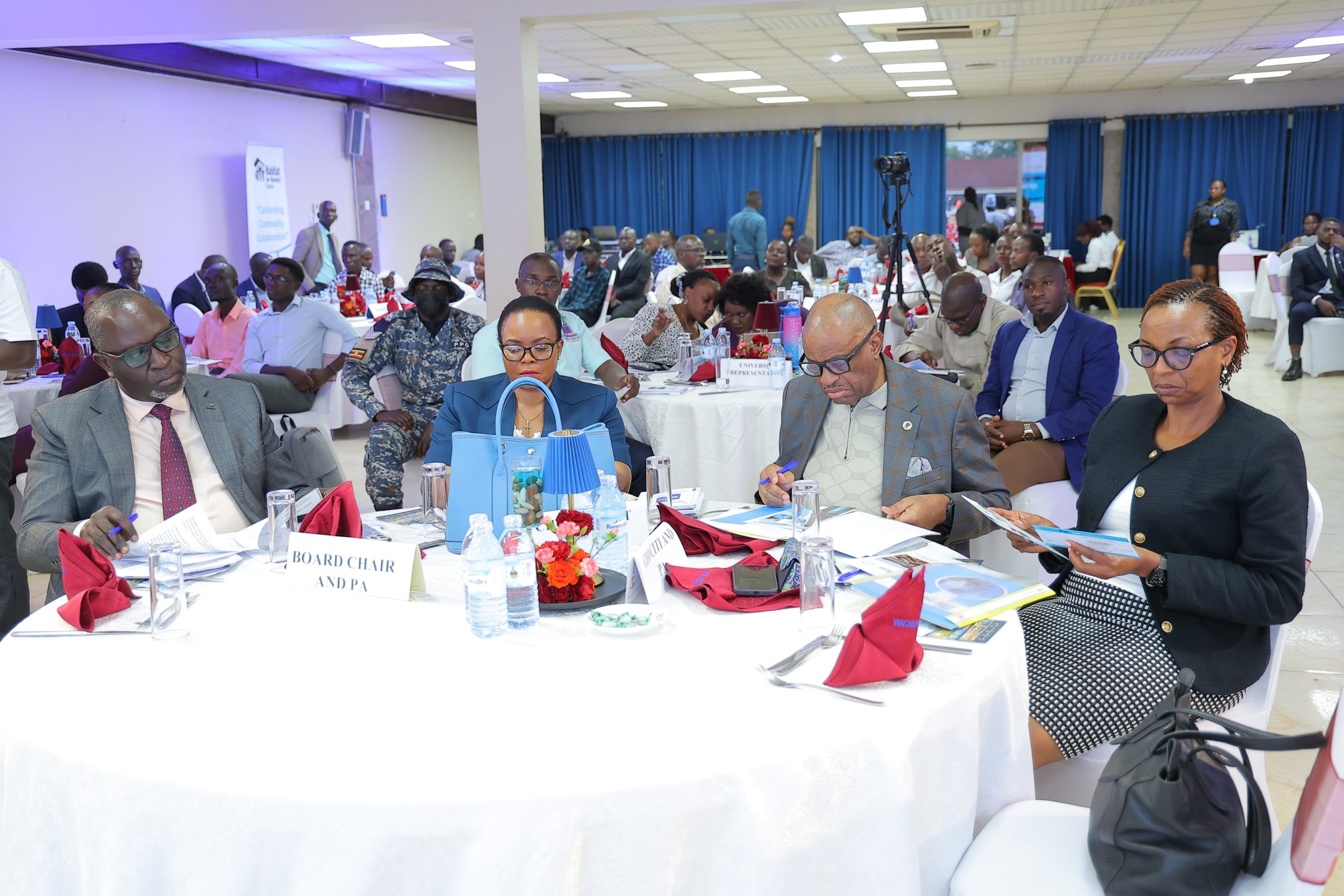
The awards brought together university students who showcased ideas aimed at reducing construction costs and improving access to safe and sustainable housing.

Nsibirwa said the ideas emerging from universities have the potential to move beyond academic competitions and become commercially viable solutions that can help reduce the cost of housing.
He urged the winners and other participants not to treat the awards as an end in themselves, but as an opportunity to develop their concepts into solutions that can be implemented at scale.
HFHU National Director Paul Okwiring said the initiative was designed to demonstrate that some of the answers to Uganda’s housing crisis could already be emerging from lecture rooms, laboratories, workshops and design studios.
“Your idea could become someone’s home tomorrow,” Okwiring told the students.
He said decent housing should not be viewed as a luxury, but as a basic human need that influences health, education, productivity, security and the overall wellbeing of communities.
According to Okwiring, rising construction costs, rapid urbanisation, population growth and limited access to affordable housing continue to put decent homes beyond the reach of many Ugandan families.
He said solving the crisis requires more than financial resources.
“It requires innovation, collaboration and fresh thinking,” he said.
From houses to homes
Nsibirwa emphasised that HFHU’s approach goes beyond putting up physical structures.
He said a home must also provide access to water, sanitation and hygiene, while supporting the economic wellbeing of the people who live there.
“A home is beyond a structure,” he said, adding that the organisation seeks to create spaces where families can rest, recover and prepare to face the challenges of the following day.
He also identified the cost of construction as one of the major barriers preventing many Ugandans from accessing decent housing, alongside challenges such as land ownership and poverty.
Innovations that can lower construction costs, he said, therefore have the potential to directly address one of the biggest obstacles facing low-income households.
Turning ideas into impact
Okwiring challenged the students to continue refining and testing their innovations after the awards.
He said the real measure of success would not be the recognition received at the ceremony, but whether the ideas eventually improve people’s lives.
“The true value of your work will be measured not by today’s applause but by the lives it improves tomorrow,” he said.
HFHU said it intends to strengthen partnerships linking academia, industry, government and communities, with the aim of turning innovative housing concepts into practical interventions.
Nsibirwa similarly called for stronger local resource mobilisation, saying Ugandans and friends of Uganda have an opportunity to contribute towards addressing homelessness.
He argued that communities play a central role in creating individual success and should therefore benefit from efforts to give back to society.
A housing dialogue ahead
The organisation also announced plans for a Uganda Homes Dialogue on October 5, bringing together stakeholders to discuss the country’s housing challenges, opportunities and innovations.
Nsibirwa said the objective would be to bring together different ideas and experiences and develop a measurable course of action for tackling Uganda’s housing crisis.
He said the dialogue would complement other policy discussions intended to find scalable solutions to the country’s housing needs.
The chairman also highlighted the case of an elderly woman, identified in his remarks as Nakanawi, who was displaced during an operation to remove people from wetlands.
Nsibirwa said HFHU’s board plans to support her in acquiring a home in Wakiso using some of the technologies and approaches being promoted through the organisation’s housing initiatives.
Her situation, he said, illustrates that Uganda’s housing crisis is ultimately about more than statistics.
“Behind every housing challenge is a family seeking dignity, safety and a fresh start,” he said.
For the students who took part in the competition, the challenge now extends beyond winning an award. HFHU wants their designs to move from paper and prototypes into communities where affordability and access to decent housing remain pressing concerns. As Okwiring put it: “Keep building. Tomorrow belongs to you.” (For comments on this story, get back to us on 0705579994 [WhatsApp line], 0779411734 & 041 4674611 or email us at mulengeranews@gmail.com).