






By BM
A disturbing new report by the Inspectorate of Government (IGG) has exposed a massive bribery scandal in Uganda’s public service recruitment process, revealing that UGX 78.7 billion was solicited from desperate job applicants seeking government employment through District Service Commissions (DSCs).
The nationwide survey, conducted across 20 districts in Uganda’s four major regions, has lifted the lid on an entrenched culture of corruption, where government jobs, particularly in the education and health sectors are blatantly sold to the highest bidder.
The findings have sent shockwaves through the public service and prompted calls for urgent reforms at the highest levels of government.
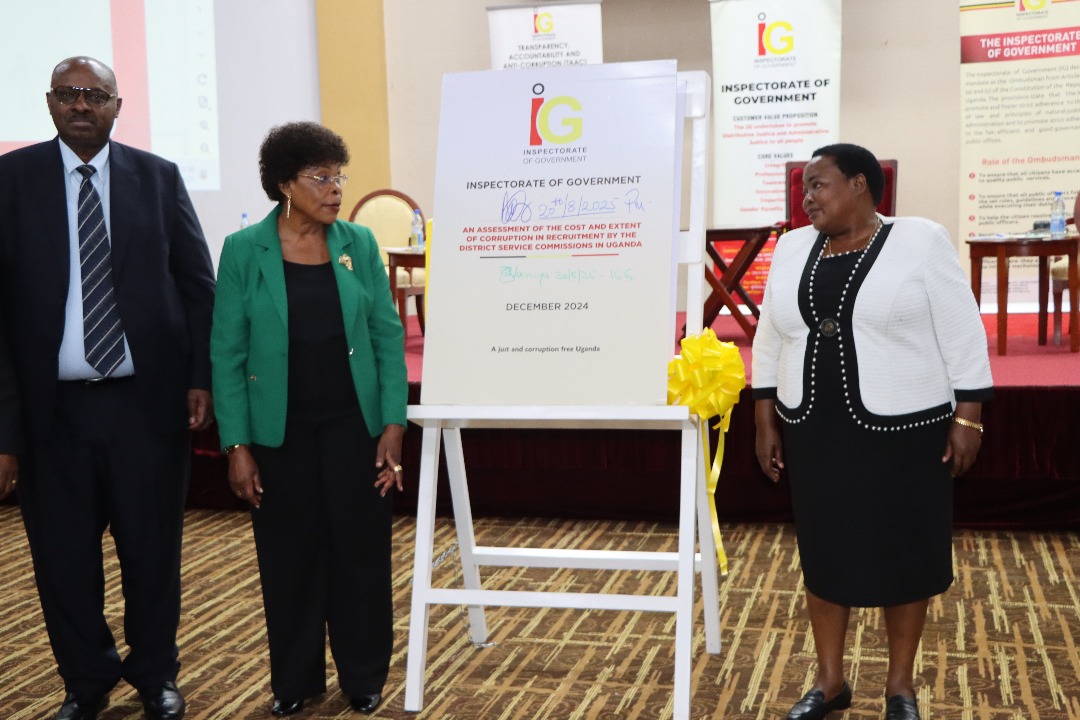
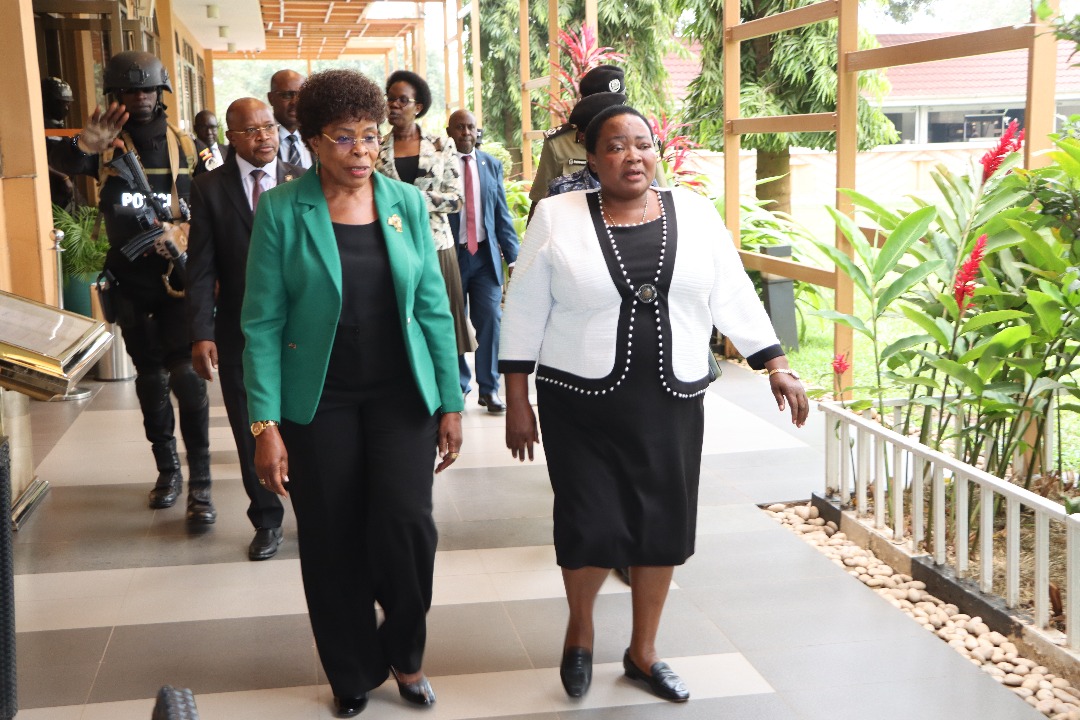
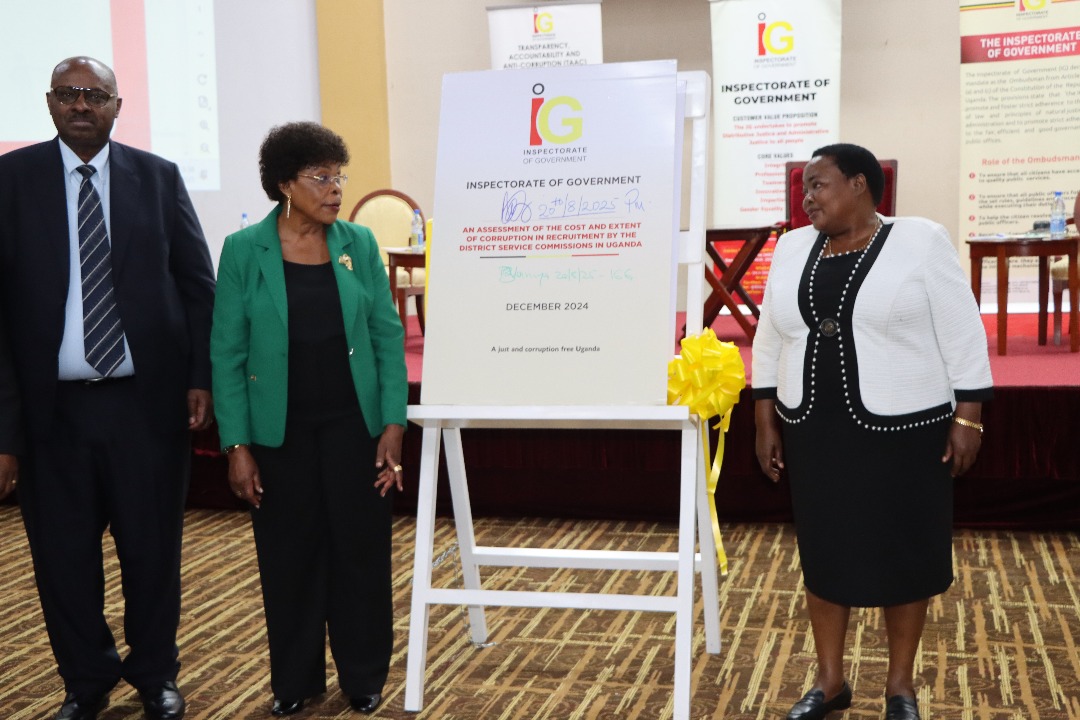
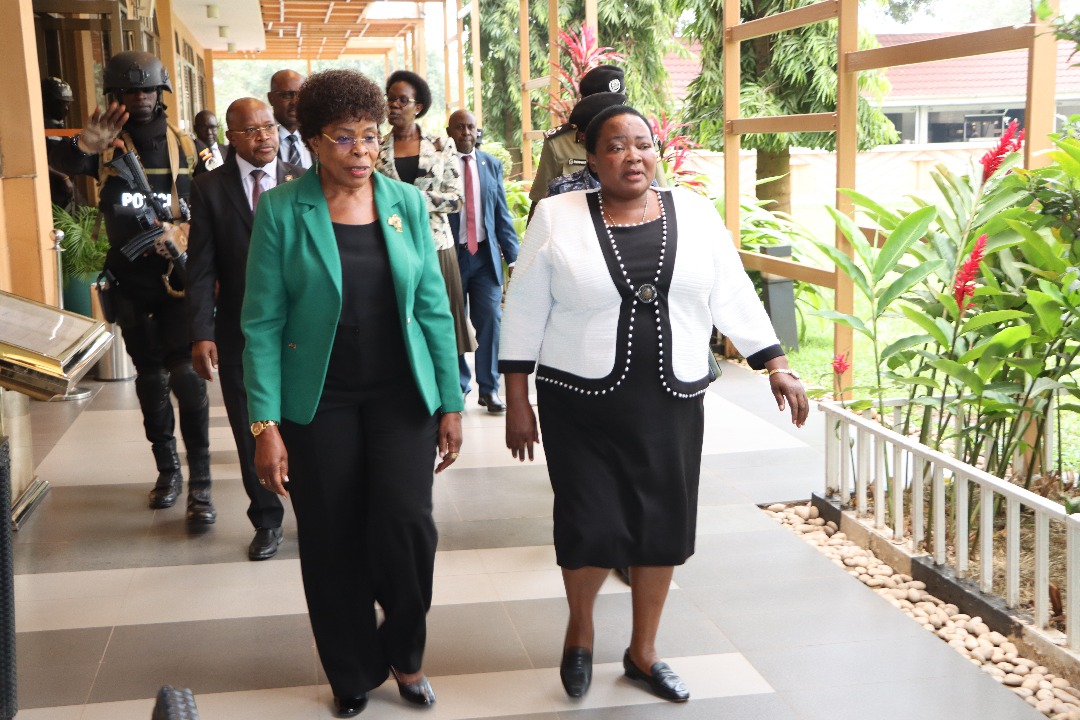
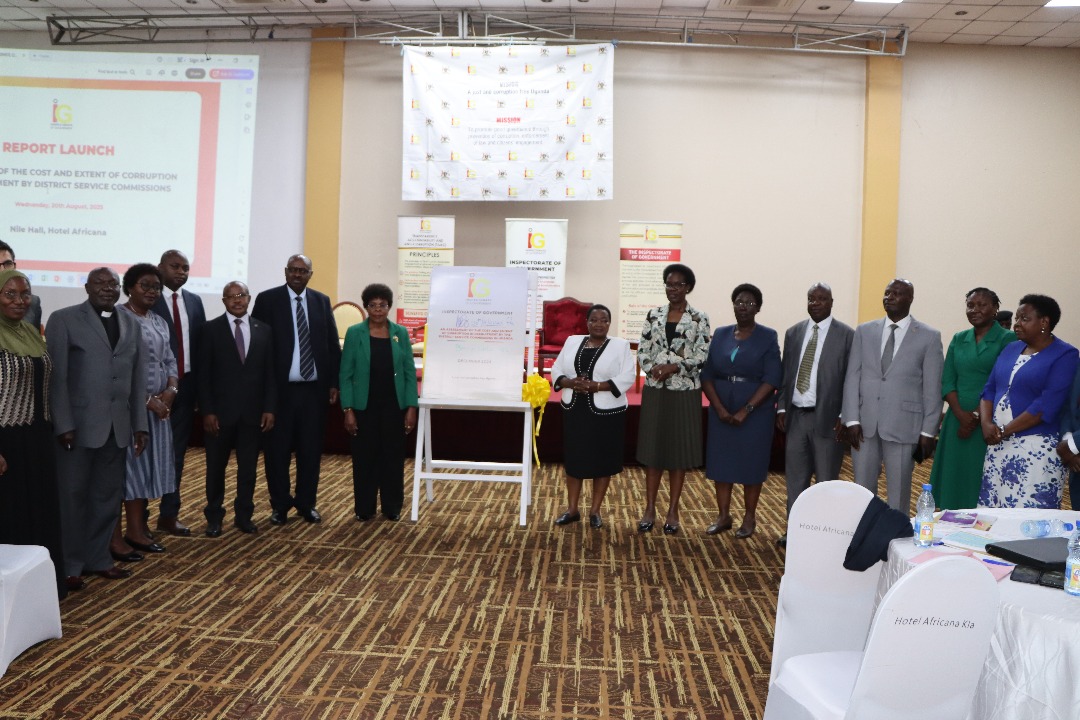
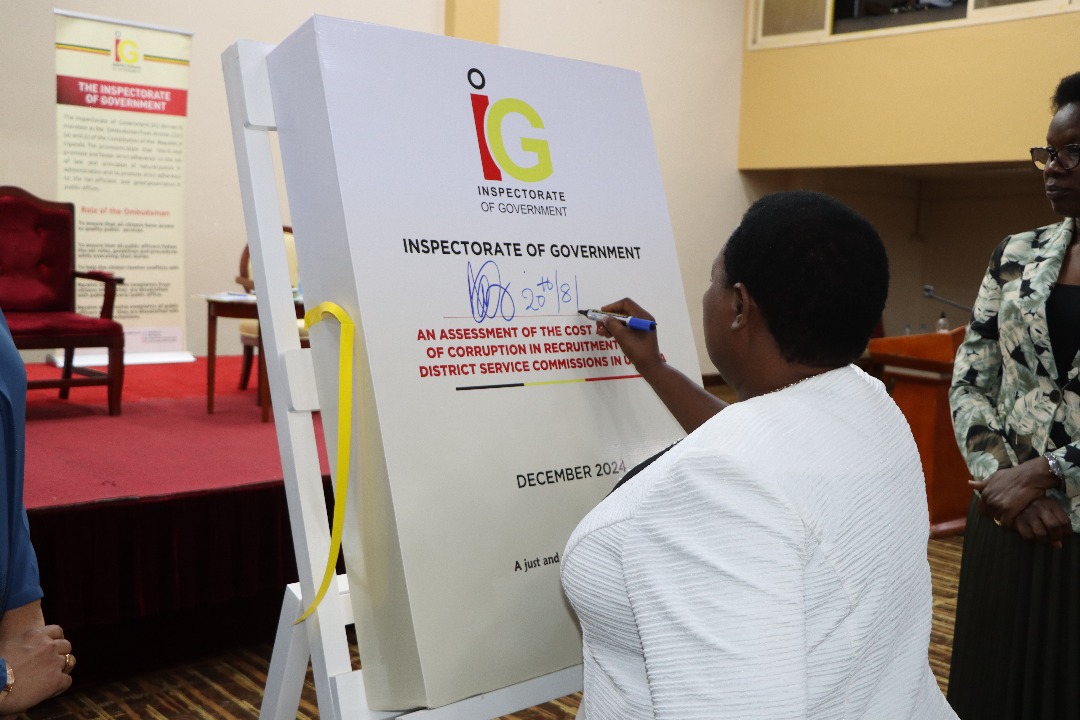
Representing the President at the launch of the report in Kampala, Prime Minister Robbinah Nabbanja condemned the revelations and hailed the IGG, the Economic Policy Research Centre (EPRC), and Makerere University for undertaking the study that she said “exposes rot that has crippled fairness and meritocracy in public recruitment.”

“This report shines a light on practices that have for too long gone unchecked,” Nabbanja said. “Government will act on this evidence to ensure recruitment into public service is transparent, fair, and based on competence – not cash.”
The IGG’s investigation sampled 748 job applicants, shedding light on how systemic and widespread the sale of jobs has become.
According to Inspector General of Government Betty Kamya, the study focused on bribe solicitation during government job recruitment and revealed alarming trends in how recruitment has been commercialized.

“This is not just about a few bad apples,” Kamya warned. “The entire recruitment pipeline, from application to interview, has been captured by individuals who see public jobs as commodities to be traded. This data must inform urgent policy reform.”
The education sector emerged as the epicenter of the scandal, with UGX 36.9 billion in bribes demanded from job seekers.

The Western region alone accounted for UGX 29.3 billion of these demands, making it the most affected part of the country.
Surprisingly, while the Northern region had no reported cases of bribe solicitation, the report uncovered that applicants still paid UGX 200 million, suggesting a reluctance to speak out due to fear or distrust in the system.
In total, job seekers across the country paid UGX 29.1 billion in bribes more than a third of what was demanded.
The Central region led in actual bribe payments with UGX 14 billion, while the health sector accounted for UGX 12.9 billion.
The report also highlighted a stark gender disparity.
Male applicants bore the brunt of the corruption, with UGX 64 billion demanded from them and UGX 22.2 billion paid far more than their female counterparts.
But bribes are only part of the story. Dr. Amos Sande from the Office of the IGG said the recruitment process is also riddled with nepotism and favouritism, which together account for 67% of corruption cases in recruitment.
According to the study, 37% of respondents got jobs due to personal connections, while 30% admitted they had been favoured during the process often without clear justification.
“Bribery is just one face of a much bigger problem,” Dr. Sande noted. “The recruitment process has been captured by networks of patronage, where merit is sidelined, and jobs go to the most connected or the most generous.”
The report breaks down where bribe solicitation is most likely to occur.
The short-listing stage is identified as the most vulnerable, with 71.4% of bribe demands likely coming from DSC Chairpersons and 53.9% from other commission members.
The interview stage also poses a high risk, with DSC Secretaries (54.6%) and District Health Officers (50%) flagged as common solicitors due to their influential roles.
At the application stage, support staffs were identified as the most likely to ask for bribes, with 62.5% of respondents indicating solicitation at this level.
In contrast, the posting and confirmation stages of recruitment posed the lowest risk, with only 2.3% of applicants reporting bribe solicitation during those phases.
A key driver behind the corruption, the report notes, is the poor remuneration of DSC members, which creates an environment ripe for bribery.
While DSC Chairpersons receive a modest monthly salary of UGX 1.2 million, other commission members rely on sitting allowances of just UGX 200,000, and those sittings may occur only once every six months.
Faced with these conditions, many members reportedly resort to soliciting bribes as a survival strategy.
However, the report has not gone unchallenged.
Several DSC Chairpersons present at the launch in Kampala rejected the findings, accusing the IGG and researchers of bias.
“We feel this report may have a hidden agenda,” one Chairperson said. “Corruption is a national problem, but portraying DSCs as the main culprits without addressing systemic issues such as underfunding, political interference, and lack of operational resources is misleading.”
Despite the resistance, the IGG is calling for sweeping reforms, including better pay for commission members, greater transparency in recruitment processes, and stronger oversight from central government.
The findings have triggered national debate, with citizens, civil society, and public servants demanding accountability.
With the government now in possession of solid evidence, the public awaits whether meaningful action will be taken or whether this report, like many before it, will gather dust.