






By Aggrey Baba
(In 1971, while mobilising against Idi Amin’s regime, Yoweri Museveni survived a near-death encounter in Mbale after a woman named Zipora Cherop shielded him from an angry crowd. Decades later, analysts point to that dramatic escape as one of the reasons he has consistently elevated women to key positions of power in Uganda, from Dr Specioza Wandera Kazibwe, the first female Vice President in Africa, to a Cabinet still dominated by women today)
When the drums beat too loudly, the village knows trouble is near. And in 1971, Uganda was living under Idi Amin’s military rule, and the drums of fear were everywhere, as soldiers moved across towns and villages without question, citizens whispered instead of speaking, and death often came without warning.
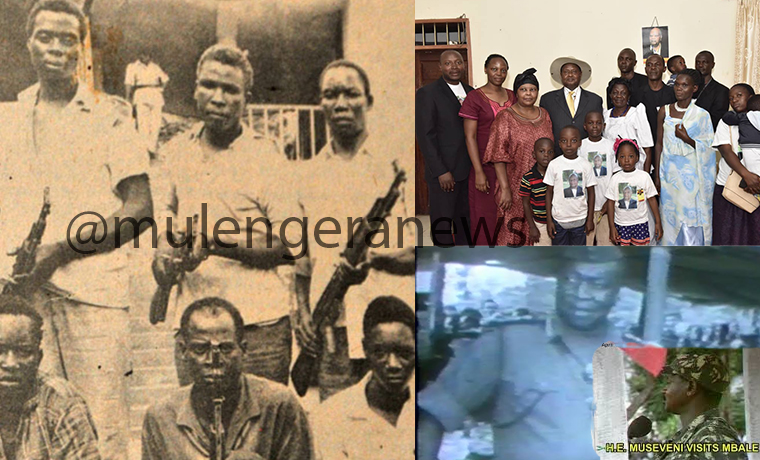
It was in this climate that Yoweri Kaguta Museveni, then a young fighter leading a small group of Front for National Salvation (FRONASA) rebels, narrowly survived death in Mbale through the courage of an unsung heroine, Zipora Cherop.
Amin’s Uganda was not a safe place for anyone suspected of opposing his government. Those suspected were arrested, paraded in public, and executed, some were imprisoned in notorious places like Makindye Military Prison, while others simply disappeared.

Every citizen was expected to be the regime’s eyes and ears, and villagers who failed to report suspicious strangers risked their own lives. Despite this, Museveni and his small rebel group operated underground, depending on trusted contacts in rural areas.

Mount Elgon, with its caves and thick vegetation, became a safe zone for them. But survival was not only about geography, but people as well (ordinary villagers who risked everything to provide food, shelter, and information).
At the heart of this network in Bumbo, Namisindwa, was Zipora. Unlike many women of her time who lived quietly in the shadows of politics, Zipora chose bravery over silence, coordinating food supplies, arranging safe shelters, and calming suspicious villagers when Museveni and his fighters appeared. Working with others like Nelson Bichunju, Bonifasio Meru Cheshet, Richard Walubengo, and Leuben Wandyema Cheptot, she became the central figure who kept operations moving. But more importantly, she became the voice of reason at a time when panic could have ended Uganda’s longest serving president’s life.
In August 1971, Museveni, Magode Ikuya, and Abwooli Malibo reportedly entered Bumbo disguised as university students from Makerere, carrying fake IDs claiming they were studying rock formations. To their misfortune, the local sub-county chief, Wandeka, after some time became suspicious, which resulted into him arresting the trio and took them to the local police post.


News spread quickly through the village, with people, already tense under Amin’s orders to report rebels gathering around the police post demanding action. Fearful villagers concluded that the three men were spies and guerrillas. In the chaos, one man attempted to behead Museveni with a panga, slicing his arm.
This was the moment Zipora stepped forward, quickly identifying the young men as students and managed to calm the angry crowd. According to the NewVision, she tied Museveni’s bleeding arm and persuaded the villagers to stand down. Her courage prevented what could have become a public lynching and immediate death for Museveni. Later, the publication writes that James Wamalwa, a Kenyan Special police officer who quietly supported anti-Amin groups, intervened, facilitating the release of Museveni and his companions from police custody. Without that decision (and without Zipora’s courage earlier) the story could have ended differently.
Not all of Museveni’s comrades were as lucky, as Abwooli Malibo, who had been with him that day, was later captured in 1973 and executed in Fort Portal to serve as a warning to others. Others, like Ibra Mukiibi, spent time in Makindye Prison, a place feared for torture and death.
For those in the villages like Zipora, life remained dangerous, since helping rebels was treason in Amin’s Uganda. Yet they chose courage, understanding that history often rewards those who act decisively.
The Mbale incident may appear like a minor escape, but in reality, it changed the course of Uganda’s history. Had Museveni been killed in 1971, the future leadership of Uganda would have been very different. Zipora’s decision to step in and protect him was more than just an act of kindness but rather of political significance. Her role also highlights something bigger, that’s none other than the trust Museveni placed in women during his liberation journey.
While men were often seen as the fighters and organizers, women like Zipora proved that survival also depended on quiet, firm leadership at the grassroots.
Many analysts argue that this experience partly explains Museveni’s later tendency to elevate women into key leadership positions.
Uganda became one of the first African countries to have a female Vice President when Specioza Kazibwe was appointed in 1994. Today, women occupy some of the most powerful offices in the land, with Jessica Alupo as the Vice President, Robinah Nabbanja as the Prime Minister, Annette Anita Among as speaker of Parliament, First Deputy Prime Minister Rebecca Kadaga and the very first female speaker to ever steer the wheels of Uganda’s Parliament, Milly Babibirye Babalanda as the minister of the presidency, Hajjat Hadijah Namyalo as the head ONC, all stand as evidence of that legacy.
Others, such as Ruth Nankabirwa, Janet Museveni, late Mary Karoro Okurut, among others have played central roles in Cabinet and Parliament.
Even in the early years, Museveni worked with women like Winnie Byanyima, Miria Matembe, Hope Mwesigye, just to mention but a few. This trend suggests that he had learned to trust women not just as supporters but as decision-makers, and the bravery of Zipora in Mbale may have planted that seed.
The incident in Mbale reminds us that history is not only made by those at the top but also by ordinary citizens who step forward in critical moments. Zipora Cherop was not a soldier, not a politician, and not a commander. Yet her courage and presence of mind changed the destiny of a young rebel leader. The proverb says, when the roots remain, the tree can sprout again. And Museveni’s survival in Mbale was the root that allowed the NRM story to sprout years later. But the root was watered by people like Zipora who took risks when it mattered most.
The untold story of Mbale is not just about Museveni’s narrow escape from death but also the power of ordinary people, especially women, in shaping Uganda’s history. It shows how one woman’s courage protected a man who would go on to lead Uganda for decades. In Uganda’s politics today, women occupy positions of influence in Cabinet, Parliament, and government agencies, something which can’t be separated from the liberation history where women played central roles.