By Mulengera Reporters
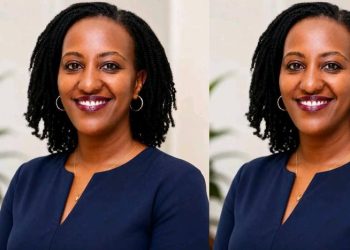
A young Ugandan nurse has broken years of silence about an abortion she underwent as a student, revealing the fear, stigma and uncertainty that drove her to make a decision she still reflects on today.
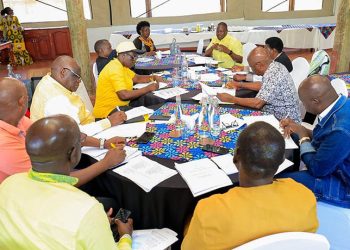
Gabriella Kokumbya narrated her experience during a Science Café for health journalists organized by the Health Journalists Network in Uganda (HEJNU) in Kamwokya, Nakawa Division, on Monday, where health experts and advocates discussed the realities and consequences of abortion in Uganda.
It is now seven years, Kokumbya carried a secret that nobody in her family, school or workplace knew.
Not her father who raised her single-handedly. Not the brother who struggled to pay her tuition. Not her classmates. Not even the administrators at the nursing school where she dreamed of building a career.

Today, she says she is speaking out to help others understand the difficult circumstances that can push young women into making life-altering decisions.

Her story is one of fear, abandonment and survival.
“I did what I did because I didn’t know what else to do,” she said.
Kokumbya became pregnant at the age of 17 during her first year of nursing school after a relationship with a man who worked at the institution. At the time, she was focused on her studies and preparing for clinical placement.

She only discovered she was pregnant after a midwife supervising students in a hospital labour ward noticed physical changes and repeatedly suggested that she might be expecting.
Initially, she ignored the hints. But after taking a pregnancy test and confirming she was pregnant, panic quickly set in.
Raised in a family that had invested heavily in her education, Kokumbya feared disappointing her loved ones.
Even more worrying was a school requirement that pregnant students suspend their studies until after childbirth before being allowed to continue with their training.
“I felt trapped,” she recalled.
She feared losing her education, disappointing her family and becoming the subject of gossip among her peers.
The man responsible for the pregnancy offered no support.
According to Kokumbya, he gradually stopped answering her calls and eventually disappeared from her life altogether.
Faced with mounting pressure, she sought guidance from a midwife she trusted.
At first, she approached the health worker indirectly, pretending to seek advice for a friend who had become pregnant and wanted an abortion.
But eventually she admitted that she was the one seeking help.
The midwife initially refused, counselling her to inform her family and continue with the pregnancy.
However, after repeated conversations, the health worker agreed to assist her.
Kokumbya underwent a medical abortion at the midwife’s residence in the nurses’ quarters.
She remembers a painful night that she says she has never forgotten.
“The whole night I didn’t sleep because of the pain,” she said.
For several days, the midwife monitored her condition and provided medication and post-abortion care.
Although she eventually recovered, she experienced prolonged bleeding and continued returning for monitoring.
No one at school ever discovered what had happened.
She completed her studies, graduated and later joined the health profession.
Yet despite moving on with her life, the emotional burden remains.
She says she still prays for forgiveness.
At the same time, she believes the decision protected her future at a moment when she saw no alternative.
“I feel like I saved myself,” she said, explaining that losing her place in school could have permanently disrupted her career aspirations.
Kokumbya’s story mirrors the experiences of many Ugandan women and girls who face unintended pregnancies amid social stigma, economic hardship and limited support systems.
Health experts warn that while some women survive abortions without major complications, others suffer severe physical and psychological consequences.
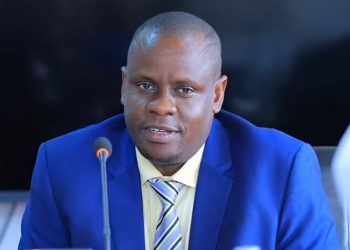
Speaking at the same event, senior obstetrician and gynaecologist Dr. Peter Ssebadduka said women often make such decisions under immense pressure rather than out of convenience.
According to him, factors such as poverty, rejection by partners, fear of parents, sexual violence, interrupted education and employment concerns frequently influence decisions to terminate pregnancies.
“No woman terminates a pregnancy casually,” he said.
“There is usually something pushing her into that decision.”
Dr. Ssebadduka noted that abortions—whether spontaneous miscarriages or induced procedures—can lead to complications ranging from infections and infertility to lengthy hospital stays and, in extreme cases, death.
Even medically supervised procedures, he cautioned, are not entirely risk-free.
“Any medical procedure can develop complications,” he said.
Beyond the physical effects, he emphasized that many women experience lasting emotional and psychological distress.
He explained that some women continue to imagine how old their child would have been years after the pregnancy ended.
“The psychological trauma can remain for a very long time,” he said.
The extent of that trauma, he added, varies from person to person.
Meanwhile, Joseph Mwebaze, Communications Officer at the Centre for Women’s Justice Uganda, described unsafe abortion as a significant public health challenge affecting thousands of women and girls.
He said many resort to unsafe methods because of stigma, fear and lack of access to accurate reproductive health information.
According to Mwebaze, discussions about abortion should not focus exclusively on morality and religion but should also consider the health risks women face.
He argued that preventing deaths, injuries and long-term complications must remain a public health priority.
He also encouraged women experiencing complications after abortions to seek immediate medical attention, noting that post-abortion care services are available in public health facilities.
For Kokumbya, however, the debate remains deeply personal.
Years later, she still wrestles with conflicting emotions.
She does not encourage others to follow the same path but hopes her story will help people understand the circumstances that often surround such decisions.
Behind every abortion statistic, she says, is a human story. A frightened student. A daughter trying not to disappoint her family. A young woman abandoned by a partner. And someone struggling to choose between a pregnancy and a future she had worked hard to build.
“I am not saying it was right,” she reflected. “I am only saying that at that moment, I felt I had no other choice.” (For comments on this story, get back to us on 0705579994 [WhatsApp line], 0779411734 & 041 4674611 or email us at mulengeranews@gmail.com).