




By Mulengera Reporters
Last week, a group of Tik Talkers and other social media users seized on video content emerging from Public Accounts Committee (PAC) to create their own narrative. They misrepresented what actually happened and all this was anticipated to create some sense of scandal and in the process, generate traffic to the content creators’ respective platforms.
Led by Committee Chairperson Patrick Oshabe Nsamba, MPs who sit on PAC had converged to scrutinize the audit queries the Auditor General had raised regarding the implementation of the £101m (roughly Shs500bn) solar-powered irrigation & water supply project interventions undertaken by the GoU (2021-2026).


The total project worth was £112.5m; comprising of £101.8m as a loan from the UK Export Finance (UKEF) and £10.8m as counterpart financing by the GoU. This was a loan in relation to which the GoU was obligated to provide the £10.8m counterpart funding to cater for things like land acquisition for the project and compensation of project affected persons (PAPs).
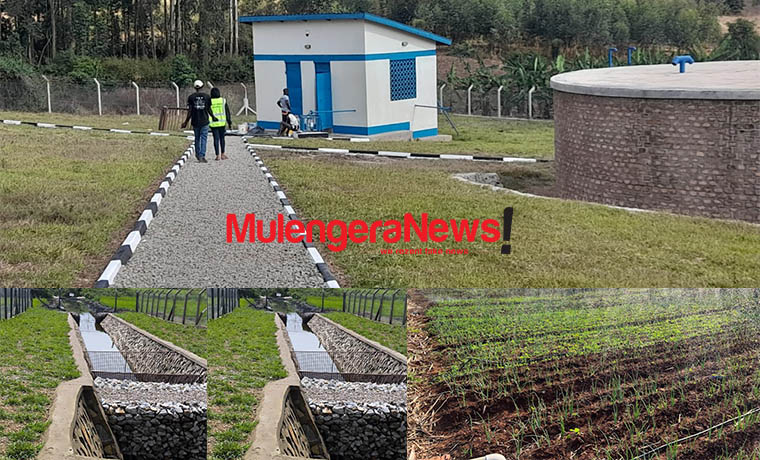
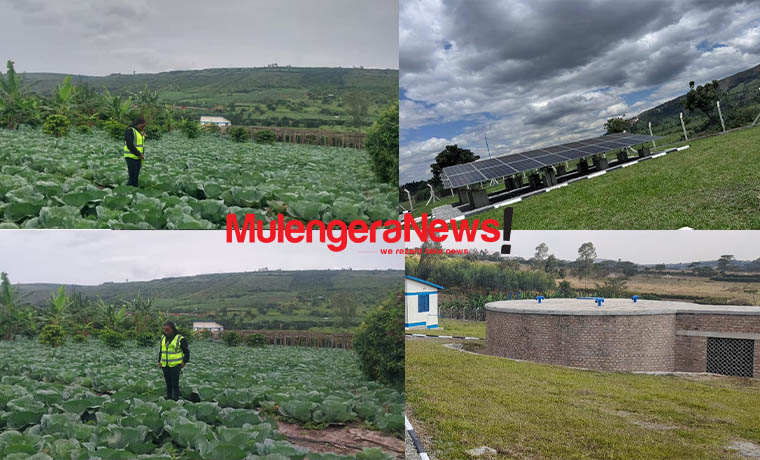
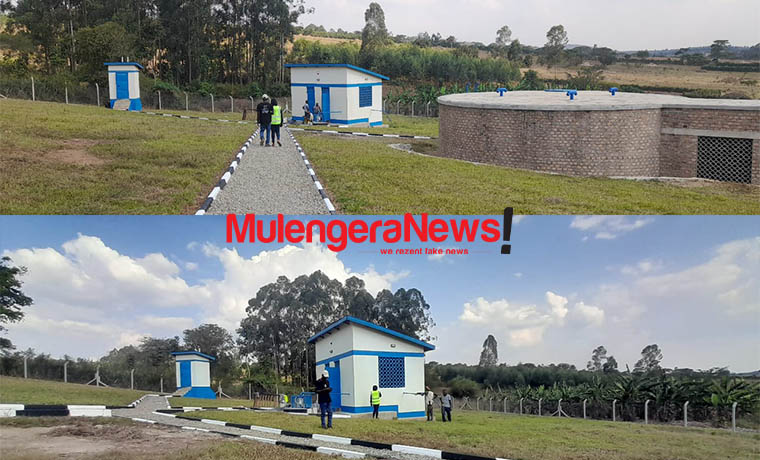
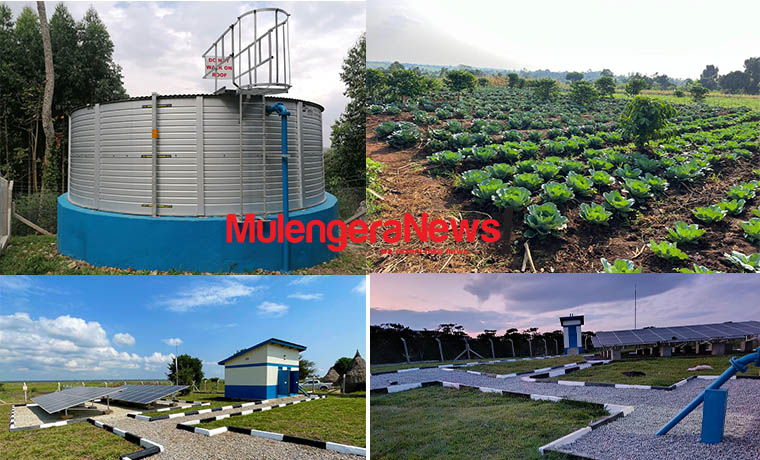
Originated by the Finance Ministry and approved by Cabinet in July 2019, the project aimed at constructing or establishing irrigation schemes, urban and rural water supply systems to increase access to quality and affordable water for domestic and production (irrigation) use among Ugandans scattered in different parts and districts of the country. As per the project proposal documents, authored by the Ministry of Water & approved by the Finance Ministry’s Development Committee, Cabinet and Parliament purposed the money to be used to facilitate the design, supply and installation of solar-powered water supply and irrigation systems.

Nexus Green Ltd, a UK firm, was contracted to do the work since the loan agreement required 75% of the inputs and the actual work going into the project to be sourced from a UK company. This is consistent with local content obligations which the UK Export Finance (UKEF) arrangement was created to enforce overseas. The loan acquisition, as was approved by Parliament on 17th March 2019, was to facilitate establishment or construction of a total of 920 such water supply and irrigation schemes using the £101.8m loan from UKEF.
However, this changed after the lender-imposed contractor (Nexus Green Ltd) quoted and demanded £279m for the amount of work the GoU had originally envisaged. This £279m was greater than the £101.8m that was available. It actually was twice more. To do the work within the funding available, the scope of work to be done had to be altered. The contractor’s demands and position were duly communicated by the MWE to the Finance Ministry whose officials agreed to alter and deliver what could be achieved with the available funding.
The scope was lowered from 920 schemes that was originally supposed to be constructed or delivered to 687 schemes which the available loan money could afford. The Finance Ministry returned to Parliament and secured a second approval for that alteration on 16th March 2021. This 687 comprised of 252 irrigation systems, 302 and 133 rural and urban water supply systems respectively. All these had to be solar-powered since other energy sources had proved way too costly and unaffordable to Ugandans whose water access-related constraints the project had been designed to mitigate.
The project, which commenced on 26th July 2021, was originally to last only 36 months but the same was extended to 30th April 2026 because of delays and shipping constraints that resulted from the COVID lockdown that was in force globally. The pandemic had the effect of delaying the implementation of the project especially during the first year.
Gratefully in all this, the Ministry of Water (responsible for all these water supply & irrigation systems) involved both PPDA and the Solicitor General and all the necessary approvals were obtained. The delay in the GoU’s counterpart funding of £10.8m being availed (to facilitate PAPs compensation etc) also contributed to the project’s overall delay.
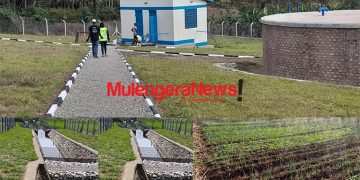
As of now (October 2026), it’s the defects liability period (DLP) that is running up to 30th October 2026. The beneficiary communities are already utilizing the delivered irrigation and domestic water supply systems as the contractor leverages the DLP to rectify any snags that may arise or be identified during usage of the same by people from the beneficiary communities across the country. At the expiry of the DLP (on 30th October), the project will be formally handed over, MPs sitting on PAC have been assured.
Even when the project has resulted into several benefits and delivered undeniable transformation (such as over 2,000 acres being brought under irrigation to enable cultivation of high value crops like vegetables, fruits, coffee etc; besides over 950,000 Ugandans directly being impacted/made to benefit, 70% reduction in energy costs since reliance on diesel generators has been replaced with solar systems, distances travelled to access domestic water sources for the impacted households reducing from over 1kms to less than 500 meters as well as diminishing the exposure to water borne diseases like cholera, typhoid & dysentery etc) certain aspects of the project have been misreported and misunderstood, a narrative Tik Talkers have inaccurately been amplifying on social media.
The Tik Tok narrative, based on what social media users chose to pick from live television reporting, has been that the MWE officials spent Shs500bn and failed to deliver the 920 water supply and irrigation schemes that was agreed upon and required in September 2019 as Parliament approved the loan. Such social media users deliberately missed out on the fact that through the subsequent approval of 16th March 2021, the same Parliament approved the lowering of the number of schemes/systems from the 920 originally approved to 687.
Yet there are other unforeseen (sometimes anticipated) developments which came along the way as the project was being implemented which PAC MPs were addressed about during the last week interface, yet the same has totally been omitted by clicks/likes/views-seeking Tik Talkers and other social media users dedicated to social media trending and content creation. PPDA regulations provide for price adjustment clauses concerning all contracts whose duration exceeds 18 months. In the instant case, these compelled the scope (namely the actual number of systems to be delivered) to further be impacted, which is why the MWE ended up delivering 434 systems or schemes, as opposed to 687.
For instance, there were changes in the designs of urban and rural water supply systems, hence departing from the previously approved work scope. Literature available before PAC indicates that, whereas the original scope was to upgrade community energy sources from diesel generators to solar power-powered systems, beneficiary communities along the way demanded for more other things, including extension of water distribution networks for rural water supply. Motorization of hand-held boreholes was also demanded.
In many cases, beneficiary communities also demanded for longer pipeline extensions than had been envisaged at the time of contracting. All this gave rise to larger systems being constructed, which enlarged project coverage and inevitably the unit costs. That is how the contract sum (£101.8m) ended up accommodating/delivering only 434 systems whose breakdown is as follows: 203 irrigation schemes, 83 urban water supply systems and 148 rural ones.
Information PAC MPs have since obtained from the MWE discloses the sites and names of locations where either the irrigation schemes or water supply systems are located. The comprehensive report indicates not just these site locations but also the constituencies and districts where each of these is actually situated.
The districts hosting these irrigation schemes and water supply systems are disclosed as follows: Abim, Agago, Adjumani, Alebtong, Amolatar, Amudat, Amuria, Amuru, Apac, Arua, Budaka, Bugiri, Bugweri, Buhweju, Buikwe, Bukedea, Bukomansimbi, Buliisa, Bundibugyo, Bunyangabu, Bushenyi, Busia, Butambala, Butebo, Buvuma, Buyende, Dokolo, Gombe, Gulu, Hoima, Iganga, Isingiro, Jinja, Kaabong, Kabarole and Kaberamaido.
Yet that isn’t all. There is also Kagadi, Kakumiro, Kalaki, Kalangala, Kiryandongo, Kitagwenda, Kaliro, Kalungu, Kamuli, Kamwenge, Kapelebyong, Kasese, Kassanda, Katakwi, Kayunga, Kazo, Kibaale, Kiboga, Kibuuku, Kikuube, Kiruhura, Kitgum, Kotido, Kumi, Kwania, Kyankwanzi, Kyegegwa, Kyenjojo, Kyotera, Lamwo, Lira, Luuka, Luweero, Lwengo, Lyantonde, Madi-Okollo, Manafwa and Maracha.
Others are Masaka, Masindi, Mayuge, Mbale, Mbarara, Mitooma, Mityana, Moroto, Moyo, Mpigi, Mubende, Mukono, Nabilatuk, Nakapiripiriti, Nakasongola, Nakaseke, Namayingo, Namutumba, Napak, Nebbi, Nwoya, Omoro, Otuke, Oyam, Pader, Pakwach, Pallisa, Rakai, Rubanda, Rubirizi, Rukungiri, Rwampara, Serere, Sheema, Sironko, Soroti, Ssembabule, Terego, Tororo, Wakiso, Yumbe & Zombo.