






By Mulengera Reporters
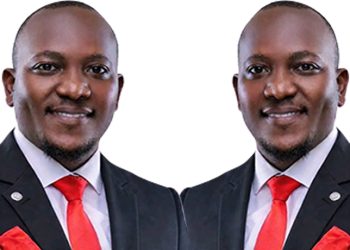
During an exclusive online interview with Norman Tumuhimbise’s Digital TV, the UCC Executive Director Hon. Nyombi Thembo stated that even when the law gives them a lot of regulatory powers over communication in Uganda, they aren’t above the law and such anyone aggrieved with their pronouncements and directives is free to petition Court and challenge them.
He said as a law-abiding government entity, the Commission always doesn’t just rush into proclaiming things. That everything they come up with is rooted in the law and is well considered and scrutinized, as to legal compliance, by a team of lawyers who he said are actually among the best legal brains in the country.
“By the time you see me putting my signature and coming out to the public to communicate it, it has been well scrutinized and considered. As the Executive Director, I just come out to proclaim the message on behalf of the Commission,” he said. “That’s why many people first make noise protesting and vowing to go to Court but they end up not going after sitting down with their lawyers carefully who end up showing them that there are no legal loopholes in the steps the Commission has taken.”
He said that, regarding the directive indicating to the media the dos and donts as they prepare to engage in 15th January election results reporting, whoever feels aggrieved is free to try their lack by dragging the Commission to Court. “If we lose, we shall accept guidance from the Courts and we shall be ready to adjust accordingly, in case we don’t appeal the decision to a higher Court.”
DETAILING UCC’S LATEST POLL RESULTS DIRECTIVE:
In his four page communication dated Wednesday 7th January, the UCC boss enumerated the laws, regulations and standards by which all licensed broadcasters and public communication outlets are governed and regulated. They are each obliged to abide by each of the relevant provisions, in their coverage and reporting of election results and outcomes.
The duty-bearing, the ED sought to remind his addressees about, is imposed under the following laws and legal instruments: the Constitution, the EC Act, the Presidential Elections Act, the Parliamentary Elections Act, the Local Government Act and Uganda Communications Act. The others are the Uganda Communications (content) Regulations, the Statutory Instrument No. 19 of 2019 and the Broadcasting Standards issued by the Commission.
Briefly, the ED’s memo called on broadcasters operating on radio, TV and online to desist from declaring election results which have not been authenticated by the Electoral Commission being the only GoU entity that is mandated to tally, declare and officially announce results from polling stations.
In the same memo, the broadcasters are also reminded of existence of Section 32 and Schedule 4 of the Uganda Communications Act, which prohibits the broadcasting of any content that is not in compliance with the law. That the Commission has a duty to protect the public against chaos and disorder that can result from premature or unauthorized declaration of election results.
The broadcasters are strictly prohibited from proclaiming results they collect themselves from polling stations or are obtained from any other source other than the EC.
The broadcaster must report accurately what has been authenticated by the EC and proclaim whatever they do strictly based on the contents of the Declaration of Results (DR) forms. Reliance on an audio-visual recording of the returning officer proclaiming the results would equally be good and helpful.
Each time they update the story with latest results, the broadcasters must keep reminding their audiences that this has officially been proclaimed by the EC and the contents therein have officially been obtained from the Simon Byabakama-led Commission. The broadcasters should at all times expect the UCC to require them to share proof that what they have just announced was based on official proclamation by the EC.
To avoid speculative reporting, the media outlets have also been required to avoid relying on results furnished to them by political parties from their tally centers or NGOs’. Election results based on random phone callers calling into the studios from wherever they, are equally prohibited for being inauthentic.
Otherwise, the media broadcasters are free to give updates and even make analysis or engage in commentary on processes relating to voting, counting and tallying procedures. They are also free to disseminate voter education and to also engage in issue-based discussions and commentary about the electoral processes and the declared results.
They are also required to be balanced by ensuring that those affected by their commentary are given chance to give their side of the story. This will be required whether the utterances required to be responded to are made by the presenter, studio guest or pundit. They should be impartial and avoid inflammatory broadcasts.
Administrators of WhatsApp groups or similarly-placed platforms won’t be able to get away with it too, even when they aren’t directly regulated or licensed by UCC. They are reminded that the laws governing licensed operators equally apply to them too.
It will be criminal to post or forward content that is inflammatory, inaccurate, false, fake and therefore misleading. The offences created under the Computer Misuse Act Cap 97 will apply. Such social media group admins will have a duty to moderate and control the content their members share or else they will be personally liable.
In case of breaches by any of the above referenced broadcasters and disseminators of information, the Commission ED’s memo makes it clear that there will be sanctions as stipulated under the law.
The sanctioning could include warnings, fines, suspension of the offending broadcaster’s license, criminal prosecution and other appropriate measures in accordance with the Uganda Communications Act and other relevant laws. (For comments on this story, get back to us on 0705579994 [WhatsApp line], 0779411734 & 041 4674611 or email us at mulengeranews@gmail.com).