







By Ben Musanje
The Government of Uganda has granted traders in the textile and garment industry a three-month amnesty to allow them to import merchandise under revised tax arrangements, following concerns over the current taxation system.
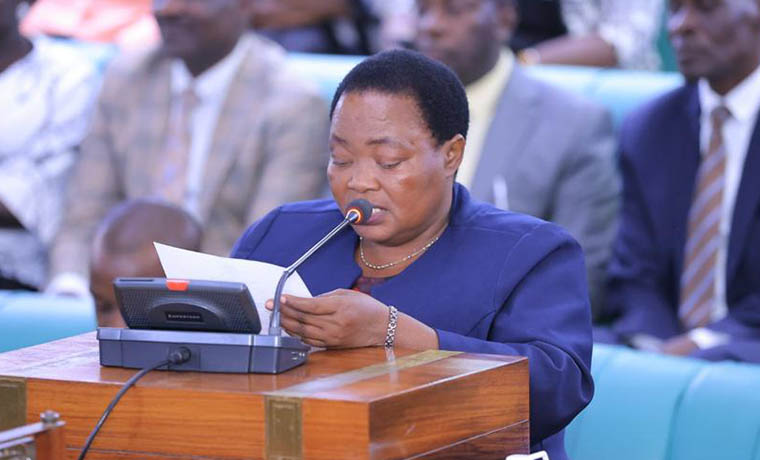
The announcement was made by Prime Minister Rt. Hon. Robinah Nabbanja during a meeting with manufacturers and other stakeholders in the textile and garment industry.
The development follows a series of engagements between the Government and traders, some of whom had closed their shops in protest against what they described as unfavourable taxation, particularly on imported textiles and garments.

Nabbanja said that following a Cabinet meeting held on Monday, it was resolved that textile and garment traders be granted a three-month amnesty to enable them to import their merchandise as the Government works towards addressing their concerns.

She added that Uganda would adopt a uniform tax rate of 35 per cent on textiles and garments, in line with other countries in the region, in a move aimed at curbing revenue losses resulting from traders importing goods through neighbouring countries.
The Prime Minister also conveyed President Yoweri Museveni’s appreciation of manufacturers for their contribution to the country’s development agenda, assuring them of the Government’s continued support and protection.
Moses Kaggwa, the Director of Economic Affairs at the Ministry of Finance, Planning and Economic Development, said the Government views the textile sector as a key driver of employment creation and economic transformation.
However, Kaggwa noted that the protective tariffs introduced on textiles and garments had not delivered the expected results, highlighting the need to review the existing tax policy.
John Musinguzi Rujoki, the Commissioner General of the Uganda Revenue Authority (URA), urged manufacturers to embrace the use of locally available raw materials, particularly cotton, to strengthen domestic production and add value to Uganda’s agricultural products.
Some investors at the meeting called for increased Government support to enable local manufacturers to compete effectively and expand their operations.
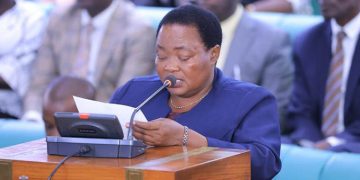
Prof. Pamela Mbabazi, the Chairperson of the National Planning Authority (NPA), challenged investors to go beyond manufacturing and prioritise the use of locally sourced raw materials, saying this would contribute to meaningful economic transformation.
To address the concerns raised by stakeholders, the Government has also constituted a committee to review the taxation policy governing the textile and garment sector.
The committee will be chaired by the Ministry of Finance, Planning and Economic Development, alongside the Ministry of Trade, Industry and Cooperatives, with the Uganda Revenue Authority and other relevant government agencies also represented.
The committee is expected to review the existing tax framework and recommend measures that balance the interests of local manufacturers, traders and the Government’s revenue mobilisation objectives. (For comments on this story, get back to us on 0705579994 [WhatsApp line], 0779411734 & 041 4674611 or email us at mulengeranews@gmail.com).