







By Mulengera Reporters
In Hoima, a school’s growth is being measured not only by the number of students walking through its gates, but also by the classrooms, dormitories, jobs and opportunities created along the way. Behind this transformation is a banking partnership that has lasted more than a decade.
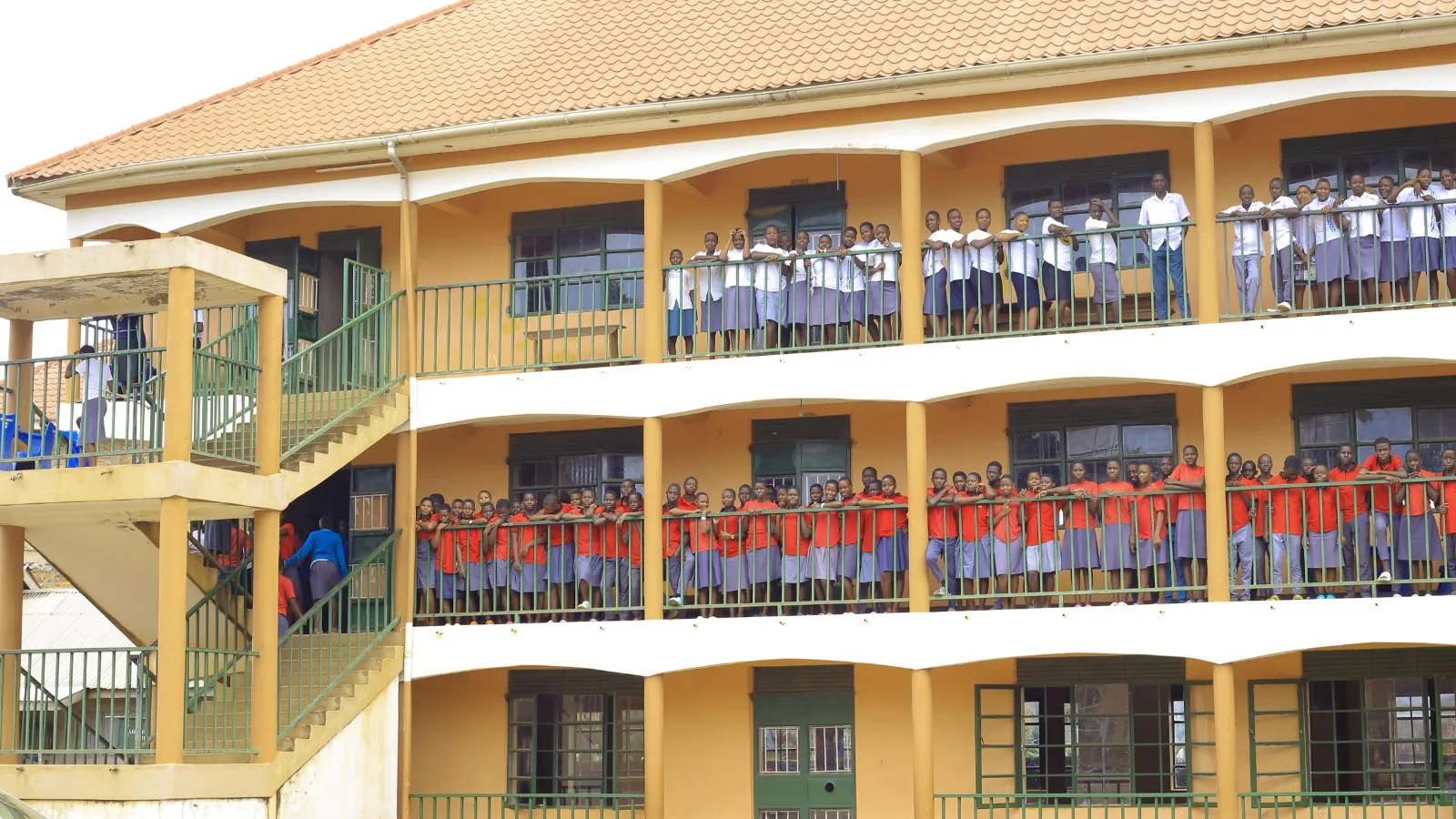
When Bob Gerald Wosuna joined St. Peter’s High School Hoima, the institution had approximately 350 students and only two classroom blocks. More than two decades after the school was established in 2001, Wosuna, now the head teacher, has witnessed a remarkable transformation, with new classrooms, dormitories and learning facilities emerging to accommodate a growing student population.
For him, the journey is more than a story of expanding buildings. It is about creating an environment where more young people can access education and pursue their ambitions.

“When I came here, the number of students was 350. I have seen the population grow. I found only two blocks, but I have witnessed the development in infrastructure. Dormitories and new classrooms have been put up, and this has helped us accommodate the increasing number of students,” Wosuna said.
Today, St. Peter’s is a mixed day and boarding secondary school in Kiryatete, Hoima City, offering both Ordinary and Advanced Level education to more than 1,000 students.
Behind much of this growth is a financial partnership with Equity Bank Uganda that began in November 2013 and has supported the school’s infrastructure development, daily operations and expansion ambitions.
For School Director Nyendwaha Baikaguza, access to financing has been central to turning the institution’s vision into reality.
He recalls that the relationship initially involved overdraft facilities around 2014/2015, which enabled the school to access funds when opportunities for expansion arose.
Through these facilities, the school was able to acquire neighbouring plots of land, gradually expanding its footprint and creating room for future development.
“Equity was giving us overdrafts. I would easily access money from the bank through overdrafts and buy these plots from the neighbours. That’s how I expanded,” Baikaguza said.
He added that the school has since acquired approximately 40 acres, with Equity Bank financing playing a significant role in the acquisition and expansion journey.
The relationship has evolved beyond overdrafts to include school construction loans, bridge financing and asset financing.
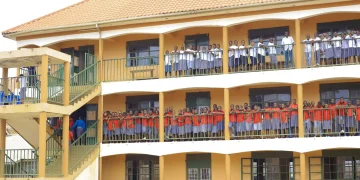
According to the school, approximately 80 per cent of its current buildings have been constructed through credit facilities obtained from Equity Bank.
These facilities have supported the construction of classrooms and dormitories, as well as the acquisition of school equipment and other essential infrastructure.
For an institution serving more than 1,000 learners, such investments are critical in ensuring that growth in student numbers is matched by adequate learning facilities.
But the impact of the partnership is perhaps best understood through the experiences of the students who use these facilities every day.
For Jannet Hannah Kataha, the school library is one of the most important spaces in her learning journey. She says the facility provides sufficient space for students to read, revise and prepare for their academic work.
“The facility that has made me like my school most is the library because it provides enough space for every student to revise his or her books,” she said.
Her schoolmate, Francis Ajunna, identifies the computer laboratory as his favourite facility, particularly because it gives him access to research resources that support classroom assignments.
“The computer lab is one of my favourites because it gives me enough time to research and do my research work. Maybe if a teacher has left us an assignment, I take time to go and research,” Ajunna said.
He added that the facilities available at the school have helped students access resources that support their academic development.
For the two students, the significance of the school’s growth is not measured in loan facilities or financial transactions, but in having access to spaces and resources that make learning more practical and productive.
Beyond infrastructure and student welfare, the partnership has also created an extensive financial relationship involving the school’s employees and suppliers.
St. Peter’s High School employs more than 50 people, including teachers, administrators and support staff, whose livelihoods depend on the institution’s continued operations.
Many of these employees bank with Equity Bank, with their salaries paid directly through the institution.
The school has also adopted a structured school payment arrangement in which every student has a school pay code, providing a channel for managing school-related payments.
Additionally, suppliers who provide goods and services to the institution are paid through Equity Bank, extending the relationship into the wider business community.
This means the financial relationship is not limited to school management but connects employees, families, suppliers and other businesses that support the institution.
Equity Bank Hoima Branch Manager Lambert Kusemererwa said the relationship began in November 2013, when St. Peter’s High School opened an account with the bank.
He noted that the institution has grown considerably since then, with the bank providing different financial solutions to support its expanding operations.
“We began the relationship in 2013, in November. That’s when the customer opened an account with us. We started when they were still very small, but we have seen them grow since 2013 by the fact that Equity Bank supported them,” Kusemererwa said.
He explained that the bank has provided asset financing, school bridge financing and other facilities to support the institution’s operational and infrastructure needs.
Through bridge financing, for instance, the bank has helped the school meet obligations such as paying teachers’ salaries at the end of school terms.
The facilities have also supported the purchase of school equipment, including laboratory equipment.
Kusemererwa added that the relationship extends to the school’s employees and associated businesses, many of whom also maintain banking relationships with Equity Bank.
“So basically, St. Peter’s has contributed a lot to the growth of our balance sheet as a branch,” he said.
His remarks highlight the wider business dimension of the partnership, demonstrating how financing an educational institution can stimulate activity across several parts of the local economy.
For Head Teacher Wosuna, the benefits also extend to staff welfare and financial empowerment.
He explained that the school encourages savings initiatives and groups that enable employees to support one another and improve their livelihoods.
“We go beyond teaching. We have the savings, we have the groups that help us develop. It is that we help each other to live in a good environment,” he said.
As the school continues to expand, Baikaguza is also looking beyond tuition fees as its primary source of income.
He revealed that the institution has acquired land and started cultivation, with plans to explore other business ventures that could generate additional revenue and strengthen its financial sustainability.
The ambition is to develop alternative income streams that can support the school’s long-term growth rather than relying exclusively on school fees.
For Equity Bank, the St. Peter’s relationship illustrates how banking can go beyond conventional deposits and withdrawals to support institutions, businesses and individuals through different stages of growth.
The partnership has supported an institution that now serves more than 1,000 students, employs over 50 people and works with a network of suppliers, while helping finance approximately 80 per cent of its current buildings.
But the most meaningful measure of the journey lies in the people whose lives are connected to the institution.
It is reflected in Wosuna, who has watched the school grow from 350 students; in Baikaguza, whose expansion ambitions have been supported by access to financing; in the teachers and other employees whose salaries sustain their families; and in students such as Kataha and Ajunna, who are using the library and computer laboratory to prepare for their futures.
It is also reflected in the businesses supplying the school and the wider community benefiting from the economic activity generated by its operations.
From two classroom blocks to a growing educational institution with a 40-acre footprint, St. Peter’s High School Hoima’s journey demonstrates the role that access to finance can play in supporting education and enterprise.
For Equity Bank Uganda, the relationship that began in 2013 has become an example of how sustained financial partnerships can help turn institutional ambitions into opportunities that reach far beyond the banking hall.
Ultimately, the real return on the investment is not only in the buildings constructed or the facilities financed, but also in the learning opportunities being created for young people preparing to shape Uganda’s future. (For comments on this story, get back to us on 0705579994 [WhatsApp line], 0779411734 & 041 4674611 or email us at mulengeranews@gmail.com).