






By Mulengera Reporters
Equity Bank Uganda is ramping up efforts to break what it describes as the biggest obstacle to clean energy adoption in Uganda, the high upfront cost of solar systems, clean cook stoves, and other renewable energy technologies.
The lender has unveiled an expanded green financing strategy designed to make clean energy more affordable for households, schools, farmers, and small businesses, positioning itself at the forefront of Uganda’s transition away from costly and environmentally harmful energy sources.

As rising energy costs and unreliable electricity access continue to affect millions of Ugandans, the bank says flexible financing could be the missing link needed to accelerate adoption of renewable energy technologies nationwide.
Speaking on renewable energy financing and Results-Based Financing (RBF), Equity Bank’s Head of Energy, Environment and Climate Change, Virginia Semakula, said demand for clean energy already exists, but affordability remains a major challenge.

“Many Ugandans want solar systems, clean cookstoves, and renewable energy solutions, but the initial costs remain too high for households and small businesses,” she said.
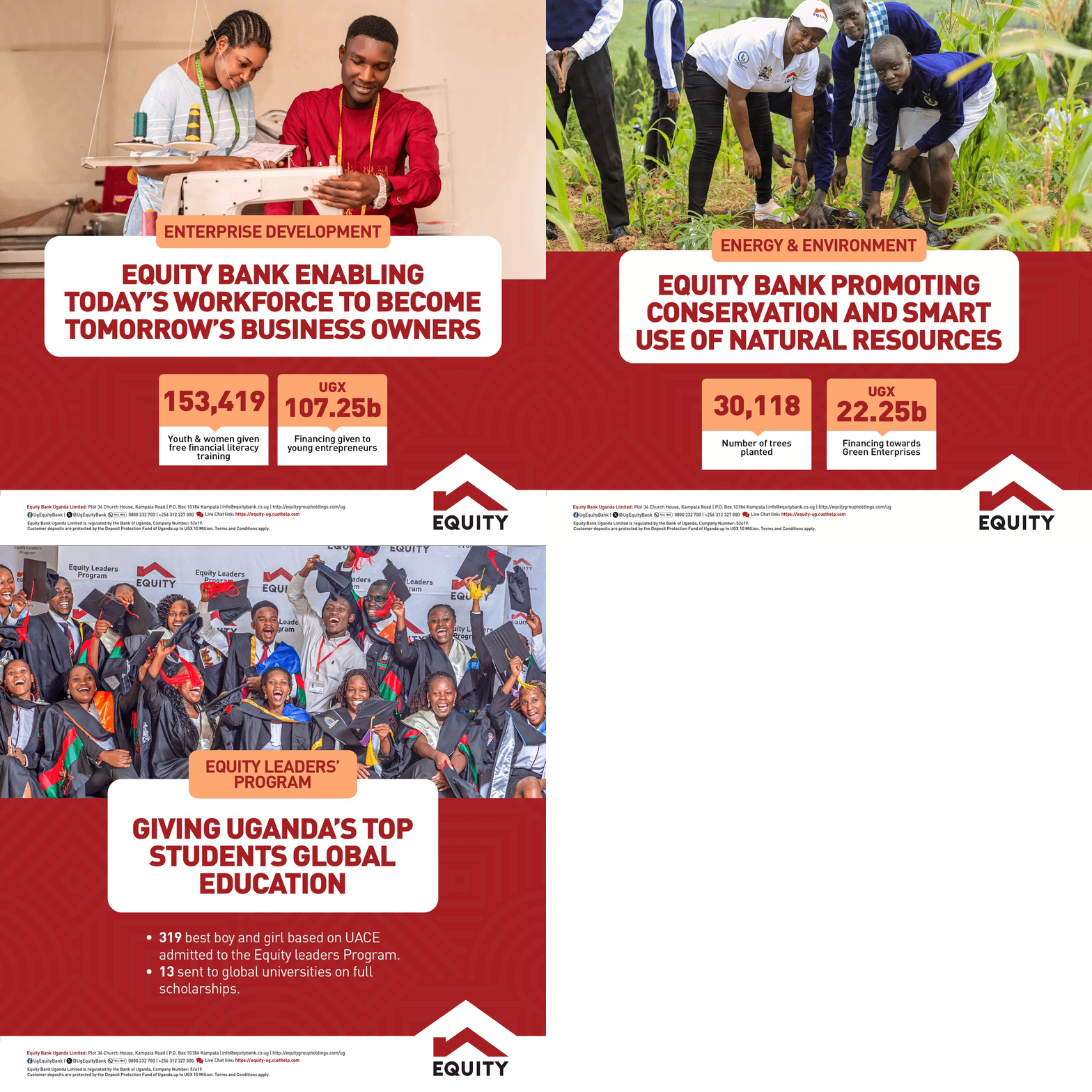
To address this gap, Equity Bank has introduced specialized products including Equi-Green Loans and Green Enterprise Financing, offering longer repayment periods and tailored financing for households, SMEs, agribusinesses, schools, and companies investing in renewable energy.
The bank argues that traditional short-term loans often make renewable energy investments unaffordable, advocating for longer repayment structures that lower the financial burden on customers.
Under its model, Equity works directly with renewable energy suppliers who install the technologies while the bank provides financing, reducing entry barriers for consumers seeking alternatives to charcoal, kerosene, and firewood.
A key part of the strategy is Results-Based Financing, where incentives are only released after projects are independently verified and confirmed to be operational. The bank says the model is helping de-risk investments while delivering measurable impact.
According to Equity, the financing approach is already supporting cleaner cooking solutions in rural communities, helping businesses cut electricity costs through solar power, and enabling schools in off-grid areas to access reliable electricity.
Despite concerns within the financial sector about renewable energy lending, the bank says repayment performance and growing customer uptake are proving the market is commercially viable.
Looking ahead, Equity plans to expand partnerships with renewable energy companies, intensify public awareness campaigns, and strengthen financial literacy programs aimed at increasing access to clean energy technologies.
“Our vision is a Uganda where every household and business can access clean energy without taking on unmanageable debt,” Semakula said.
The lender believes reducing financing barriers could unlock hundreds of millions of dollars in renewable energy investments and accelerate Uganda’s shift toward cleaner, more affordable energy solutions. (For comments on this story, get back to us on 0705579994 [WhatsApp line], 0779411734 & 041 4674611 or email us at mulengeranews@gmail.com).