







By Mulengera Reporters
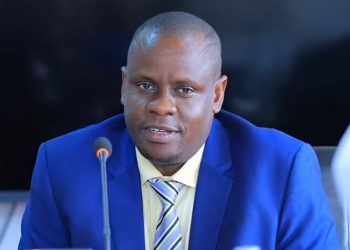
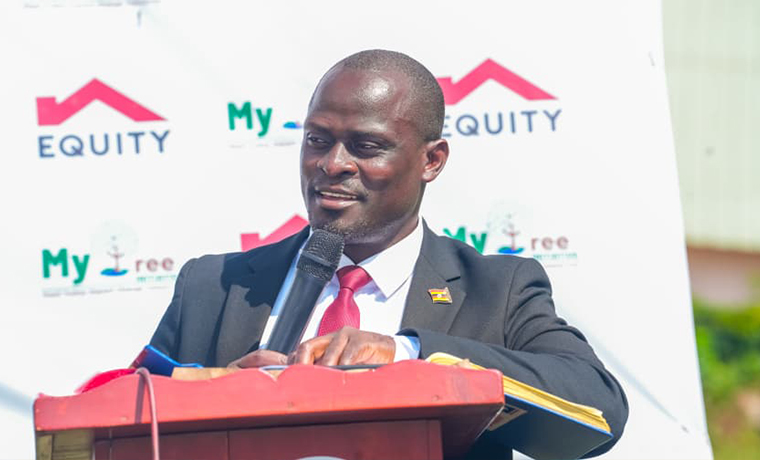
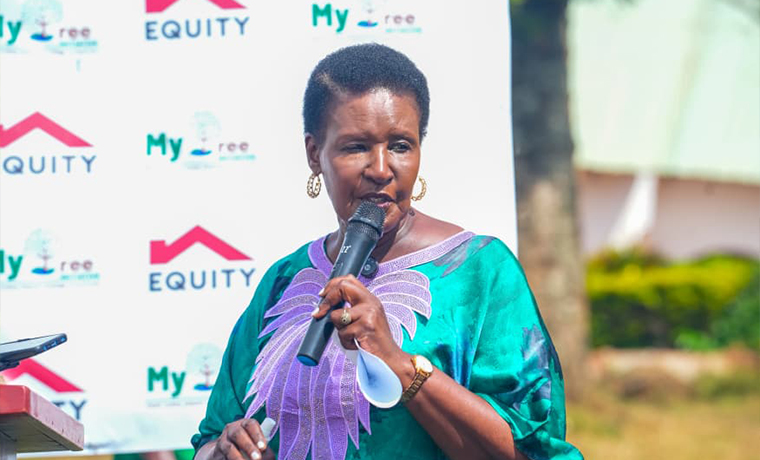
Equity Bank Uganda has strengthened its environmental conservation agenda through a major tree planting campaign in Mpigi District, with former Trade Minister and Mawokota North Member of Parliament Amelia Kyambadde calling on Ugandans to treat trees as national assets rather than a source of charcoal and timber.
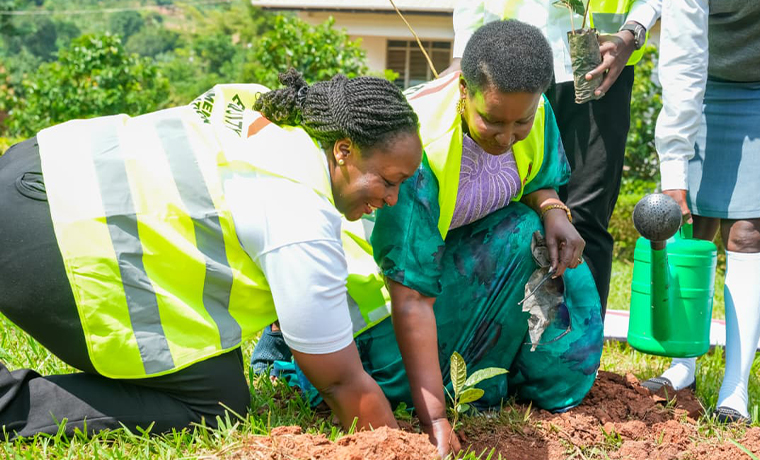
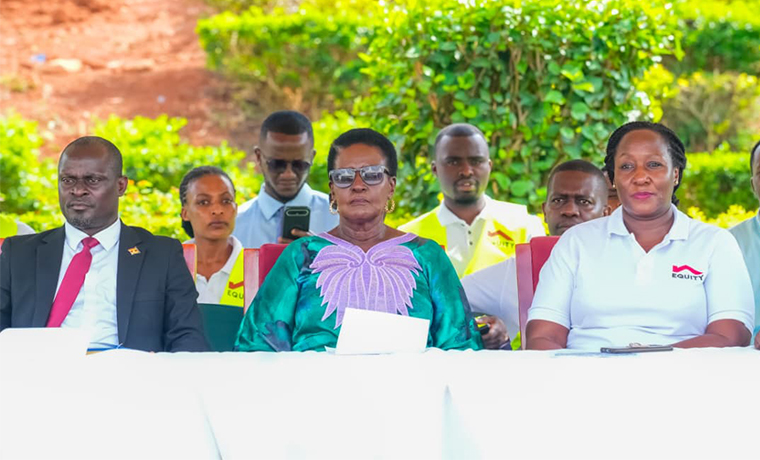
The exercise, organized in partnership with My Tree Initiative at Kyasanku Hill College in Kasanje along the Kampala-Masaka Highway, saw students, teachers, community leaders and environmental advocates plant hundreds of indigenous and fruit tree species on two acres of land dedicated by the school for environmental restoration.
The campaign forms part of Equity Bank Uganda’s contribution to Equity Group’s ambitious target of planting 35 million trees across East Africa under its Africa Recovery and Resilience Plan (ARRP), which promotes environmental conservation as a pillar of climate resilience, food security, biodiversity protection and inclusive economic growth.

Addressing participants, Kyambadde challenged Ugandans to rethink the value of trees beyond their commercial use.

“Trees are more than timber. They provide food, shelter, biodiversity, clean air and a better future for generations to come,” she said.
She warned that the continued destruction of forests for charcoal production threatens both livelihoods and Uganda’s environmental future.
“Let us stop cutting trees for charcoal. Every tree we save today is an investment in Uganda’s tomorrow.”

Drawing from her personal experience, Kyambadde described trees as a source of healing and reflection.
“For the past five years, trees have been my therapy. Today I plant them, tomorrow I sit beneath them to read, reflect and find peace,” she said.
She urged communities to appreciate forests for the environmental services they provide rather than viewing them solely as commercial assets.
“A tree should not only be seen as cash waiting to be cut. Its greatest value lies in the life it sustains.”
Kyambadde concluded by reminding participants that environmental conservation is one of the greatest legacies today’s generation can leave behind.
“The greatest wealth we can leave our children is not money, but a healthy environment. Every tree planted today is a promise of a greener tomorrow.”
Equity Bank Uganda’s Manager for Energy, Environment and Climate Change, Virginia Ssemakula, said the institution views environmental protection as an integral part of its mission of transforming lives.
“At Equity Bank, we believe that transforming lives also means protecting the environment, because true prosperity can only exist on a healthy planet,” she said.
According to Ssemakula, sustainability requires safeguarding natural resources for future generations rather than focusing solely on present-day achievements.
“Sustainability is not just about today’s progress. It is about ensuring that future generations inherit the same opportunities, resources and dignity that we enjoy today.”
She observed that climate change is already affecting communities across Uganda through increasingly frequent floods, prolonged droughts and other environmental disasters.
“Climate change is no longer a distant threat. Floods, droughts and environmental disasters remind us every day that protecting nature is everyone’s responsibility. Our natural resources are limited, and the responsibility before us is not simply to use them, but to use them wisely and sustainably.”
Ssemakula said financial institutions have an important role to play by financing environmentally sustainable projects that contribute to long-term economic growth while protecting ecosystems.
“Financial institutions have a vital role in building a sustainable economy by investing in solutions that protect the environment and secure a better future for all.”
The partnership with My Tree Initiative reflects a shared commitment to reversing Uganda’s declining forest cover while empowering communities and young people to participate actively in environmental conservation.
My Tree Initiative Executive Director Enjer Ashiraf said tree planting should be viewed as an investment in both people and the environment.
“Tree planting is not simply about restoring forests; it is about restoring hope, protecting livelihoods and securing the future of our communities,” Ashiraf said.
“Through partnerships such as this one with Equity Bank Uganda, we are creating practical solutions to environmental challenges while empowering young people to take ownership of the climate agenda.”
Working closely with the Ministry of Water and Environment, schools, local communities, development partners and private sector organisations, My Tree Initiative continues to spearhead reforestation and climate awareness programmes across the country.
The Mpigi campaign adds to Equity Bank Uganda’s growing portfolio of environmental conservation initiatives.
Among the bank’s flagship programmes is the Bugisu Greening Campaign, implemented in partnership with the Umukuka wa Bugisu and the GRO Foundation, under which more than 60,000 trees are being planted following a Shs60 million investment.
At Busoga College Mwiri, the bank partnered with the Kenya High Commission and Million Trees International to invest Shs85 million in planting more than 43,000 indigenous trees while establishing a 10-acre fruit orchard. Similar greening initiatives have also been undertaken at St. Julian High School Gayaza.
As climate change continues to threaten ecosystems, agriculture and livelihoods across East Africa, Equity Bank says partnerships involving financial institutions, schools, civil society organisations and local communities are critical in accelerating environmental restoration efforts.
For Equity Bank Uganda and My Tree Initiative, the Mpigi campaign represents more than simply planting trees. It is an investment in climate resilience, environmental sustainability, community livelihoods and a greener future for Uganda and the wider East African region. (For comments on this story, get back to us on 0705579994 [WhatsApp line], 0779411734 & 041 4674611 or email us at mulengeranews@gmail.com).