







By Aggrey Baba
Democratic Party (DP) Vice President Dr Fred Mukasa Mbidde has said he would not mind seeing Uganda’s existing political parties scrapped under Gen Salim Saleh’s proposed consociational democracy arrangement, arguing that new political parties could be established once the country agrees on a more stable governance system.
Mbidde made the remarks while discussing about the Consociational Democracy Agreement, a document which was authored by President YK Museveni’s brother Salim Saleh, together with his personal aide Professor Ogenga Otunnu. He questioned whether the continued existence of registered political parties necessarily means the country has functional political organizations capable of providing meaningful leadership.
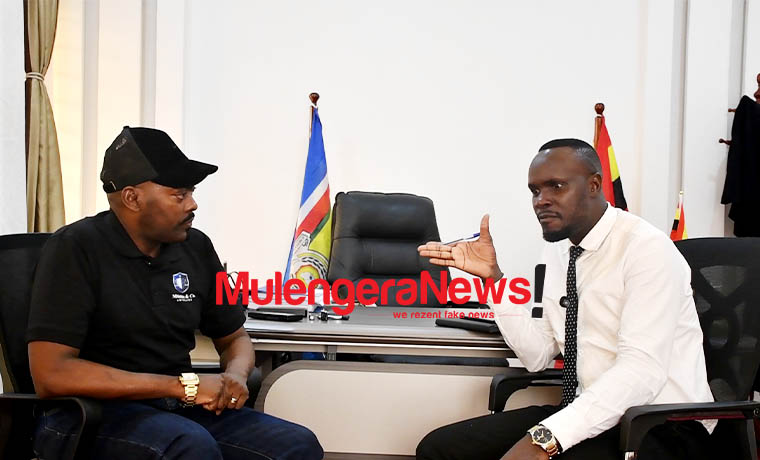
In an interview with Mulengera News on Friday, the former legislator at the East African Legislative Assembly (EALA) and veteran opposition politician argued that most political parties in Uganda have failed to develop the ideological foundations, organizational structures and internal democratic systems expected of institutions competing to govern the country. Detailed video version of the interview can be accessed and viewed via this YouTube link: https://www.youtube.com/watch?v=dYSknWlV61o&t=54s.

He said many politicians had instead turned political parties into convenient vehicles for electoral competition, without investing in the structures and political education necessary to make them effective institutions.

“If parties are to be deleted, delete, so be it. We will form new parties. There is no problem,” Mbidde said.
The position is particularly striking coming from a senior leader of DP, one of Uganda’s oldest political parties, whose history dates back to the country’s struggle for independence.
But Mbidde argued that the historical importance of political parties should not prevent Ugandans from questioning whether the existing ones are still serving the purpose for which political parties are supposed to exist.
He pointed to what he described as the absence of credible membership registers, weak grassroots structures and unclear ideological positions among several political organizations.
According to Mbidde, some parties cannot even demonstrate that they have properly established structures and meaningful membership across the country.
He also criticized what he described as ideological inconsistencies among political actors, arguing that some parties adopt positions depending on the political circumstances rather than operating from clearly defined principles.
Mbidde traced part of the problem to the period between 1986 and 2005, when political parties were restricted under the Movement system.
He argued that although the restoration of multiparty politics in 2005 allowed political organizations to resume their activities, Uganda did not adequately invest in educating citizens and politicians about the ideological and organizational responsibilities of political parties.
He said this contributed to a situation in which some Ugandans treat political party membership almost like religious affiliation, making it difficult for individuals to abandon the parties even when they no longer subscribe to their political beliefs.
Using his own party (DP) as an example, Mbidde questioned the relevance of maintaining political affiliations based on historical religious identities.
He argued that being Catholic, for instance, should not automatically oblige someone to belong to DP, suggesting that political affiliation should be determined by ideology and shared political interests rather than religious background.
Therefore, for Mbidde, the debate surrounding Gen Saleh’s proposed consociational arrangement should not be reduced to whether existing political parties will survive the negotiations.
He believes the more important question is whether the proposed process can establish a governance framework that restores stability and creates conditions for meaningful political competition and the emergence of stronger political institutions.
His position introduces a different dimension into the debate over Saleh’s proposal, particularly at a time when several opposition political parties regard the preservation of multiparty competition as central to Uganda’s constitutional and political development.
While some opposition politicians have expressed reservations about the proposed dialogue and its implications for the existing political order, Mbidde maintained that the survival of current political parties should not be treated as an end in itself. (For comments on this story, get back to us on 0705579994 [WhatsApp line], 0779411734 & 041 4674611 or email us at mulengeranews@gmail.com).