







By Ben Musanje
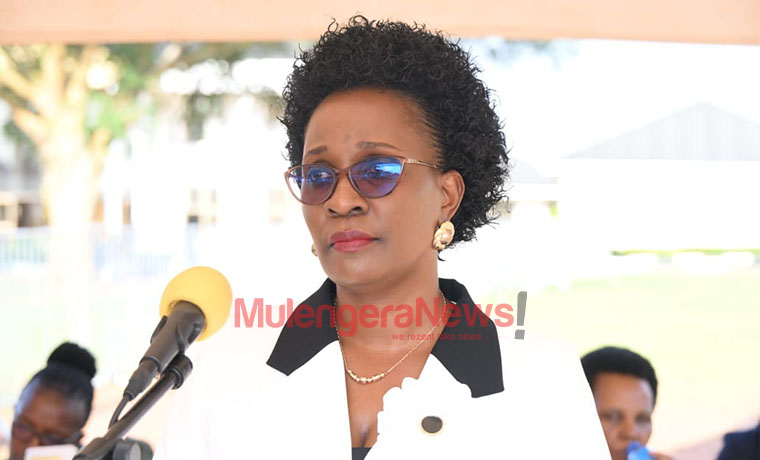
The Deputy Inspector General of Government (DIGG), Mrs. Anne Muhairwe, has cautioned Cabinet Ministers against interfering in the day-to-day operational work of government institutions, warning that such involvement may undermine accountability systems and create opportunities for corruption.
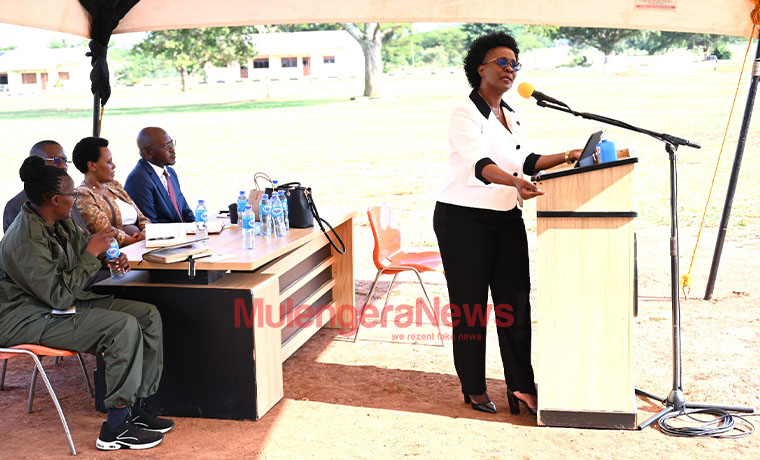
Speaking during an induction retreat for newly appointed Cabinet Ministers at the National Leadership Institute (NALI) in Kyankwanzi, Muhairwe said ministers should focus on strengthening oversight while allowing accounting officers and technical teams to execute administrative functions.
Her presentation centered on “The Mandate of the Inspectorate of Government and the Role of the Executive in the Fight Against Corruption,” with emphasis on maintaining clear institutional boundaries in public administration.

Muhairwe urged ministers to embrace what she described as the “Eyes-on, Hands-off” principle, where political leaders actively monitor government programmes without taking over operational responsibilities.

“The law assigns the responsibility of recruitment processes, procurement award decisions, and other day-to-day administrative functions to accounting officers. Where a minister identifies wrongdoing, the appropriate action is to refer the matter to the competent authority rather than assume functions assigned to others,” she said.
She stressed that strong oversight and respect for institutional processes must operate together, noting that weakening administrative systems often creates conditions in which corruption can thrive.
“Strong oversight and respect for institutional processes must go hand in hand. A minister who remains independent retains the moral authority necessary to supervise others and demand accountability,” Muhairwe added.

The Deputy IGG further encouraged ministers to take an active role in monitoring government programmes through field visits and engagement with service delivery points to ensure that public resources translate into tangible benefits for citizens.
She said political leadership becomes more meaningful when it is reflected in visible improvements in service delivery, adding that ministers should regularly assess the performance of programmes under their supervision.
“Ministers must ask questions. They must challenge poor performance. They must insist on results,” she said.
Muhairwe emphasized that government performance is ultimately judged by citizens based on outcomes rather than policy promises, underscoring the need for continuous monitoring and evaluation of public service delivery.
She added that effective oversight should function as a mechanism for identifying gaps in implementation and ensuring that public officials are held accountable for results.
The Deputy IGG also reminded ministers that public leadership carries significant responsibility, urging them to prioritize national interests over personal or political considerations in their decision-making.
Her remarks come as the government intensifies efforts to strengthen accountability mechanisms and improve efficiency in public service delivery across various sectors.
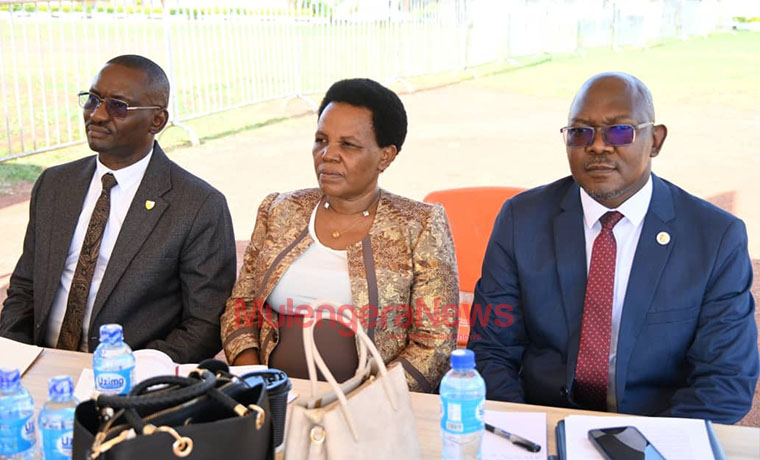
Muhairwe was accompanied by senior officials from the Inspectorate of Government, including Directors Mrs. Annet Twine (DPRMC), Mr. Gerald Gwaira (DREA), and Mr. Kakooza Savio Ntensibe (DOA). (For comments on this story, get back to us on 0705579994 [WhatsApp line], 0779411734 & 041 4674611 or email us at mulengeranews@gmail.com).