







By Ben Musanje
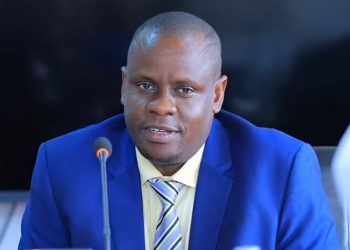
In a rare and emotionally charged interview with Nation Media Group journalist Edgar R. Batte on a YouTube channel, veteran Ugandan politician James Nathan Nandala Mafabi has laid bare the personal cost of political life, speaking candidly about betrayal, repeated “collapses,” and the emotional toll of years spent in power struggles, campaigns, and public service.
Mafabi, a long-serving Member of Parliament and former presidential contender on Forum for Democratic (FDC) ticket, did not hold back as he reflected on what he called a life marked by broken trust and political disappointment. “It takes a lot to reconcile with betrayal,” he said. “There is no straight path. You do this today, tomorrow you collapse. I personally have collapsed three times.”
Though he did not name specific individuals or incidents, his remarks pointed to a recurring theme of political betrayal—both within competitive electoral politics and within the broader ecosystem of alliances that often define Uganda’s political landscape.

The seasoned politician suggested that betrayal in public life is not a single event but a continuous burden. “It just takes long. It is in your hands,” he added, implying that recovery from political and personal setbacks is a slow, internal process rather than something resolved by external reconciliation.

The interview, conducted in a relaxed homelike setting, contrasted sharply with the weight of Mafabi’s reflections. At home, he described moments of calm listening to local and religious music, reading both the Bible and the Qur’an, and engaging with village conversations. Yet even in these quieter reflections, he repeatedly returned to the turbulence of public life.
He described his political journey as one filled with logistical hardship, financial strain, and emotional exhaustion. Campaign seasons, he said, pushed him into physically demanding journeys across Uganda, often under difficult conditions. Roads were impassable, vehicles were lost, and entire convoys were damaged during travel to remote campaign venues.
At one point, Mafabi recounted how his campaign operations suffered heavy losses, including multiple vehicles damaged or abandoned in flood-hit or inaccessible areas. He estimated the total financial burden of his recent political campaign cycle at over 20 billion Ugandan shillings when logistics, staffing, and losses were combined.

Despite the scale of those losses, Mafabi framed the experience as part of a broader struggle rather than a personal failure. However, beneath the logistical details was an undercurrent of frustration with what he sees as systemic inequality in political competition, where access to resources, transport, and institutional support is uneven.
He also expressed concern about the economic realities faced by ordinary Ugandans, pointing to rural poverty, exploitative money lenders, and high transaction costs in mobile money systems as evidence of deeper structural challenges. In his view, these hardships are part of the same environment that shapes political betrayal and survival.
“The people are suffering,” he said, arguing that political promises often fail to translate into real economic relief for citizens. He added that widespread poverty leaves communities vulnerable to debt cycles that strip them of land, livestock, and stability.
Despite his grievances, Mafabi insisted he remains committed to public service and political life. He described himself as still willing to serve, though only in the highest capacity. “I would only serve as a president. Nothing less,” he said, underscoring both ambition and defiance in the face of past defeats.
He also revealed his ongoing involvement in business ventures, including fuel, hospitality, and media interests, suggesting a parallel strategy for survival beyond politics. Still, he maintained that politics remains central to his identity, describing it as something that exists “even in the home.”
As the conversation closed, Mafabi returned to his central theme: resilience in the face of repeated setbacks. Betrayal, collapse, and recovery, he suggested, are not exceptions in political life but its defining rhythm.
For a man who has spent more than two decades in Uganda’s political arena, the message was clear—survival has required endurance, reinvention, and a willingness to continue even after repeated political and personal blows. (For comments on this story, get back to us on 0705579994 [WhatsApp line], 0779411734 & 041 4674611 or email us at mulengeranews@gmail.com).