








By Langoya Alex
The recent statement by the Chief of Defense Forces (CDF), General Muhoozi Kainerugaba, regarding the validation of Resident District Commissioners (RDCs) before appointment presents an important opportunity for Uganda to rethink the role, professional capacity and institutional relevance of RDCs in the country’s governance architecture. While loyalty to the President and constitutional order remains important, a more fundamental question is whether the current crop of RDCs possesses the qualifications, experience, integrity and professional competencies required to effectively represent government and connect it with citizens.
Reflecting on Northern Uganda, particularly during and after the insurgency, one recalls distinguished District Administrators (DAs), Special District Administrators (SDAs) and RDCs such as the late Benon Biraaro, late Tom Apilla, late Ocaya, late George Odwong of Kitgum; Peter Odok W’Ochieng, and late Colonel Walter Ochora Odoch of Gulu; Late Ojede Obaa, and Joseph Arwata of Lira among others. These individuals commanded public attention and effectively communicated government positions, even among communities that were initially hostile to government.
The late Colonel Walter Ochora Odoch, for instance, demonstrated remarkable communication prowess through his regular engagements on MEGA FM, particularly in explaining government policy on the disbandment of Internally Displaced Persons (IDP) camps, besides his role in peace talk with the LRA. His experience illustrates the influence an RDC can exercise through effective public communication, community engagement and an understanding of local political dynamics.

Unfortunately, much of this institutional communication capacity appears to have weakened over time. The challenge confronting Uganda today is therefore not simply whether RDCs are loyal to government, but whether they possess the professional competence to translate government policies into public understanding, facilitate citizen engagement and strengthen confidence in public institutions.
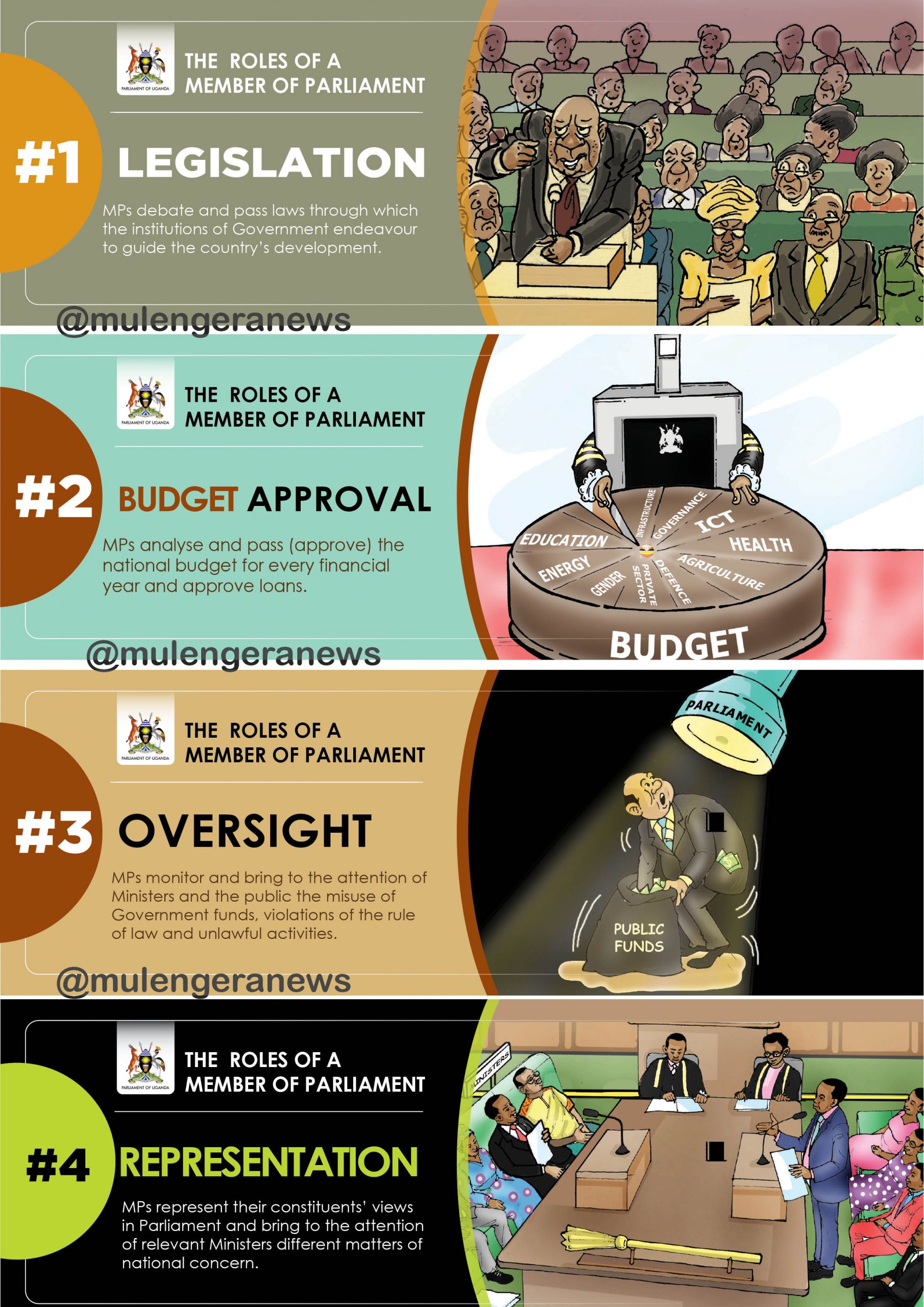
Under Article 203 of the Constitution of the Republic of Uganda, 1995, RDCs represent the President at district level and perform important responsibilities relating to government programme monitoring, coordination of government services, security oversight and sensitization of communities about government policies and programmes.
However, the changing governance environment demands that these responsibilities extend beyond traditional administrative supervision and political mobilization. RDCs must increasingly become strategic governance communicators, public policy interpreters and facilitators of constructive government-citizen relationships. Government performance should not only be measured by the policies adopted, infrastructure constructed and resources allocated, but also by what citizens understand, experience and trust.
Despite the numerous development interventions undertaken by the NRM government, their visibility and public appreciation are sometimes undermined by fragmented government communication, information gaps, misinformation, inadequate citizen engagement and weaknesses in institutional accountability. Government can invest substantial resources in development programmes, but where citizens lack reliable information about their objectives, implementation and intended benefits, the opportunity to build public confidence is diminished.
This call for the integration of three complementary governance instruments into the work of RDCs: strategic governance communication, ethical political marketing and institutional trust building. Strategic governance communication ensures that government policies, programmes and achievements are systematically communicated and understood by citizens.
Political marketing applies stakeholder analysis, audience segmentation and strategic messaging to improve public understanding and positioning of government policies, without descending into propaganda or partisan manipulation. Institutional trust, on the other hand, is built through transparency, integrity, competence, responsiveness and accountability.
RDCs occupy a unique position to facilitate these interconnected governance functions because they operate at the intersection of central government, local government institutions and communities. They are therefore strategically positioned not only to communicate government policies to citizens but also to relay citizens’ concerns, expectations and experiences to the relevant government authorities.
The adoption and launch of Uganda’s National Communication Policy 2026 provide an important opportunity to institutionalize this transformation. The policy’s emphasis on coordinated government communication, crisis communication, addressing misinformation and meaningful citizen engagement creates a foundation for repositioning RDCs as strategic actors within the national government communication architecture. However, this transformation requires more than administrative instructions. It demands deliberate institutional reform, professional capacity development, clear performance standards and effective coordination mechanisms.
To translate the CDF’s proposed validation exercise into an institutional reform, this article proposes the establishment of a District Strategic Governance Communication and Public Confidence Framework (DSGCPF), coordinated by the Ministry of ICT and National Guidance in collaboration with the Office of the President, Ministry of Local Government, RDC Secretariat and local governments.
The framework would bring together RDCs, Chief Administrative Officers (CAOs), District Chairpersons, District Information Officers, District Communication Officers and other relevant stakeholders to strengthen government communication and citizen engagement at district level. The proposed framework would be anchored on five strategic pillars: strategic governance communication and public information; ethical political marketing and government programme positioning; citizen engagement and participatory governance; institutional transparency, accountability and responsiveness; and public confidence monitoring and institutional trust measurement.
Through these pillars, districts would develop coordinated communication strategies, establish structured platforms for citizen-government dialogue, strengthen public information sharing and periodically assess citizens’ perceptions of government institutions and service delivery.
The overarching objective would be to strengthen government-citizen relations, public communication, accountability and institutional confidence at district level. Importantly, this framework should complement rather than duplicate existing government communication and local government structures, while respecting the respective constitutional and statutory mandates of RDCs, CAOs, elected local government leaders and other public institutions.
For this framework to succeed, the proposed RDC validation exercise must go beyond determining political loyalty. Loyalty to the President and constitutional order is important, but it must be complemented by professional competence, integrity, relevant academic qualifications, administrative experience, political consciousness and effective communication skills. Uganda needs RDCs who understand public administration, appreciate the country’s political and socioeconomic environment, interpret government policies, manage stakeholder relationships, communicate during crises and facilitate constructive engagement between citizens and government.
The validation process should therefore establish clear minimum professional standards covering academic qualifications, public administration experience, leadership capacity, communication competencies, ethical conduct and understanding of constitutional governance. Furthermore, RDC performance should be assessed against measurable indicators, including the effectiveness of government communication, citizen engagement, responsiveness to public concerns, coordination of government programmes and public confidence in government institutions. This would shift the emphasis from appointment based predominantly on political considerations towards a more professional and performance-oriented system of public administration.
The proposed validation of RDCs should ultimately be viewed as an opportunity for broader institutional transformation rather than merely an exercise in determining political loyalty. The RDC of the future must be more than a presidential representative, security coordinator or government programme mobiliser. He or she must become a strategic governance communicator, public policy interpreter, government-citizen relationship manager and institutional trust builder.
Uganda has an opportunity to redefine the RDC institution in response to the changing demands of public administration, digital communication, citizen participation and accountable governance. The proposed District Strategic Governance Communication and Public Confidence Framework offer a practical pathway towards achieving this transformation and translating the objectives of the National Communication Policy 2026 into tangible district-level governance outcomes.
Ultimately, government must not only govern effectively; it must also communicate effectively, engage meaningfully and earn public confidence. Loyalty may secure representation, but competence, integrity and professionalism deliver effective governance. Uganda needs RDCs who possess all four. The writer is a Policy Analyst and a student of “From Obwiriiza to Amatafaali.” (For comments on this story, get back to us on 0705579994 [WhatsApp line], 0779411734 & 041 4674611 or email us at mulengeranews@gmail.com).