




By Aggrwy Baba
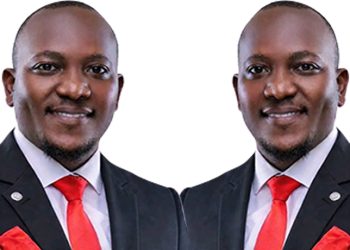
Outgoing Mowokota South MP and FDC stalwart, Yusuf Nsibambi, has officially crossed into NRM, sparking another debate over his political loyalties and the shifting allegiances within the opposition ranks.
At the NRM headquarters on Kyadondo Road in Kampala, Nsibambi was on Wednesday, February 18, welcomed by senior party leaders, including the Speaker of Parliament and Bukedea District woman MP, Annet Anita Among, and the NRM Secretary General (SG), Richard Todwong.
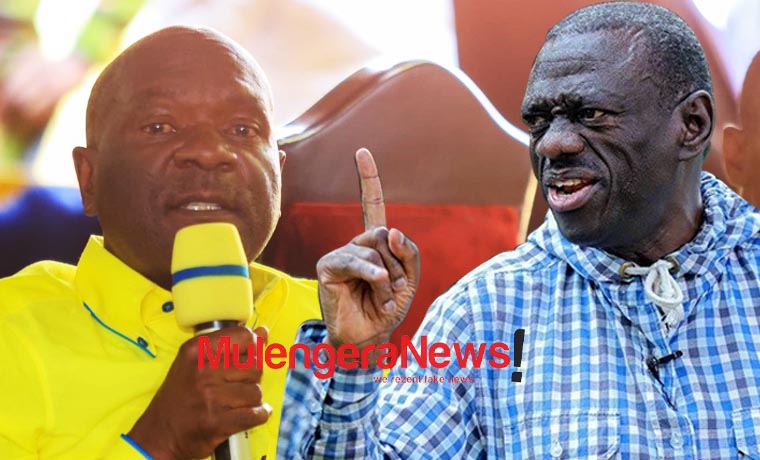
Dressed in the party’s signature yellow shirt, Nsibambi boldly said, “I’m here as a newcomer but I have the zeal and strength to work for the NRM, to ensure that my country and my people have smiles on their faces.”
He went on to thank the Speaker and SG, for the opportunity.
His announcement marks the culmination of weeks of speculation and debate following a controversial meeting between Nsibambi and President Kaguta Museveni earlier this month. The meeting, which Nsibambi had publicly defended as a strategy to reconcile the opposition and the ruling party after the charged January 2026 election, was initially seen by many as an attempt to bridge the political divide. However, his formal move into the NRM today is seen by some as a clear indication of his shift to the yellow bus.
In a further symbolic gesture, Nsibambi revealed that he had come with his FDC membership card and would soon return it to Najanankumbi before officially collecting his yellow membership card from Todwong.
The move comes in the wake of ongoing talks about opposition MPs forging partnerships with the NRM. Recently, Among who’s also the second vice chairperson for the NRM hinted that many opposition MPs were exploring the possibility of signing a Memorandum of Understanding (MoU) with the NRM.
A History of Shifting Allegiances
Nsibambi’s political journey has always been marked by shifting allegiances and wavering loyalty, raising eyebrows within both the opposition and the NRM. The FDC has long struggled with internal divisions, and Nsibambi has often found himself in the middle of these splits. His history within the party is a story of fluctuating positions, where he has sometimes acted as an ally of the opposition leadership and at other times as a bridge to the NRM.
A striking example of his unpredictable political maneuvering came in 2021 when Nsibambi, despite being an FDC member, reportedly helped secure an audience between an NRM MP and President Museveni. The NRM MP, who had faced difficulties getting access to the president, was able to meet with Museveni after Nsibambi intervened. This incident, aired during a political talk show on CBS Radio, left many questioning the true nature of Nsibambi’s political commitments.
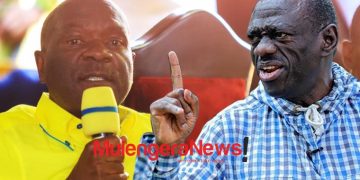
It is a narrative that has played out before. Back in the 1980s, as the National Resistance Army (NRA) fought to overthrow President Milton Obote’s government, FDC founder Kizza Besigye famously gave Nsibambi the nickname “Kanoonya.” Besigye explained that the name was inspired by a man named Kikonyogo Kanoonya, a figure from the NRA bush war days who was always uncertain about the rebels’ success and frequently vacillated between the government and the insurgents.
Besigye likened Nsibambi’s behavior to that of Kanoonya, describing him as someone who seemed to constantly waver between working with the government and opposing it, making it difficult to predict where his loyalties truly lay. In the years since, Besigye’s prediction has appeared very accurate as Nsibambi’s political moves have frequently shifted between the FDC and the NRM, leading some to label him as opportunistic.
Nsibambi’s formal alignment with the NRM is part of a broader trend of fragmentation and realignment in Uganda’s opposition politics. Since the internal fallout within the FDC and the formation of the People’s Front for Freedom (PFF), now led by Erias Lukwago, some members have accused factional leaders of accepting money from the government, further fueling suspicions of opposition betrayal.
Nsibambi was notably involved in the efforts to block the Katonga faction, which later splintered off to form the PFF.
Political watchers have long suggested that Nsibambi’s interactions with the NRM were strategic rather than ideological. His recent meeting with Museveni, coupled with his longstanding role as a mediator between the two political sides, further compounds this perception. It appears that some in the opposition are now opting to work within the yellow camp for personal or political gain, even as they outwardly oppose its rule.
As Nsibambi formally joins the Museveni, his move is likely to have ripple effects throughout the political landscape, raising questions about the future of opposition unity in Uganda, particularly at a time when the country’s political scene is experiencing significant shifts.
With several opposition MPs reportedly in talks with the NRM, “How will this trend evolve? And will more opposition leaders follow in Nsibambi’s footsteps, or will the shift only further entrench the divide?” Remains the question at large. (For comments on this story, get back to us on 0705579994 [WhatsApp line], 0779411734 & 041 4674611 or email us at mulengeranews@gmail.com).