




By Mulengera Reporters
At a recent cabinet meeting, Ministers voted to alter the GoU public media communication strategy whereby liberalisation of the airwaves is to be moderated. At that cabinet meeting, majority Ministers were of the view that radios, TVs and even online media houses had become too many-implying that the government detrimentally “over liberalised” the media space.
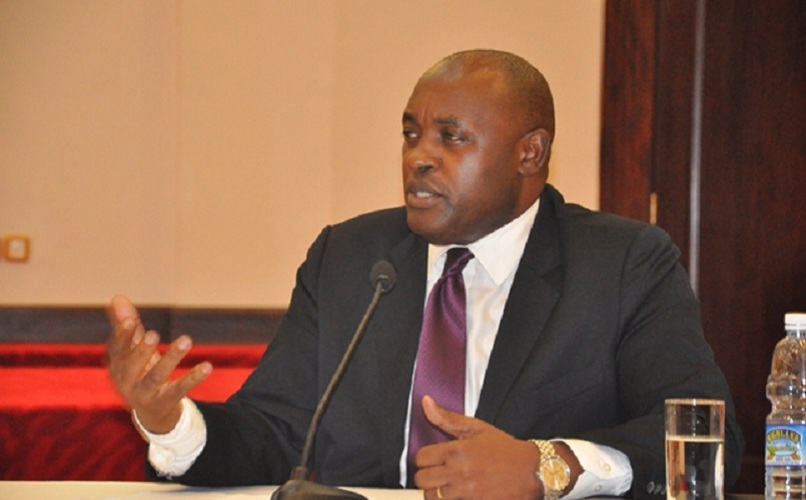
On Friday, while opening the UCC broadcasters and media owners’ stakeholder engagement meeting for the greater Kampala region at Imperial Royale Hotel, Information & National Guidance Minister Dr. Chris Baryomunsi told the evidently shocked media owners and broadcasters that at the above referenced Cabinet session, majority Ministers expressed dismay at growing cases of extortion and lack of professionalism among so-called media practitioners.
Baryomunsi said several Ministers told the meeting how they were continuing to be privately approached by poverty-stricken news reporters, moderators and editors who complain of exploitation whereby they take long to be paid, in the case of those who are lucky to be paid at all.

Others complained of the pay being very little-as little as Shs150,000 per month yet there are no other benefits such as transport or even lunch at the work place.
Many journalists are deployed and sent out to report news at places like Parliament, Court, press and Media Centre etc without being facilitated with basic things such as transport.
Baryomunsi explained that at the above referenced cabinet meeting, Ministers weren’t exactly angry at media owners having come to the realisation that many of these so-called media houses, radio stations and TVs, are actually not making money. They are financially struggling and not breaking-even. This is the case regardless of whether such TV or radio station is based in Kampala or upcountry, though the problem of journalists’ exploitation is worse and more pronounced in areas further away from Kampala.
Baryomunsi revealed that, to address the problem in a manner that relieves both the staff and media owners, Cabinet had resolved to have “rationalization of the media ecosystem” similar to what happened to government MDAs some months ago. This resulted into some government departments and agencies being deemed duplicating roles and as financially unviable. They were merged and, in their place, more viable entities established.
Baryomunsi revealed that Cabinet tasked his Ministry to spearhead this rationalization of the country’s media ecosystem and that this is something his Ministry is determined to prioritize and fix urgently. He revealed that majority Ministers felt that there is need to collapse some of them because media houses have simply become too many in Uganda and that this isn’t sustainable-government has to intervene and refocus the media landscape in the country.
Baryomunsi indicated that Gen Museveni was fully aware of media houses’ inability to remunerate staff and generally address their welfare concerns, which is why he has lately been using his upcountry wealth creation tours to interact with individual media practitioners into whose SACCOs he has been investing Shs100m each besides donating a transport van to each such SACCO. That this explains why the man from Rwakitura is very supportive of the reforms his Cabinet is suggesting to be occasioned onto the country’s media landscape.
The Minister also quoted fellow Cabinet members to have wondered why there was need for some districts to have as many as 4 radio stations “even when its obviously not viable and owners can’t even get money to pay staff from that very radio business.” Baryomunsi added: “There is need to promote ethics of media practice and this can only be achieved through recruiting professionals, which many of these media houses can’t afford because they aren’t making money. They are not viable as businesses-they have failed to break even after many years of being in operation.”
Saying time has come for government to “bring the required levels of hygiene in the media ecosystem,” Baryomunsi called on media owners present (mainly those uniting under National Association of Broadcasters [NAB] and RUBA for rural broadcasters) to prepare their views on how that is going to be achieved for the betterment of the media industry, as opposed to destroying it. “My Ministry will be looking forward to your input into this rationalization process.”
The Minister corroborated on what UCC Executive Director Nyombi Thembo had said earlier on during the same Friday meeting, by revealing that the regulatory mechanisms and levers will be utilized by the government to ensure that some of the small media houses, that are clearly unviable as businesses, accept to be bought off and acquired by bigger ones which are more viable.
Government hopes that once that happens, the surviving media broadcasting houses will be able to be stronger and leverage economies of scale. The rationalized media industry, government hopes, will be able to operate more profitably, have adequate financial resources to attract, recruit and retain professional media practitioners through whom professionalism and media ethics will be easier to enforce.
Paul Ekochu’s Media Council, which government recently reconstituted after expiry of former Council members’ tenure, will be playing an equally big role in guiding that impending rationalization process of the media industry.
Just like Presidency Minister Milly Babalanda who had spoken earlier, Baryomunsi hoped that tendencies of journalists surviving on extortion will be significantly diminished as a result of the impending rationalization through which government hopes that individual media businesses will improve their capabilities to trade and operate more profitably so that there are no more excuses not to hire ethical professionals who understand the need to engage in objective, balanced, accurate and fair reporting using public media platforms.
Baryomunsi made it clear that, to ensure the intended sanitization of the media ecosystem succeeds, UCC will be required to enforce licensing conditions and minimum broadcasting standards without fear or favour. He demanded that whoever seeks to or insists on thriving on the broadcasting business via radio, TV and online platforms must apply, seek and obtain a license from UCC which is the regulator.
He implored UCC Executive Director Nyombi Thembo to decisively enforce the law as it is, as opposed to being cowed by media houses’ owners who consider themselves powerful simply because they are Ministers and MPs or even clerics with a lot of powerful connections inside government. Baryomunsi assured Nyombi Thembo of his full personal and Ministry support and backing so that no one breaches communications laws and gets away with it.
He added that he had indeed been rang and approached by fellow powerful politicians who wanted him to arm-twist UCC not to sanction them for their broadcasting houses’ breaches. “I keep telling them to simply obey, go and complying by doing everything the regulator is requiring them to do or else forget about media broadcasting.”
KIN KARIIS’S QUESTION: Baryomunsi said all this in a bid to assure Next Media’s Kin Karisa who, in his speech, had indicated that the execution of UCC’s mandate, which requires enforcement of minimum broadcasting standards, would remain an impossibility for as long as powerful Ministers and MPs continue operating and owning radio stations especially upcountry where they do what they want.
Karisa said that compliant NAB members like his Next Media and Dr. Innocent Nahabwe’s Galaxy media belong to a small category as over 150 out of the 317 radio stations in the country are owned by MPs and Ministers who breach all the minimum broadcasting standards without fearing any consequences.
“These are honourable Chris Baryomunsi’s colleagues. To them, you can’t talk about minimum broadcasting standards. I can assure you for free that, whereas you are here telling us not to announce results, those guys will have their own tally centers to announce themselves winners [for MP position] and nothing will be done to them. You say you are against abusive language but those guys will use their radios in the districts upcountry to abuse themselves and nothing will be done to them. My friend Julius [Tumusiime] of RUBA can bear me witness on that,” Dr. Karisa said infront of both Nyombi Thembo and Baryomunsi.
“The second category of these broadcasting media houses are owned by pastors, the churches and Muslims. They constitute up to 30% and they always breach minimum broadcasting standards and there isn’t much you can do about that too because these are powerful institutions with very good connections.”
Stressing on why there isn’t much the regulator can do about MPs and Ministers-owned broadcasting media houses, Dr. Karisa added: “They have soldiers guarding their broadcasting premises and there is so much impunity to the extent that even UEDCL can’t switch off the power in case they fail to pay for it. UCC can’t switch them off because they are connected and politically powerful. That’s the architecture of the media landscape in today’s Uganda. We as NAB are ready to support UCC to enforce the minimum broadcasting standards because that’s the only way we can all succeed and be sustainable but Hon Minister, you must ensure that ED Nyombi Thembo has the full support of the political leadership as he moves towards sanitizing things in that space.” (For comments on this story, get back to us on 0705579994 [WhatsApp line], 0779411734 & 041 4674611 or email us at mulengeranews@gmail.com).