






By Dr. Apostle Joseph Sserwadda
Your Excellency the President of Uganda,
Sir,
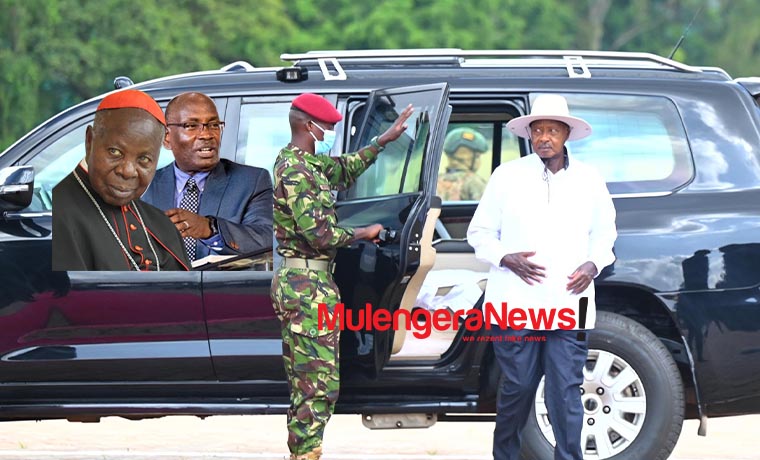
THANK YOU FOR REMEMBERING & HONORING HIS EMINENCE EMMANUEL CARDINAL WAMALA.

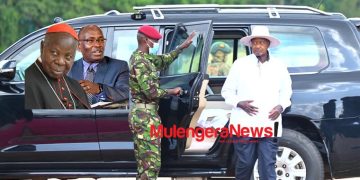
On behalf of all those who value faithful and selfless service to our nation, we extend our heartfelt appreciation to H.E. President Yoweri Kaguta Museveni for his thoughtful gesture in blessing His Eminence Emmanuel Cardinal Wamala with a brand-new vehicle. The bigger message is that of honoring the Cardinal during his life time. This act is a fitting recognition of a distinguished spiritual leader whose decades of ministry, wisdom, and commitment to peace, unity, and moral guidance have positively impacted Uganda across generations.

HIS EMINENCE EMMANUEL CARDINAL WAMALA: A LIFE OF FAITH, SERVICE AND NATION BUILDING.
Cardinal Emmanuel Wamala is the Archbishop Emeritus of Kampala and the second Ugandan to be elevated to the College of Cardinals. Born in December 1926 in Masaka District, he has been a foundational leader in the Ugandan Catholic Church, serving as Archbishop from 1990 until his retirement in 2006.
Biography & Early Life

Birthdate: December 15, 1926
Birthplace: Kamaggwa Village, Lwaggulwe Parish, Masaka District, Uganda
Education: He attended Bukalasa Minor Seminary and Katigondo National Major Seminary. He later studied at the Pontifical Urban University in Rome and earned a diploma in pedagogy from Makerere University in Kampala.
Key Church Roles & Legacy
Priesthood: Ordained a priest on December 21, 1957, in Rome.
Bishop of Kiyinda-Mityana: Consecrated as the first bishop of the newly established diocese in 1981.
Archbishop of Kampala: Promoted to Coadjutor Archbishop in 1988, and officially succeeded Cardinal Emmanuel Nsubuga as the Archbishop of Kampala on February 8, 1990.
College of Cardinals: Pope John Paul II elevated him to the position of Cardinal-Priest of Sant’Ugo in November 1994.
Major Contributions
Academic Leadership: Served as the first Rector of Uganda Martyrs University.
National Leadership: Held prominent roles including President of the Episcopal Conference of Uganda and President of the Uganda Joint Christian Council.
Papal Conclaves: Participated in the 2005 papal conclave that elected Pope Benedict XVI.
Retirement
He served as Archbishop of Kampala until his resignation on August 19, 2006. He officially handed over the archdiocese to his successor, the late Archbishop Cyprian Kizito Lwanga. He currently lives as Archbishop Emeritus in Kampala.
Inter Religious Council of Uganda
Cardinal Emmanuel Wamala served as a Chairperson and co-leader of the Inter-Religious Council of Uganda (IRCU) from its founding on March 1, 2001, until his retirement in August 2006.
Because the IRCU operates under a collective “Council of Presidents” model, leadership is uniquely shared and rotated among the heads of Uganda’s major religious institutions rather than held by a single individual.
The critical timeline of his service includes:
March 1, 2001: Cardinal Wamala became one of the founding pioneers of the IRCU alongside other historical faith leaders like the late Metropolitan Jonah Lwanga, Mufti Sheikh Shaban Ramathan Mubajje, and the late Archbishop Livingstone Mpalanyi Nkoyoyo.
2001–2006: During this active window, he held the mantle of leadership on the Council of Presidents while concurrently serving as the Catholic Archbishop of Kampala.
August 19, 2006: He stepped down from active leadership in both the Archdiocese and his regular operational rotation at the IRCU due to his retirement at the age of 79.
Following his retirement, his official capacity shifted from active Co-Chairperson to Grand Patron of the Inter Religious Council of Uganda.
His Eminence Emmanuel Cardinal Wamala stands among Uganda’s most respected religious leaders and statesmen, whose influence has extended far beyond the boundaries of the Catholic Church. His life has been marked by a rare combination of spiritual leadership, commitment to peace, mentorship of generations, and a passion for the social and economic transformation of Uganda.
From the altar to the national stage, Cardinal Wamala has consistently demonstrated that faith must serve humanity and that religious leadership carries a responsibility to promote justice, reconciliation and the common good.
A Champion of Peace Building and National Reconciliation
Throughout Uganda’s turbulent history, Cardinal Wamala has been a voice for peace, dialogue and reconciliation. Serving during periods of political uncertainty, social tension and armed conflict, he consistently encouraged Ugandans to seek solutions through forgiveness, truth and peaceful engagement rather than division and violence.
As a senior leader in the Catholic Church, he used his influence to promote national healing and unity, reminding leaders and citizens alike that Uganda’s future depends on justice, respect for human dignity and the ability to reconcile across political, ethnic and religious differences. His ministry reflected the Church’s role as a bridge builder in society — standing with the suffering, speaking for peace and encouraging responsible leadership.
A Father and Mentor to Young Clergy
One of Cardinal Wamala’s greatest legacies is his investment in the next generation of Catholic priests and leaders. He was not only an administrator of the Church but also a father figure who nurtured, guided and encouraged young clergy to embrace holiness, discipline, scholarship and service.
Many priests who served under his leadership benefited from his wisdom, pastoral guidance and personal example. He emphasized that priesthood is not merely a position of honour but a lifelong calling of sacrifice, humility and love for God’s people. His mentorship helped shape a generation of clergy who continue to serve communities across Uganda and beyond.
Leadership Roles in the Nation
Cardinal Wamala’s leadership journey placed him among the key moral voices in Uganda. Before becoming Archbishop of Kampala and later a Cardinal of the Catholic Church, he served in various pastoral and administrative roles, including leadership in the Diocese of Jinja and later as Archbishop of Kampala.
Beyond ecclesiastical structures, he was widely regarded as an elder statesman whose counsel was respected by leaders across different sectors of society. His ability to engage governments, communities and institutions positioned him as an important voice in national conversations on peace, morality, education and development.
Contribution During Uganda’s Liberation Struggle
During Uganda’s difficult years of political instability, Cardinal Wamala played a significant role as a religious leader who stood for the restoration of peace, stability and human dignity. The Church, under leaders like him, remained a source of hope for communities affected by conflict and suffering.
His commitment was not driven by political ambition but by a conviction that leadership must protect life, promote justice and serve the vulnerable. His voice contributed to the moral conversations surrounding Uganda’s transition and the rebuilding of national institutions after years of turmoil.
The Vision Behind Centenary Bank
One of Cardinal Wamala’s most significant contributions to Uganda’s social and economic development was his involvement in the establishment and growth of Centenary Bank.
The bank was founded from a vision of providing financial services to ordinary Ugandans, especially those who had historically been excluded from formal banking. Cardinal Wamala supported the idea that economic empowerment was essential for human dignity and national development.
Under the guidance of the Catholic Church and other stakeholders, Centenary Bank grew into one of Uganda’s leading financial institutions, demonstrating how faith-based initiatives can contribute meaningfully to society. Its success became a testimony to the power of combining ethical leadership, financial inclusion and service to the community.
Honours, Recognition and Those Who Valued His Work
Cardinal Wamala’s contribution has been recognized both nationally and internationally. His elevation to the College of Cardinals by Pope John Paul II in 1994 was a recognition of his service to the universal Church and his leadership within Uganda.
He has been honored by religious institutions, civil society organizations and national leaders who have acknowledged his role as a peace builder, mentor, development advocate and moral voice. His work has earned respect from people across religious, political and social divides because of his consistent commitment to serving humanity.
A Legacy of Faithful Service
As Uganda Honours His Eminence Emmanuel Cardinal Wamala, the nation celebrates more than a church leader; it celebrates a servant of God and humanity whose influence has shaped spiritual life, national dialogue and social development. His life reminds future generations that true leadership is measured not only by positions held, but by lives touched, peace promoted and institutions built.
His legacy remains a testimony that faith, when combined with wisdom and compassion, can become a powerful force for national transformation.
ONCE AGAIN, THANK YOU, YOUR EXCELLENCY.
For the President to honor the cardinal, remind us that a nation is strengthened when it celebrates those who have dedicated their lives to serving God and humanity. We commend the President for remembering one of Uganda’s most respected elder statesmen of faith.
We pray that God will continue to grant His Eminence Emmanuel Cardinal Wamala good health, strength, and many more years of fruitful service, while blessing our nation with leaders who value gratitude, honour, and unity.
His Eminence Dr Joseph Serwadda
Presiding Apostle of the Born Again faith in Uganda
Co-Chair – Inter Religious council of Uganda.