







By Mulengera Reporters
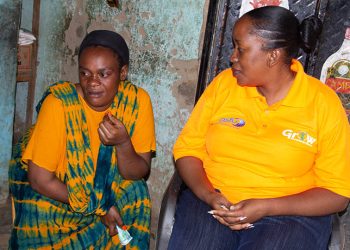
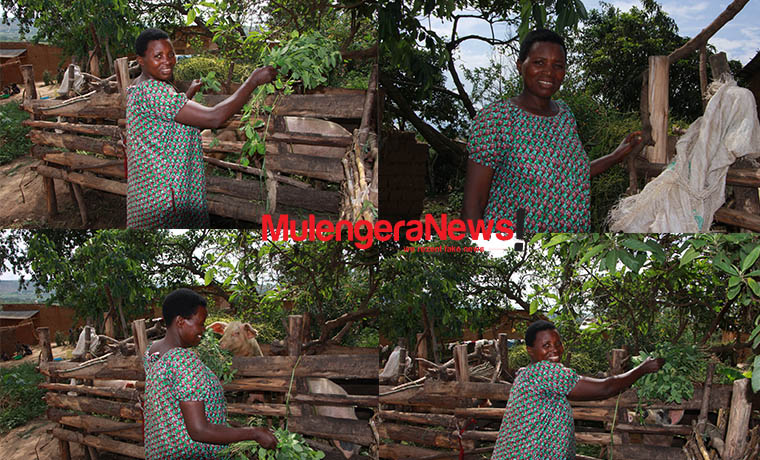
For Valentine Nirere, the journey from Rwanda to Uganda was not a journey of choice but one shaped by displacement, uncertainty and the struggle to rebuild her life. Today, as a refugee woman living in Nakivale Refugee Settlement in Isingiro District, southwestern Uganda, she is gradually rebuilding her livelihood through tailoring, piggery farming and crop cultivation, thanks to support from the Generating Growth Opportunities and Productivity for Women Enterprises (GROW) Project.
Nirere’s difficulties began in Rwanda, where her family was affected by government enforcement of environmental protection regulations along the shores of Lake Kivu. Rwanda has strengthened environmental conservation measures, including the protection of lakeshores, wetlands and other sensitive ecosystems, to address soil erosion, water pollution and destruction of aquatic habitats. Among the measures is the enforcement of buffer zones, including a mandatory 50-metre protection zone along water bodies.
The enforcement operations, which intensified around 2013 following broader environmental restoration initiatives, targeted illegal farming, construction and other activities along Lake Kivu. Rutsiro was among the affected districts, alongside Rubavu, Karongi, Nyamasheke and Rusizi.

Nirere’s family lost its land during the evictions and was relocated to a distant trading centre. However, life in the new settlement proved difficult. Having previously enjoyed a large piece of land, the family suddenly found itself confined to a congested environment with limited opportunities to sustain its livelihood.

Unable to cope with the circumstances, Nirere made the painful decision to leave with her young child in search of safety and better opportunities in Uganda, leaving her elder son behind with relatives in Rwanda. She eventually settled in Kyeibale B Village, Rugaaga Sub-county, within Nakivale Refugee Settlement.
Her journey into exile came with further challenges. While in Uganda, she gave birth to another child, whose father did not remain involved in her life. As a single mother, she had to find ways of providing for her children while navigating the difficulties of starting afresh in a foreign country.
When Nirere arrived in Nakivale in 2013, she initially engaged in crop cultivation and piggery farming. Drawing on her tailoring skills, she also began sewing clothes to supplement her income.
Her determination gradually paid off. She started piggery farming with just three pigs. Over the past three years, she has expanded the enterprise to 11 pigs. She also cultivates maize, beans and sorghum, crops that are in high demand within the refugee settlement.
However, limited capital remained a major obstacle. Before accessing support from GROW, Nirere depended on local village savings groups, where she could borrow approximately UGX 100,000 and repay before accessing another loan. Although the savings groups helped her meet some business needs, the amounts were insufficient to expand her enterprises meaningfully.
Her circumstances began changing when she learned about the GROW Project. She enrolled in financial literacy and business skills training, alongside piggery farming training conducted at Kabingwa by Enterprise Uganda, Malaika Vocational and Business Institute (MVBI), Uganda Tailors and other implementing partners.
Through the project, Nirere accessed a loan of UGX 1.5 million from UGAFODE Microfinance Limited, which she was required to repay over a period of eight months. She made monthly repayments of UGX 200,000 until she successfully completed the repayment.
The financing enabled her to purchase an additional sewing machine, acquire more pigs and invest further in crop cultivation. Unlike the smaller loans of approximately UGX 100,000 she previously accessed through local savings groups, the GROW financing provided her with greater capital to invest in her businesses. Successfully repaying the loan demonstrated her commitment to meeting her financial obligations and managing borrowed funds responsibly.
With improved business capacity, Nirere could better manage her activities and provide for her children. Her two children living with her in Uganda are now attending school, while her elder son, who remained in Rwanda, is also receiving support from relatives and pursuing university education.
Despite these achievements, her entrepreneurial journey has not been without setbacks. Recently, Nirere developed a leg condition that affected her mobility and disrupted her tailoring business. Her child, whom she had trained in tailoring, could not independently meet the growing demands of customers, eventually forcing the business to collapse.
Nevertheless, her other enterprises, particularly piggery and crop cultivation, remain important sources of livelihood.
The GROW Project is designed to address the financial and business development challenges faced by women entrepreneurs. Led by Uganda’s Ministry of Gender, Labour and Social Development and the Private Sector Foundation Uganda, with support from the World Bank, the initiative provides access to affordable financing, business training, work placements and workplace infrastructure support.
Through financial institutions including UGAFODE Microfinance Limited and Opportunity Bank, women entrepreneurs in refugee settlements and host communities can access financing to strengthen and expand their businesses.
The project generally supports loans ranging from UGX 4 million to UGX 200 million, with participating microfinance institutions also facilitating smaller financing needs. The financing arrangements provide for interest rates of up to 10 per cent annually and repayment periods of up to two years, subject to applicable eligibility and lending conditions.
For Nirere, the significance of GROW goes beyond the money she received. It has given her an opportunity to rebuild her confidence, strengthen her entrepreneurial skills and create a more sustainable livelihood after years of displacement and uncertainty.
She says the project has helped her survive and improve her living conditions compared with the difficult years following her arrival in Uganda in 2013.
From losing her family’s land in Rwanda to starting again with just three pigs in Nakivale, Nirere’s story demonstrates how access to finance, business skills and determination can help displaced women rebuild their lives.
Although challenges remain, her children are in school, her GROW loan has been fully repaid, and her farming activities continue to provide a source of income. For a woman who once lost nearly everything, these achievements represent renewed hope and an opportunity to build a more secure future. (For comments on this story, get back to us on 0705579994 [WhatsApp line], 0779411734 & 041 4674611 or email us at mulengeranews@gmail.com).