







By Ben Musanje
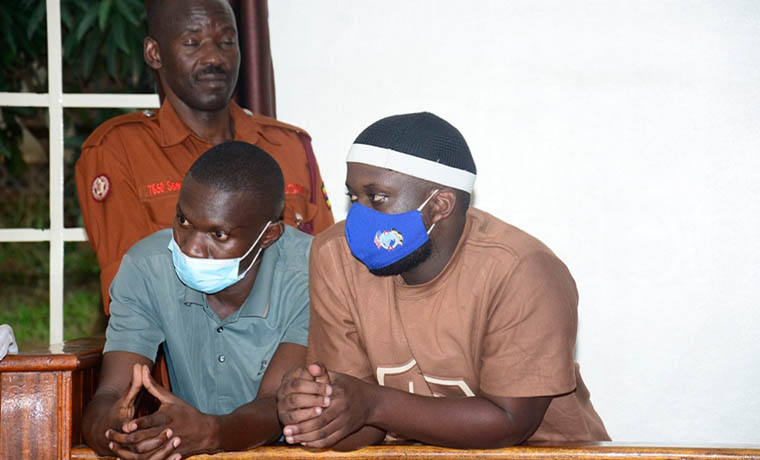
A habitual telecommunications infrastructure vandal, Disan Ssekalevu, also known as Saava, has been sentenced to a cumulative 14 years in prison after the Standards, Utilities and Wildlife Chief Magistrate’s Court at Makindye found him guilty of repeatedly targeting telecommunications installations and stealing high-value network equipment belonging to American Tower Corporation (ATC).
The sentence, delivered on Friday evening, November 27, 2026, by Trial Magistrate Her Worship Gladys Kamasanyu, marks a significant victory in the efforts by the Uganda Communications Commission (UCC) and telecommunications infrastructure operators to combat the growing problem of vandalism and theft of critical network installations.
Ssekalevu received eight years’ imprisonment for removing and tampering with telecommunications installations and seven years for theft. The two sentences in the latest case will run concurrently. However, they will run consecutively with a separate six-year prison sentence previously imposed on him in another telecommunications vandalism case, bringing his cumulative custodial sentence to 14 years.

His co-accused, Edrick Miravumba, was cautioned after being convicted of receiving or retaining stolen property.

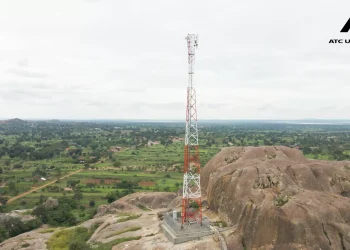
The proceedings arose from an incident on June 9, 2026, at Kasubi Tombs in Lubya Parish, Rubaga Division, Kampala District, where Ssekalevu was accused of cutting and stealing two Universal Baseband Processing Boards from an American Tower Corporation telecommunications installation identified by tower code number 607201. The stolen equipment was valued at approximately US$7,786.
The prosecution established the charges of removing and tampering with telecommunications installations contrary to Section 84(1)(b) of the Uganda Communications Act and theft contrary to Sections 237(1) and 244 of the Penal Code Act.
In a separate count, Miravumba was charged under Section 294(1) of the Penal Code Act with receiving or retaining stolen property. The particulars alleged that during June 2026, at Kisenyi in Kampala District, he received eight Universal Baseband Processing Boards belonging to MTN Uganda Limited and Airtel Uganda Limited, knowing or having reason to believe that the equipment had been unlawfully obtained.
Although the accused persons initially denied the charges, the matter subsequently proceeded towards the prosecution hearing, during which they expressed willingness to proceed with the prosecution witnesses and admitted guilt, paving the way for their conviction and sentencing.
The prosecution was led by Dr. Abdul Salam Waiswa, assisted by two lawyers representing the Uganda Communications Commission. Both accused persons appeared in court without legal representation.
In her sentencing remarks, Magistrate Kamasanyu expressed serious concern over the increasing incidents of vandalism and theft targeting telecommunications infrastructure, observing that the practice had become a significant threat to the country’s communications ecosystem and national development.
The magistrate emphasized that telecommunications installations constitute critical national infrastructure whose protection is essential for the uninterrupted delivery of services relied upon by individuals, businesses, government institutions and other sectors of the economy.
She observed that vandalism of telecommunications towers does not merely result in the loss of expensive equipment to infrastructure operators but can also cause substantial network disruptions, with far-reaching consequences for telecommunications services, education, healthcare, financial transactions, emergency response and other essential public services.
The court further noted that the destruction and theft of telecommunications infrastructure impose considerable financial burdens on operators and government, undermine national development objectives and threaten the security of infrastructure upon which the country’s social and economic activities increasingly depend.
The magistrate characterized the vandalism of telecommunications installations as a form of economic sabotage and a national security threat, stressing that telecommunications towers must be protected as critical national assets.
She observed that the increasing prevalence of these offences required firm judicial intervention, including the imposition of deterrent sentences capable of discouraging offenders and protecting the country’s telecommunications infrastructure.
A major consideration in determining Ssekalevu’s sentence was his extensive criminal history, particularly his repeated involvement in offences targeting telecommunications installations belonging to American Tower Corporation.
The court examined three previous criminal proceedings involving the accused and established a pattern of offending that had persisted despite earlier convictions, fines and custodial sentences.
In Criminal Case No. SUW-292 of 2023, Uganda versus Katamba Michael, Kungu Sharif and Ssekalevu Disan, the accused had been jointly charged with two others over the removal and theft of direct-current cables and radio remote unit cables from an American Tower Corporation telecommunications mast at Kawempe Market Zone in Kampala.
The incident occurred on June 10, 2023, when the accused persons were alleged to have unlawfully entered the telecommunications installation and removed the cables connected to the tower, identified by code number 606273.
The charges included removing and tampering with telecommunications installations, theft and criminal trespass. According to the court record, the accused persons eventually pleaded guilty through a plea-bargaining arrangement after the prosecution had presented its witnesses.
They were subsequently convicted and sentenced to fines of Shs1 million each, with nine months’ imprisonment in default of payment on the first count, and nine months’ imprisonment on the second count.
The court also considered Criminal Case No. FEW-220 of 2024, Uganda versus Saava Disan, in which Ssekalevu was charged alone over the vandalism of another American Tower Corporation installation at Wanyama Cell in Bugembe Northern Division, Jinja City.
The incident occurred on July 8, 2024, when he was accused of unlawfully cutting and removing four radio units and power cables, each measuring approximately 50 metres, from a telecommunications mast owned and operated by American Tower Corporation.
He was charged with damaging and demolishing telecommunications installations contrary to Section 83(1)(b) of the Uganda Communications Act and criminal trespass contrary to the Penal Code Act.
The court record indicated that Ssekalevu initially attempted to enter into a plea-bargaining arrangement before eventually pleading guilty. On March 4, 2025, he was sentenced to a fine of Shs3 million, with an alternative custodial sentence of three years on the first count, and nine months’ imprisonment on the second count. He subsequently paid the fine.
The third previous matter considered was Criminal Case No. 168 of 2026, Uganda versus Ssekalevu Disan, also known as Saava, and Edrick Miravumba, which involved the theft of telecommunications equipment from Ntinda Primary School in Nakawa Division, Kampala.
The prosecution alleged that on June 9, 2026, Ssekalevu and others still at large removed and tampered with an American Tower Corporation telecommunications installation at Ntinda Primary School by cutting and stealing two Universal Baseband Processing Boards from tower code number 607597. The equipment was valued at approximately US$19,691.
Ssekalevu was charged with removing and tampering with telecommunications installations and theft. On November 6, 2026, he was sentenced to six years’ imprisonment on each of the two counts.
Magistrate Kamasanyu observed that the repeated incidents, considered alongside the accused’s previous convictions, demonstrated that earlier punishments had not achieved the intended rehabilitative effect.
The court was particularly concerned that Ssekalevu had continued engaging in similar criminal activities despite previously appearing before courts, admitting guilt and receiving punishment. The magistrate also noted that he had appeared under different names in the various proceedings, a factor she considered alongside the prosecution’s submissions concerning his habitual offending.
In assessing the aggravating circumstances, the magistrate referred to paragraph 47 of the Constitution (Sentencing Guidelines for Courts of Judicature) (Practice) Directions, 2013, which provides guidance on factors that courts should consider when sentencing offenders convicted of theft and theft-related offences.
Among the aggravating factors identified were the substantial value of the stolen property, the financial losses occasioned by the offences, the deliberate and premeditated nature of the criminal conduct, the offender’s lack of remorse and his previous convictions.
The magistrate observed that the theft of telecommunications equipment involved considerable planning and that the high value of the stolen items, coupled with the repeated nature of the offences, warranted a substantial custodial sentence.
She further explained that criminal punishment serves several important objectives, including protecting the public, rehabilitating offenders, incapacitating individuals who persistently engage in criminal conduct and deterring others from committing similar offences.
The court was particularly concerned about the need to send a strong message to other individuals who were still at large and potentially involved in the theft and vandalism of telecommunications installations.
According to the magistrate, an effective sentence would not only punish the offender but also discourage others from participating in the practice, protect infrastructure operators from recurring financial losses and reduce the burden associated with repairing and maintaining vandalized telecommunications installations.
The prosecution had urged court to impose the maximum sentence of 10 years’ imprisonment on Ssekalevu for removing and tampering with telecommunications installations, arguing that he was a repeat offender.
Under Section 84(1)(b) of the Uganda Communications Act, the offence attracts a fine not exceeding 120 currency points, imprisonment for a term not exceeding five years, or both. In the case of a subsequent conviction, the law provides for a fine not exceeding 240 currency points, imprisonment for a term not exceeding 10 years, or both.
The magistrate acknowledged the prosecution’s submissions and the seriousness of the offence but considered the six-year sentence already imposed on Ssekalevu in the Ntinda case. She reasoned that the two cases involved separate criminal proceedings and that the sentences would be administered consecutively.
She consequently found an eight-year custodial sentence appropriate for the telecommunications infrastructure offence in the present case, rather than imposing the maximum 10 years requested by the prosecution.
On the theft charge, Section 244 of the Penal Code Act provides for a maximum sentence of 10 years’ imprisonment. The sentencing guidelines provide for a starting point of five years and a maximum of 10 years for theft-related offences.
The court ultimately sentenced Ssekalevu to seven years’ imprisonment on the theft count, bringing his sentences in the Kasubi case to eight years and seven years, respectively. Both sentences will run concurrently.
The magistrate further ordered that the period Ssekalevu had spent on remand, from June 26, 2026, to November 27, 2026, be deducted from his imprisonment sentences.
When combined with the six-year sentence previously imposed in the Ntinda case, the eight-year sentence in the current proceedings brings his cumulative custodial term to 14 years.
In determining the sentence for Miravumba, the court considered the fact that the Universal Baseband Processing Boards involved in the present proceedings were also the subject of Criminal Case No. 168 of 2026, in which he had already received a three-year prison sentence.
The magistrate also considered his acceptance of a caution appropriate and consequently cautioned him on the receiving or retaining stolen property count rather than imposing an additional custodial sentence in the present case.
The court also considered an application by the prosecution seeking the release of a blue Toyota RAV4 motor vehicle, registration number UAQ-689N, which had reportedly been found with Ssekalevu.
However, Magistrate Kamasanyu declined to issue a formal release order, explaining that the vehicle had never been formally produced in court as an exhibit. She maintained the position she had taken in the previous proceedings, leaving the parties to deal with the vehicle as appropriate without a formal court order for its release.
The magistrate concluded the proceedings by informing the accused persons of their right to appeal against the decision.
The judgment reinforces the importance of protecting telecommunications infrastructure against vandalism and theft, particularly given the critical role that network installations play in supporting Uganda’s digital economy, financial systems, public services and national development.
For the Uganda Communications Commission and telecommunications infrastructure operators such as American Tower Corporation, the successful prosecution underscores the importance of continued cooperation among law enforcement agencies, prosecutors, infrastructure owners and the courts in addressing crimes that threaten the reliability and security of the country’s telecommunications networks.
The case was heard and determined by the Standards, Utilities and Wildlife Chief Magistrate’s Court at Makindye on Friday evening, November 27, 2026. (For comments on this story, get back to us on 0705579994 [WhatsApp line], 0779411734 & 041 4674611 or email us at mulengeranews@gmail.com).