








The British Council has called for stronger partnerships to remove barriers preventing women, young people, persons with disabilities (PWDs) and underserved communities from accessing digital skills and opportunities in Uganda’s growing digital economy.
British Council Country Director Millicent Mugabi said digital inclusion must go beyond providing internet connectivity and access to devices to equipping people with the skills, confidence and support needed to use technology productively.
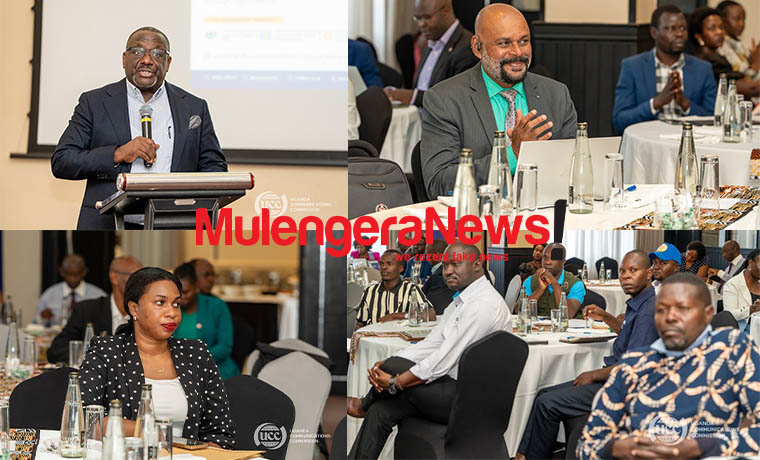
Speaking during a stakeholder dialogue on strengthening Uganda’s digital skills ecosystem at Mestil Hotel, Mugabi said marginalized communities risk being left behind unless deliberate efforts are made to ensure they benefit from the country’s digital transformation.
She said the British Council was working with government institutions and other partners to expand digital participation through programmes that strengthen national policies, build institutional capacity and deliver practical digital skills training at community level.
“If we are to build the inclusive digital future that we envision, we must ensure that no one is left behind,” Mugabi said.
She explained that the organization’s approach places inclusion at the centre of its education and skills development programmes, with particular attention to communities that face difficulties accessing training, networks and economic opportunities.
Mugabi highlighted the Skills for Inclusive Digital Participation (SIDEP) programme, a regional initiative designed to strengthen digital inclusion by equipping underserved populations with relevant skills and competencies.
The programme targets women, persons with disabilities and young people, with interventions aimed at improving their ability to participate meaningfully in the digital economy.
According to her, SIDEP operates through three key areas, including supporting policy development at the national level, strengthening institutional capacity and delivering practical digital skills training to underserved communities.
Under the policy component, the British Council works with relevant institutions to support processes aimed at improving digital literacy policies, providing technical expertise and facilitating stakeholder engagement.
The institutional capacity component focuses on strengthening the ability of organizations within the digital skills ecosystem to deliver effective and sustainable programmes.
At community level, Mugabi said the organization was implementing digital skilling initiatives in Bugiri, Busia, Namayingo and Mayuge Districts in eastern Uganda, to help underserved populations acquire practical skills that can improve their livelihoods and economic participation.
She noted that the programme began in Kenya before being expanded to Uganda, offering an opportunity for regional cooperation and the exchange of experiences in promoting digital inclusion.
Mugabi said the initiative recognizes that digital participation requires more than technical knowledge, as beneficiaries also need supportive environments and opportunities to apply their skills in everyday life.
She added that the British Council was committed to building connections between people and institutions from diverse backgrounds, while promoting equality, inclusion and stronger community participation.
The country director said the stakeholder dialogue was an opportunity to assess progress, identify persistent challenges and develop practical solutions to strengthen Uganda’s digital skills ecosystem.
She warned that the challenges were too complex for any single organization to address independently, making cooperation between government, regulators, private companies, development partners and community organizations essential.
The meeting was convened by the Uganda Communications Commission (UCC), through the Uganda Communications Universal Service and Access Fund (UCUSAF), in partnership with the British Council, with support from the British High Commission and UK International Development.
The engagement brought together government officials, telecommunications operators, civil society organisations, academia and other stakeholders to explore ways of expanding digital skills beyond basic internet use towards education, employment and enterprise development.
Mugabi said sustained collaboration would be crucial in ensuring that the benefits of digital transformation reach communities that have traditionally faced barriers to technology and economic participation. (For comments on this story, get back to us on 0705579994 [WhatsApp line], 0779411734 & 041 4674611 or email us at mulengeranews@gmail.com).


site-verification-ok