







By Mulengera Reporters
The Uganda Communications Commission (UCC) has refuted claims that it is behind the recent arrests of public Wi-Fi operators in Kampala, while signaling plans to introduce a clearer regulatory framework for the growing hotspot business.
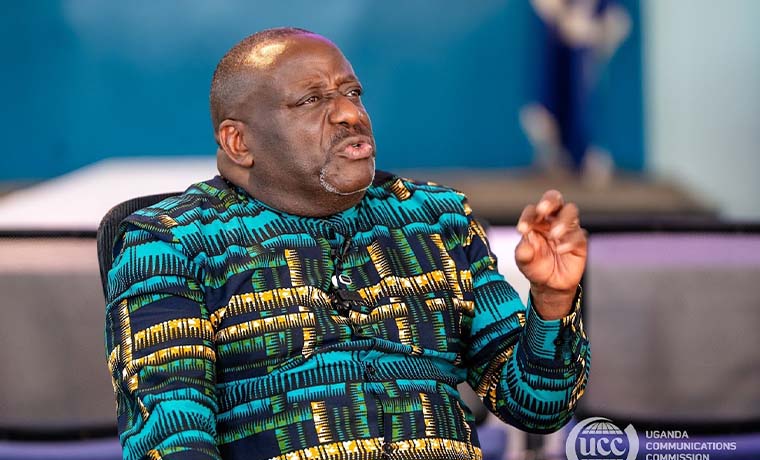
UCC Executive Director George William Nyombi Thembo said the Commission had not arrested any Wi-Fi operators, explaining that recent police action followed complaints from licensed internet service providers over alleged unauthorised use of their networks.
“We as UCC have not arrested anyone, but as you know, these companies, Internet service providers, have the ability to have you arrested if you interfere with your business without authorisation,” Thembo said in a televised interview on Monday.

Police operations in recent days have targeted unauthorised Wi-Fi resellers in Kasangati, Kawaala, Kasubi and Kawempe. Officers confiscated routers, cables, boosters and other equipment from operators accused of providing internet services without regulatory approval and, in some cases, attaching equipment to telecommunications infrastructure without permission.
Thembo said UCC remains concerned about the operation of unlicensed public internet businesses, arguing that providing communication services requires regulatory approval.
“The communication business, like any other business, has to be conducted after licensing. Now, who licensed these public Wi-Fi hotspot providers?” he asked.
He also said equipment used by hotspot operators must be approved by the regulator to ensure it does not interfere with other communications networks.

“The equipment you are using has to be type approved. We have to know the science behind these devices in order to protect our networks,” Thembo said.
The regulator, however, appears to be shifting from immediate enforcement towards developing rules that can bring the hotspot business into the formal telecommunications framework.
Thembo said UCC has already engaged operators in the sector and decided to slow down enforcement while it studies how the business operates.
“Recently I invited the people involved in the hotspot business and we talked, and I decided to dial back on enforcement, to first study the business,” he said.
He said UCC expects to announce a new regulatory direction within two weeks, making clear that the businesses will not be allowed to operate outside the licensing framework.
“But what you have to know is that no such business will be allowed without licence. You will also be required to bring all your equipment to us to be examined, to ensure that they do not disrupt other lines,” he said.
The planned approach comes as neighbourhood Wi-Fi businesses continue to expand across Kampala, driven largely by demand for cheaper internet access in densely populated communities.
For many users, hotspot services offer an alternative to individual mobile-data packages, allowing residents to access internet connectivity at relatively low cost.
The growth of the businesses has, however, raised questions about licensing, equipment standards, consumer protection and the use of telecommunications infrastructure.
Thembo said UCC had received information that some hotspot operators were installing boosters and other equipment on poles belonging to telecommunications companies without authorisation.
“We have also learnt that you are hanging your boosters on other people’s poles without their permission,” he said.
Telecommunications companies have raised similar concerns, arguing that unauthorised attachments can damage infrastructure, complicate maintenance and potentially affect network operations.
Thembo also defended the concerns raised by licensed internet companies over operators who allegedly tap into their networks and resell connectivity without authorisation.
“What I have heard, which I will investigate, is that there have been people who have been selling Wi-Fi through hotspots, while tapping the networks of those licensed companies. So it seems those companies sounded an alarm about this theft to the police,” he said.
At the same time, Thembo acknowledged that hotspot operators are providing an important service by making internet access more affordable.
He argued, however, that some operators may be able to charge less because they are not carrying the same regulatory, tax and infrastructure costs faced by licensed providers.
“It is true that you are providing cheap internet, but that is because you have not significantly invested in this service. It is like selling looted goods,” he said.
“You have not been licensed; you do not pay taxes or fees, do not follow any standards and so on.”
UCC had earlier announced a nationwide enforcement campaign against unlicensed public Wi-Fi providers in July, warning that unregulated services could expose consumers to unreliable connectivity, data privacy risks and cyber threats.
The Commission subsequently urged operators to regularise their businesses or stop operating.
The latest position suggests that UCC is now seeking to balance those enforcement concerns with the realities of a growing informal internet market.
Rather than outlawing public Wi-Fi hotspots, the regulator is expected to set out requirements covering licensing, equipment approval and the use of third-party infrastructure.
The planned rules could provide a legal pathway for hotspot operators while giving UCC greater oversight of the services and equipment they use.
For consumers, the regulatory changes could determine whether the affordable internet offered by neighbourhood hotspots can continue expanding without compromising network integrity and consumer protection.
For operators, the immediate challenge will be to understand the licensing and technical requirements UCC sets out and bring their businesses into compliance.
As UCC prepares to announce its new direction, the regulator’s message is becoming clearer: public Wi-Fi is not necessarily the problem, but operating the business outside Uganda’s telecommunications rules is.(For comments on this story, get back to us on 0705579994 [WhatsApp line], 0779411734 & 041 4674611 or email us at mulengeranews@gmail.com).