







By Aggrey Baba
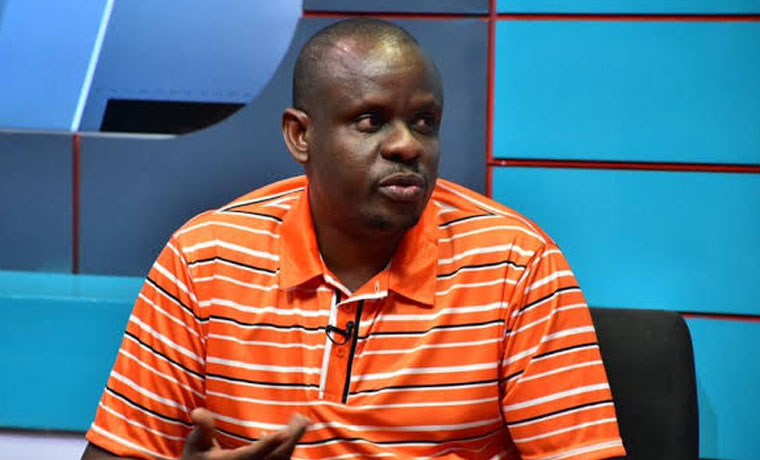
The Minister for Local Government Local Atenyi Balaam Barugahara appears to have taken a more cautious approach to complaints against teachers and school administrators, shortly after NRM mobilizer Rosemary Sseninde challenged the practice of rushing to arrest teachers before establishing the circumstances behind disputed school charges.
Sseninde’s intervention carries particular weight because she has a professional teaching background and understands the challenges faced by teachers and school administrators in running schools where Government funding does not always cover every operational need.
She recently questioned the wisdom of Balaam parading teachers as thieves and handcuffing them before giving them an opportunity to explain the decisions taken by their schools and parents.
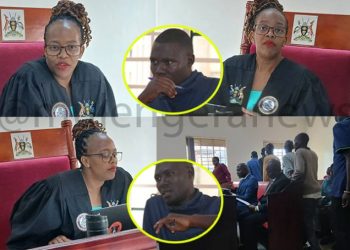
That concern appeared to resonate in Bugiri on Friday, where Balaam handled a complaint at Bukooli College School in a markedly different way from some of his recent anti-corruption operations. Parents and students reported that the government-aided school had been collecting money for a number of purposes, including feeding, welfare and the purchase of a school bus.
The most contentious issue was the school bus contribution. Parents said money had been collected for years, yet the school had never acquired the bus and no satisfactory accountability had been given for the funds.
With Balaam having recently gained a reputation for ordering arrests during inspections of schools accused of imposing unauthorized charges, many expected the Bukooli complaint to produce a similar outcome.
Instead, the minister brought the school administration and parents together for a meeting and listened to their explanations before any enforcement action was taken.
The head teacher explained that some of the money collected was being used to meet costs arising from the school’s large number of support workers who are not on the Government payroll. These include cooks, Ascaris, ground workers and other staff needed to keep the school functioning.
Parents also explained that some of the contributions had been agreed upon during parents’ meetings, meaning the payments were not simply imposed by the administration without their knowledge.
In the meeting, it was subsequently agreed that parents would temporarily contribute UGX30,000 per student for welfare and UGX70,000 for feeding as the school waits for guidance from President Museveni and the Ministry of Education on how such costs should be handled.
The approach was notably different from several recent cases involving Balaam. In Bududa, anti-corruption officials attempted to arrest head teacher Nasibu Mutyaba after Balaam questioned a UGX150,000 charge, but students intervened and prevented the arrest.
In Maracha (West Nile), the head teacher and School Management Committee chairman of Kololo Public Secondary School were arrested after Balaam questioned UGX80,000 charge imposed on students.
At Buheesi Secondary School in Bunyangabu, the head teacher and PTA chairman were also arrested over alleged illegal fees, with the school explaining that some contributions were meant to pay workers who were not on the Government payroll, but Balaam never listened.
Against that background, the Bukooli meeting offered a different picture of Balaam’s approach, introducing a new one: investigate first, hear the explanations and then determine what action is necessary.
Whether Sseninde’s intervention influenced this approach is not stated, but her warning came against the same backdrop of concern over teachers being arrested as chicken thieves without even giving them chance to explain their case.